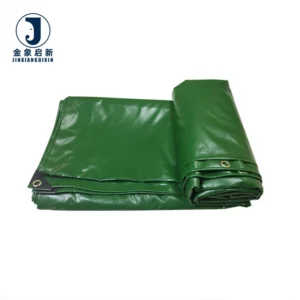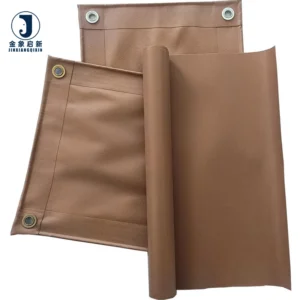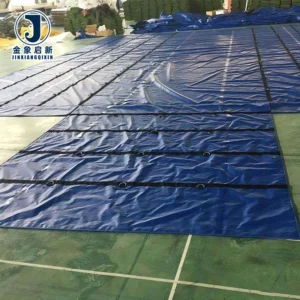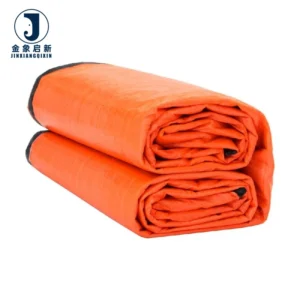
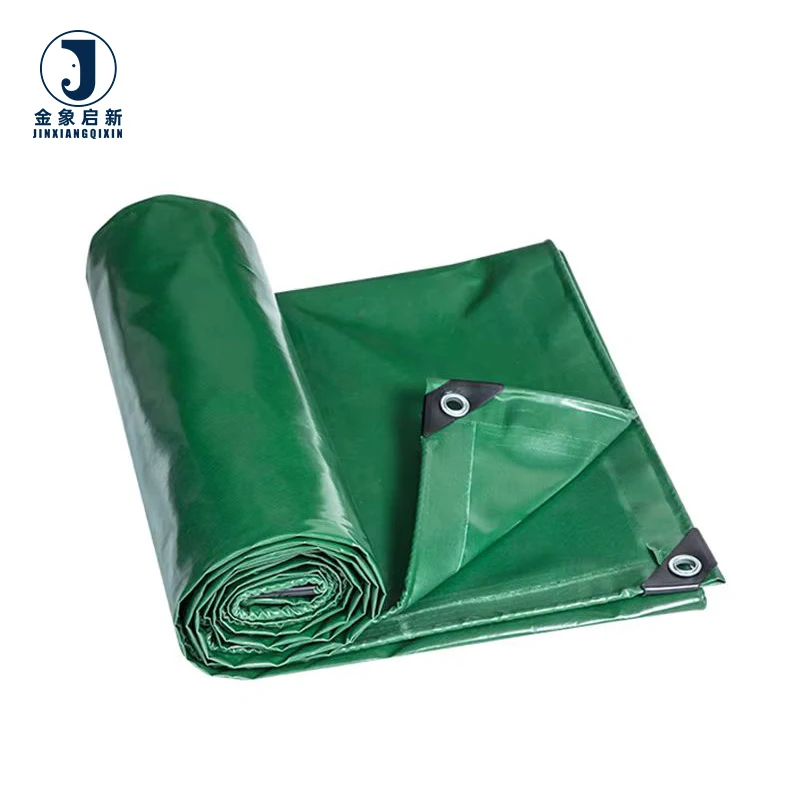
Coating Weight Control — Each roll of PVC Coated Tarpaulin gsm coating technology is verified against stated weight before dispatch, eliminating the gap between quotation and delivered material.
Technical Specifications
| Parameter | Value |
|---|---|
| Product Type | PVC Coated Tarpaulin |
| Weight Options | 500gsm, 600gsm, 700gsm, 850gsm, 900gsm |
| Coating Material | PVC |
| Waterproof | Yes |
| Flame Retardant | Available (grade not stated — confirm the grade required for your market) |
| Anti-Static | Available (standard not stated — confirm the standard required for your site) |
| Anti-Cold | Available (test basis not stated) |
| Anti-Mildew | Available (test basis not stated) |
| Anti-UV | Available (treatment basis not stated — request test documentation) |
| Weather Resistance | Suitable for extended outdoor exposure |
| Customization | Size, colour, weight |
Application Suitability
| Application | Exposure & Requirement |
|---|---|
| Truck cargo cover | Constant flexing at load points, road debris abrasion, UV exposure, rain ingress |
| Outdoor equipment protection | Static long-term weathering, dust and moisture ingress, wind uplift stress |
| Transport fleet covering | Repeated deployment and folding, tie-down tension, highway-speed wind load |
| Construction site protection | Puncture from scaffolding and materials, mud and chemical splash, prolonged sun |
Why GSM Alone Does Not Define Tarpaulin Durability
GSM tells you how much material is present, not how it is structured or how the coating bonds to the base fabric.
Many buyers specify PVC Coated Tarpaulin gsm coating technology by weight alone, only to find that two fabrics at the same GSM behave differently under load. The base fabric denier, weave density, and coating adhesion together determine how the material handles tension at tie-down points and flex fatigue along fold lines [NEED_CITE: tensile and tear test methods for coated fabrics per ISO 1421]. A heavier coating does not compensate for a loosely woven base yarn, and a high-denier base will not reach full strength if the PVC coating delaminates under heat or mechanical stress.
Base Fabric Architecture and Tensile Performance
The structural backbone of any PVC coated tarpaulin is the polyester base fabric. Denier and weave density govern how tensile load distributes across warp and weft. Higher GSM often correlates with heavier yarn, but without a balanced weave, tear propagation can follow a single yarn line rather than distributing across the fabric structure. This matters most where covers are tensioned over irregular loads or secured with tie-down straps at concentrated points.
Coating Adhesion and Peel Strength
The method of applying the PVC layer — whether knife coated, laminated, or calendered — directly affects how well the coating bonds to the base fabric [NEED_CITE: coating adhesion test methods for technical textiles]. Knife coating pushes the PVC compound into the weave interstices, creating a mechanical lock that resists delamination at flex points. Poor adhesion shows up first at welded seams, where heat and pressure during fabrication stress the coating-to-yarn bond. A seam that fails before the fabric body is a coating adhesion issue, not a fabric strength issue.
Interpreting GSM Against Mechanical Demand
Selecting between 500gsm and 900gsm is not simply choosing thicker material. A 500gsm grade with a tight weave and high-quality knife coating can outperform a 700gsm grade with poor yarn density in tear resistance. The relationship between PVC Coated Tarpaulin gsm coating technology and real-world durability depends on how the manufacturer balances three variables: base fabric specification, coating compound formulation, and process control during application. Buyers specifying for truck side curtains should prioritise flex fatigue resistance, while static equipment covers benefit more from UV-stable surface treatment and colour consistency across rolls.
The Cost of Misjudging Specification
When fabric arrives lighter than the quoted GSM, the consequences are rarely visible at first inspection. Thinner coating layers reduce waterproofing reliability and accelerate UV degradation of the base yarn underneath. Welded seams on underweight material tend to fail at the flex zones where trailer bodies articulate [NEED_CITE: seam failure analysis on PVC coated transport covers]. Colour variation between rolls in the same shipment becomes apparent only after installation, when panels sit side by side on a vehicle or structure. These failures trace back to insufficient process control during coating and finishing, not to the GSM number itself.
Why Procurement Verification Matters Here
The coating process is controlled across three full production lines with 36 sets of equipment, allowing bulk orders to maintain consistency from first roll to last. Every roll undergoes weight sampling against the stated 500gsm, 600gsm, 700gsm, 850gsm, or 900gsm grade before leaving the facility. The 10-person R&D team handles custom formulation for flame retardant or anti-static requirements, developing samples within days rather than weeks. Pre-shipment inspection covers weight, colour, and coating integrity across the full order. ISO and CE certification supports compliance review for export markets.
Documentation & Verification
- Material specification sheet stating verified GSM, base fabric denier, and coating method for each grade ordered
- Flame retardant and anti-UV test reports provided where applicable to your market standard
- Pre-shipment weight verification record per roll against the quoted GSM
- Roll packing list with batch traceability for colour consistency across the shipment
- ISO and CE certificates supplied for compliance and import documentation
Fabrication, Handling & Storage
- Hot-air welding temperature should match the PVC coating compound — request recommended settings for your chosen GSM grade
- Reinforce eyelet zones with additional PVC patches to distribute tie-down load across the base fabric weave
- Store rolls upright on pallets to prevent permanent creasing that weakens the coating at fold lines
- Allow cold-stored rolls to acclimate before unrolling to avoid cracking the PVC surface layer
- Use mild detergent for cleaning — aggressive solvents can degrade the coating compound and surface treatment
- Plan cutting layout to minimise cross-grain seams where tear resistance is lowest in the base fabric structure
What to Include in Your Enquiry
Specify the application environment and mechanical demands — whether the fabric will be deployed as truck side curtains subject to flexing, or as static covers exposed to long-term weathering. State the required GSM grade, target colour reference, and whether flame retardant or anti-static certification is needed for your site or market. Indicate whether you require roll stock or finished cut sizes with edge reinforcement.
Frequently Asked Questions
Q: How do I verify the actual GSM matches the quoted weight on delivery?
A: Request the pre-shipment weight verification record included with each order. Upon arrival, cut a measured sample from the roll and weigh it on a calibrated scale. The GSM value should fall within the stated tolerance for your specified grade — whether 500gsm, 600gsm, or any other weight. Discrepancies can be traced to the batch inspection record provided.
Q: What flame retardant documentation supports site compliance?
A: Flame retardant treatment is available in various grades. Confirm the specific classification required by your local fire safety authority or project specification. Once identified, request the corresponding test report showing the grade achieved. Without a stated classification, the fabric cannot be assumed compliant for regulated environments such as mining or aviation ventilation.
Q: Can I maintain colour consistency across multiple rolls in one order?
A: Colour matching is controlled at the coating formulation stage. For multi-roll orders, all rolls are produced from the same compounded batch to minimise variation. A colour reference sample can be provided for approval before production. Pre-shipment inspection includes visual comparison across rolls in the consignment.
Q: Which welding method works best for this PVC coated fabric?
A: Hot-air welding and high-frequency welding both produce strong seams on PVC coated tarpaulin. The optimal temperature, speed, and pressure settings depend on the specific GSM grade and coating compound. Request the manufacturer’s recommended fabrication parameters for your chosen weight to avoid seam failure at flex points where the cover articulates under load.
Q: How does coating adhesion affect long-term seam durability?
A: Knife coating drives the PVC compound into the base fabric weave, creating mechanical bonding that resists peel forces at welded joints. When adhesion is insufficient, seams separate before the fabric body reaches its rated tensile capacity. Specifying verified coating method and requesting peel strength data helps ensure welded seams perform throughout the cover’s service life.