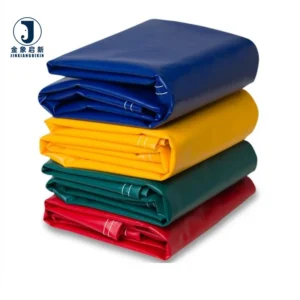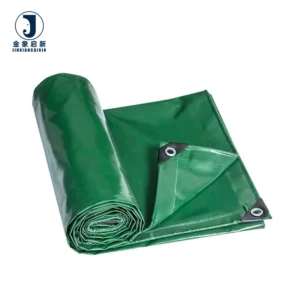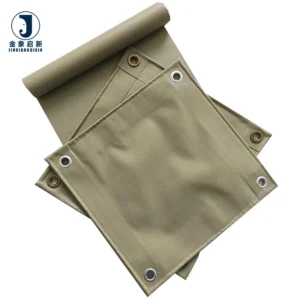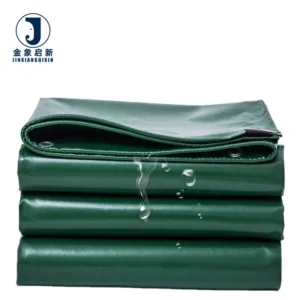
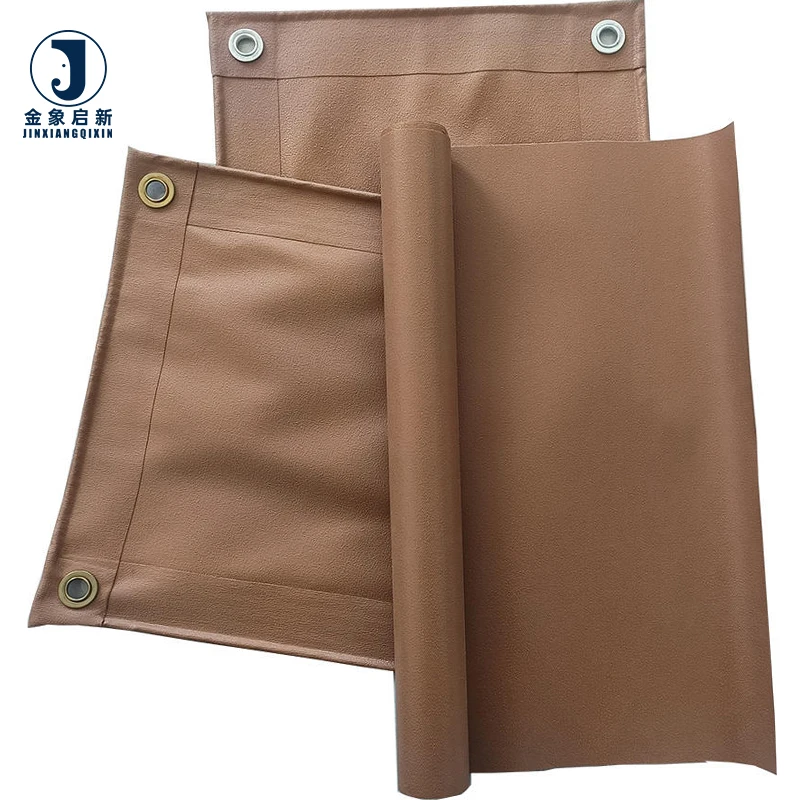
Coating Process Control — Coating weight and base fabric adhesion monitored at every stage on three dedicated production lines, ensuring the PVC coated tarpaulin 520 gsm arriving at your dock matches the specification agreed at order.
Technical Specifications
| Parameter | Value |
|---|---|
| Product Type | PVC Coated Tarpaulin Fabric |
| Base Fabric | 100% high toughness polyester yarn |
| Coating Material | PVC |
| Coating Method | Lamination technology and hot melt coating technology |
| Weight | 520 gsm |
| Total Thickness | 0.35–0.45 mm (source value — verify against manufacturer catalog) |
| Tensile Strength | Longitude 1500–2000 N/5cm / Latitude 1200–1800 N/5cm (test basis not stated) |
| Cold Resistance | Yes (grade not stated) |
| Anti-Static | Anti-static treatment (standard not stated) |
| Anti-Mildew | Mold proof |
| Waterproof | Yes |
| Flame Retardant | Available in flame retardant grades — confirm grade required for your market |
| UV Resistance | UV resistant (test basis not stated) |
| Welding Tear Strength | Excellent (test basis not stated) |
| Color Fastness | High color fastness (test basis not stated) |
| Weather Resistance | Suited to extended outdoor exposure |
| Key Features | Waterproof, cold resistant, mold proof, anti-static treatment available, heat-weldable seams |
Application Suitability
| Application | Exposure & Requirement |
|---|---|
| Truck tarpaulin and flatbed cover | Road debris abrasion, wind flap fatigue, UV from constant sun, flexing at load tie-downs |
| Truck side curtain fabric | Repeated sliding on curtain runners, lateral wind load, daily open-close cycling |
| Lightweight engineering protective cover | Site dust, rain splash, mechanical contact with scaffolding or stored materials |
| Waterproof industrial canopy | Standing water runoff, prolonged weather exposure, tension from frame attachment |
| Outdoor equipment wrap | UV and moisture barrier, abrasion from handling, stacking pressure in storage |
Why Stated GSM Does Not Guarantee Field Performance
The weight on the label tells you mass per square metre, not how long the fabric survives a highway at full load.
Technical buyers often receive PVC coated tarpaulin 520 gsm that tests below the quoted weight on arrival, or arrives at weight but tears at the weld line under lateral wind load. A fabric can meet a GSM target through heavier coating alone while the base polyester scrim remains under-dimensioned, leaving tensile strength below what the application demands. When the scrim denier and weave density are not verified alongside coating weight, the material passes the scale test but fails the flex test within months of service. [NEED_CITE: tensile and tear test methods for coated fabrics per ISO 1421]
Coating Method and Its Effect on Fabric Behaviour
Lamination and hot melt coating are both used in this PVC coated tarpaulin 520 gsm grade, and each method shapes how the material performs downstream. Lamination bonds a pre-formed PVC film to the polyester scrim under heat and pressure, producing a consistent surface thickness that supports clean heat-welded seams. Hot melt coating applies liquid PVC directly into the scrim weave, achieving deeper penetration that improves peel resistance at the coating-to-yarn interface. Fabricators running automated welding lines benefit from knowing which method was used, because the thermal response and optimal weld temperature window differ between the two.
Base Fabric Construction and Load Response
The 100% high toughness polyester yarn base provides the structural backbone that carries tensile and tear loads once the PVC coating has done its job of weatherproofing. A tighter weave in the base fabric restricts tear propagation — once a puncture occurs, the density of cross-yarns determines whether the tear arrests or zips across the panel. For truck side curtain applications where the fabric flexes hundreds of times per trip, the scrim construction is as critical as the coating chemistry. Specifying only by weight leaves the base fabric variable uncontrolled, which is why material data sheets should list denier and weave count alongside GSM. [NEED_CITE: relationship between scrim density and tear propagation in coated polyester fabrics]
Interpreting the Thickness-to-Weight Relationship
The stated thickness range of 0.35–0.45 mm aligns with what is expected for a 520 gsm laminated or hot melt coated polyester fabric. Thickness in PVC coated textiles is driven by coating weight and scrim profile rather than by added filler, so a measurement outside this range on arrival signals either a coating variance or a base fabric substitution. For fabricators calculating roll yield and finished cover dimensions, thickness also affects how the material behaves on the welding table — thinner sections heat through faster and risk scorching, while thicker spots may require dwell time adjustment to achieve full seam fusion.
The Hidden Cost of Specification Drift Between Rolls
When PVC coated tarpaulin 520 gsm arrives with coating weight variance between rolls, the consequences compound through the fabrication process. A lighter roll may weld at the same temperature setting but produce a weaker seam because the coating layer is too thin to fuse completely. Colour shifts between rolls in the same shipment become visible once panels are installed side by side on a trailer, triggering rejection and rework. Anti-static or flame retardant treatments applied inconsistently across a batch leave individual rolls failing site compliance checks. [NEED_CITE: batch consistency requirements for coated fabrics in transport applications]
Why Fabricators Source This Grade Here
Three full production lines and 36 sets of professional equipment provide the capacity to run PVC coated tarpaulin 520 gsm in volume while maintaining coating weight control roll to roll. A 10-person R&D team develops custom samples within days, allowing fabricators to confirm weld behaviour, colour match and treatment response before committing to bulk. Dedicated QA and QC personnel inspect every production stage with a 100% pre-shipment inspection record, so the material leaving the factory matches the specification sheet provided at order. ISO and CE certified production supports documentation requirements for cross-border supply chains. The team supplies material data including GSM verification, base fabric details and coating method so technical buyers can cross-reference against their own incoming inspection.
Documentation & Verification
- Material specification sheet stating 520 gsm, polyester base fabric and PVC coating method per order
- Test reports for UV resistant and flame retardant grades supplied where applicable on request
- Pre-shipment inspection record with weight and visual check documented per roll
- Roll packing list with batch reference for colour and weight traceability
- Certificate of origin and customs documentation included with every dispatch
Fabrication, Handling & Storage
- Set weld temperature and dwell time based on whether lamination or hot melt coating was specified for this 520 gsm grade
- Allow cold-stored rolls to reach ambient temperature before unrolling to prevent PVC coating cracking at the fold line
- Store rolls horizontally on racking to avoid flat spots that cause creasing when the 0.35–0.45 mm material is unrolled on the cutting table
- Use heat welding rather than adhesive bonding at seams to exploit the excellent welding tear strength of the PVC-to-polyester interface
- Clean with mild detergent only; avoid solvent-based cleaners that can soften the PVC coating surface and reduce weather resistance
- Plan panel layout to place welded seams away from maximum flex zones on truck side curtains and tie-down attachment areas
Request a Specification Match
Provide your application type — truck cover, side curtain, or engineering canopy — along with the exposure conditions your finished product will face. Specify any flame retardant or anti-static grade required by your market regulations, and confirm whether you need roll stock or finished cut-to-size panels. If colour matching or custom width is needed, request a sample for weld testing and visual approval before production begins.
Frequently Asked Questions
Q: How is the 520 gsm weight verified and how can I recheck on arrival?
A: Weight is checked during in-process QA and again at the 100% pre-shipment inspection stage. You can verify on arrival by cutting a measured sample from the roll edge and weighing it on a calibrated scale. The material specification sheet provided with your order states the target GSM and acceptable tolerance range for cross-reference.
Q: What test basis supports the UV resistant and flame retardant claims?
A: UV resistance and flame retardant grades are available, and test reports are supplied where applicable — request these before production begins. The specific test standard and grade depend on the treatment formulation selected for your order. Confirm the compliance standard required in your destination market so the correct grade is specified.
Q: What welding recommendations apply to this PVC coated polyester at 520 gsm?
A: Heat welding is the recommended joining method, taking advantage of the PVC coating’s thermal response for strong fused seams. Optimal temperature and dwell time depend on whether lamination or hot melt coating was used. Request a sample roll section to dial in your welder settings before running production panels.
Q: Can I get a material specification sheet before placing a bulk order?
A: Yes. A full specification sheet stating GSM, base fabric construction, coating method and available treatments is provided with the quotation. For flame retardant or anti-static grades, request the relevant test report at the same time so you can evaluate the material against your project compliance requirements before committing to volume.
Q: How is colour consistency controlled across multiple rolls in one order?
A: Colour is monitored during the coating stage through in-process QA checks, and a colour reference is recorded on the material specification sheet. Rolls within the same production batch are matched against this reference. For critical colour matching applications, request a physical sample for approval before the full order enters production.