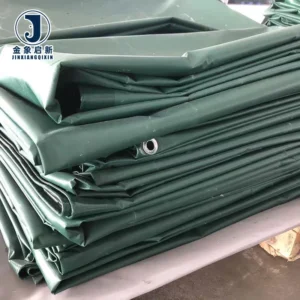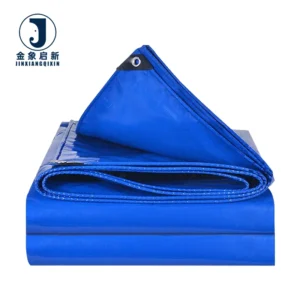
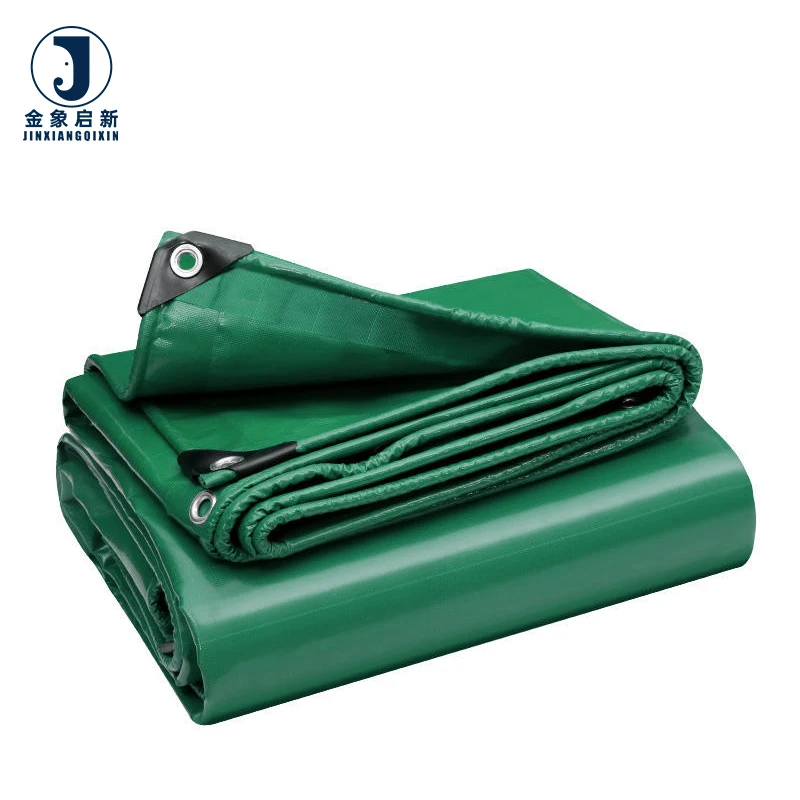
Process Control — Every roll of heavy-duty vinyl tarpaulin leaving this facility carries a material specification sheet verifying GSM, base fabric denier, and coating weight before it reaches your warehouse.
Technical Specifications
| Parameter | Value |
|---|---|
| Product Type | PVC Coated Tarpaulin |
| Base Fabric Denier | 200DX300D / 500DX500D / 840DX840D / 1000DX1000D (options available) |
| Weight Range | 250gsm-1500gsm (grade depends on denier selected) |
| Total Thickness | 13mil |
| Coating Material | PVC |
| Surface Finish | Glossy or matte |
| Colour Options | Blue, yellow, black, green, white, custom colours available |
| Temperature Range | -15°C to 70°C |
| Waterproof | Yes, fully coated construction |
| UV Treatment | Available — confirm the test standard required for your market |
| Flame Retardant | FR treated — confirm the grade required for your market |
| Anti-Fungal | Treated — confirm the standard required for your market |
| Working Life | 3-10 years depending on usage environment (manufacturer estimate) |
| Standards | ISO, CE |
Application Suitability
| Application | Exposure & Requirement |
|---|---|
| Firewood covering | Constant UV and rain exposure, requires tear resistance during daily handling and re-stacking |
| Roof protection | Prolonged sun and water pooling, needs seam integrity across large spans under wind load |
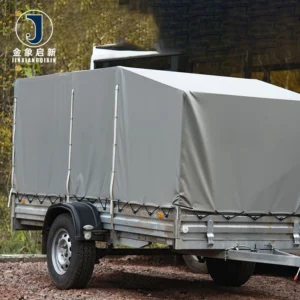
| Dump trailer cover | Road abrasion, high-speed flexing at tie-down points, UV degradation from daily highway exposure |
| Pool cover | Continuous water contact, chemical exposure from pool treatments, puncture risk from debris |
| Boat cover | Saltwater spray, UV reflection off water surface, abrasion against hull fittings |
| Camping and patio shelter | Frequent assembly and folding, moderate UV and rain, demand for flexible handling at low weight |
What "Flame Retardant" Means Without a Grade Behind It
A PVC coated tarpaulin described as flame retardant tells you nothing until the test standard and grade are specified. A coating can carry a chemical treatment yet still fail the compliance check your project demands.
Technical buyers have rejected shipments because the supplier provided a fabric labelled "FR" without matching the local fire classification — B1 per DIN 4102 for a European construction site, or NFPA 701 for a North American event tent. The cost of that mismatch is not just the return freight; it is the project delay and the credibility lost with the end client. [NEED_CITE: DIN 4102 fire classification for building materials]
The same logic applies to UV treatment. A claim of "UV resistant" without a stated test basis — whether xenon arc exposure per ISO 105-B02 or a QUV accelerated weathering cycle — gives you no basis to compare two suppliers or predict how the material will hold up in your climate. Always request the test report and read the grade before you approve the sample.
How Base Fabric Denier Defines Performance Before the Coating Even Matters
The denier of the base fabric — whether 200DX300D or 1000DX1000D — sets the tensile and tear ceiling that the PVC coating alone cannot overcome. A heavy coating on a light base fabric adds weight without proportional strength, which is why matching denier to application is the first specification decision.
For a PVC coated tarpaulin used on a dump trailer, the base fabric must resist the repeated flexing and abrasion at tie-down contact points, making a higher denier construction necessary. For static firewood covers or patio shelters, a mid-range denier with appropriate coating weight delivers the required balance of strength and flexibility.
Coating Weight, Adhesion, and the Weld Line Problem
The PVC coating method determines how well the coating bonds to the base fabric and how it behaves when heat-welded into finished tarpaulins. Poor adhesion between coating and yarn shows up first at welded seams — the point where the load flexes most and where most field failures originate. [NEED_CITE: tensile and tear test methods for coated fabrics per ISO 1421]
When coating weight is controlled at every production stage and verified before shipment, the weld line reaches a strength that matches or exceeds the body fabric. This is the difference between a tarpaulin that fails at the seam after one season and one that ages uniformly across its entire surface.
Reading the Specification Sheet: What GSM, Denier, and Finish Actually Tell You
GSM alone is a misleading indicator. A 650 GSM fabric woven from 1000DX1000D yarn will behave very differently from a 650 GSM fabric built on a 200DX300D base with heavier coating fill. The former concentrates strength in the yarn structure, giving superior tear propagation resistance; the latter relies on coating mass, which can crack under sustained flex.
Surface finish — glossy or matte — affects more than appearance. A glossy surface sheds dirt and water more readily, which suits agricultural and transport covers exposed to road grime. A matte surface reduces glare and provides better friction for stacking or lashing, which matters on construction sites where covers slide against each other.
Temperature range from -15°C to 70°C defines the operating boundary. Below -15°C, PVC stiffens and becomes susceptible to crack propagation from impact. Above 70°C, the coating softens, which can reduce seam holding strength under load. These boundaries should frame how you specify the material for climates or applications that push toward either extreme.
The Hidden Cost of Specifying by Price Per Square Metre
When a PVC coated tarpaulin arrives lighter than the quoted GSM, the savings on the invoice disappear in early field failures — torn hems, split welds, and covers that cannot withstand the first winter storm. The buyer pays twice: once for the substandard material and again for the replacement. [NEED_CITE: coating weight verification standards for PVC tarpaulin]
Colour variation between rolls in the same order is another consequence of inconsistent process control. Two covers installed side by side on a truck fleet or a construction site reveal the mismatch immediately, forcing either acceptance of an unprofessional appearance or a costly full-batch replacement.
Why Source This PVC Coated Fabric Here
Deep process control over coating weight and adhesion means the GSM on your material specification sheet matches the GSM on the roll you receive, verified at every production stage.
A 10-person R&D team handles material selection, denier matching, and sample development so that you can test the exact grade, colour, and finish before committing to a production run.
Three full production lines and 36 sets of equipment support bulk roll orders with reliable scheduling, so container loading plans and shipping dates hold firm.
Dedicated QA/QC runs at every stage with 100% pre-shipment inspection, catching coating weight deviations, colour drift, and seam defects before the roll leaves the facility.
Samples for custom widths, colours, and surface finishes are developed within days, shortening the gap between initial enquiry and approved specification.
Documentation & Verification
- Material specification sheet listing GSM, base fabric denier, and coating type for the exact grade ordered
- Test reports for UV and flame retardant grades, citing the standard and grade achieved
- Pre-shipment inspection record with roll-by-roll weight verification against the stated specification
- Colour reference documented per roll to ensure batch consistency before packing
- ISO and CE certificates provided with certificate of origin and customs documentation
Fabrication, Handling & Storage
- Heat-weld seams using temperature and dwell settings matched to the PVC coating weight to prevent adhesion failure at flex points
- Store rolls upright on pallets to avoid flat-spot deformation that creates permanent creases in the coated surface
- Allow material to acclimatise above 10°C before unrolling and cutting to prevent coating crack propagation in cold conditions
- Use mild detergent for cleaning — solvent-based cleaners can degrade the PVC coating surface and compromise the finish
- Plan cutting layouts to minimise waste across the available roll width, especially on custom-width orders
What to Include in Your Enquiry
To match the correct denier, GSM, and treatment combination to your application, share the end-use environment and any fire classification or UV test standard your market requires. Specify whether you need roll stock or finished cut sizes, along with target colour references and any surface finish preference. If you are running a trial, request a sample in the exact grade before committing to a full production order.
Frequently Asked Questions
Q: How is GSM verified before each shipment leaves the factory?
A: Every roll undergoes a weight check during pre-shipment inspection, compared against the GSM stated on your material specification sheet. The inspection record travels with your documentation, so you can confirm the coating weight and base fabric match the grade you approved at the sample stage.
Q: Can I get a test report for flame retardant or UV treatment?
A: Test reports are available for the specific grade ordered. Because standards vary by market — B1 per DIN 4102, NFPA 701, or others — state the classification your project requires during the enquiry so the correct treatment and documentation are prepared.
Q: How does base fabric denier affect tensile and tear strength?
A: Higher denier yarns such as 1000DX1000D concentrate strength in the woven structure, giving better resistance to tear propagation under load. Lower denier options like 200DX300D suit lighter-duty static covers. The denier selection should match the mechanical demands of your specific application.
Q: Can custom widths, colours, and finishes be combined in a single production run?
A: Yes, the production lines handle multiple custom parameters together. Provide your width, colour reference, and glossy or matte preference during the specification stage. Samples are developed for approval before the full run begins to confirm all parameters meet your requirements.