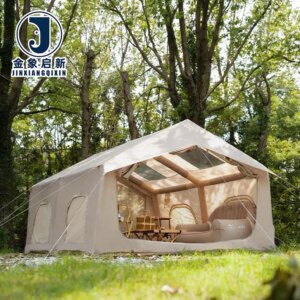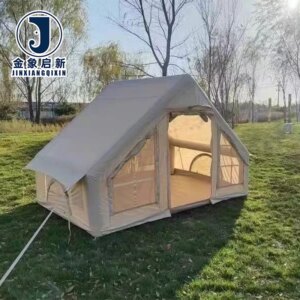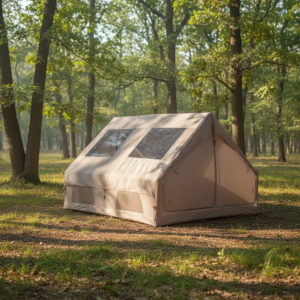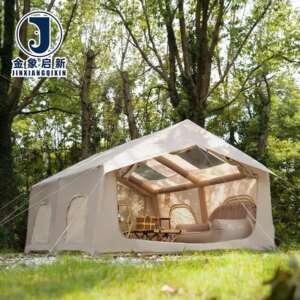
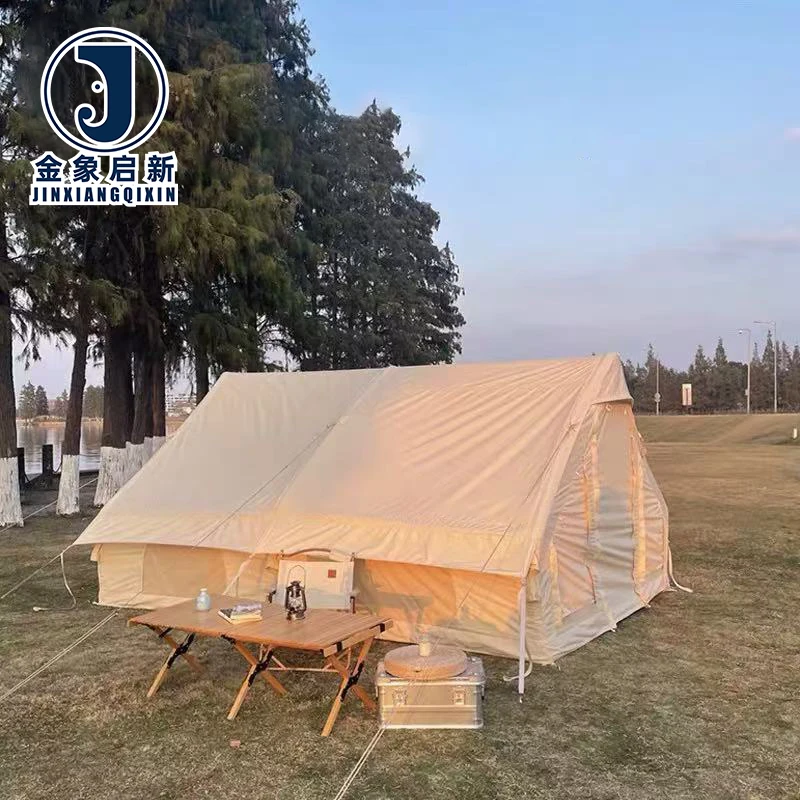
Knife Coated Fabric Control — three full production lines maintain PVC coating weight and adhesion consistency across every roll destined for inflatable tent fabrication.
Technical Specifications
| Parameter | Value |
|---|---|
| Product Type | Inflatable Tent Fabric |
| Core Material | PVC Tarpaulin |
| Coating Method | Knife Coated |
| Product Forms | Single Layer Construction, Extended Type |
| Waterproof Performance | Fully waterproof coated construction |
| UV Resistance | UV-resistant formulation — confirm required test standard for your market |
| Fire Retardancy | Fire-retardant grades available — confirm the grade required for your market |
| Anti-static Treatment | Anti-static options available — confirm standard applicable to your end use |
| Tear Resistance | Tear-resistant construction for repeated inflation cycles |
| Customization | OEM & ODM, sample customization, pattern printing |
| Quality System | Full-process QA/QC inspection with dedicated staff |
| Certifications | ISO9001, ISO14001, ISO45001, CE |
Application Suitability
| Application | Exposure & Requirement |
|---|---|
| Commercial glamping tent structures | Year-round UV exposure, wind load stress on inflatable beams, guest expectation of weather-tight performance |
| Large-scale event accommodation | Repeated setup and breakdown cycles, rapid deployment requirement, public safety compliance on flame retardancy |
| Industrial temporary shelters | Exposure to dust and particulate ingress, requirement for anti-static behaviour in sensitive environments, thermal stress from direct sunlight |
| Inflatable membrane structures | Constant internal air pressure stressing weld seams, four-season temperature fluctuation affecting coating flexibility |
What Happens When Weld Strength Falls Short of Fabric Strength
The structural integrity of an inflatable tent depends on the seam performing as well as the material itself.
Inflatable tent beams operate under continuous internal pressure. When the PVC coated fabric flexes under wind load or thermal expansion, the welded seams absorb concentrated stress. If the weld line fails before the fabric reaches its own tear threshold, the entire inflatable structure collapses at the point of highest mechanical demand. [NEED_CITE: tensile and tear test methods for coated fabrics per ISO 1421] This failure pattern is common when PVC inflatable tent fabric is heat-welded at incorrect temperatures or when the coating formulation does not support adequate adhesion between overlapping layers. The result is a deflated structure and a compromised commercial operation.
Coating Adhesion and Its Role in Inflatable Beam Durability
Knife coating applies PVC compound directly onto the base fabric under controlled blade pressure, forcing the coating into the weave structure. This mechanical interlock between coating and yarn is what determines whether a heat-welded seam can match the tensile capacity of the PVC inflatable tent fabric itself. Poor adhesion causes delamination at the weld zone long before the base fabric fails, making the seam the structural weak point in any inflatable beam or air column.
Base Fabric Weave and Its Effect on Tear Propagation
The denier of the yarn and the density of the weave dictate how a puncture or cut propagates through the material. In an inflatable tent, a small abrasion on a beam section can develop into a running tear if the base fabric lacks sufficient thread count to arrest it. The relationship between yarn thickness, weave tightness, and PVC coating penetration determines whether damage stays local or spreads across an entire beam section under internal air pressure. [NEED_CITE: relationship between base fabric construction and tear resistance in coated textiles]
Interpreting Coating Weight for Inflatable Applications
GSM alone does not define the performance of inflatable tent fabric. A high coating weight with a loosely woven base fabric will show high gram weight on the scale but low tear strength in practice. Conversely, a tightly woven base with moderate coating weight delivers better structural performance for inflatable beams that must resist internal pressure and external wind load simultaneously. The coating method matters as well: knife coa* lamination, producing stronger weld seams and better long-term adhesion. The balance between base fabric density and coating thickness is what determines whether the material can withstand repeated inflation and deflation cycles without developing weak points at the weld zones.
The Cost of Overlooking Batch Consistency in Commercial Deployments
A glamping site ordering multiple inflatable tents for a single season expects uniform appearance across every structure. When PVC coated fabric rolls within the same order show visible colour variation after installation, the commercial presentation fails before the season begins. Similarly, if the GSM delivered is lighter than the GSM on the specification sheet, the inflatable beams may not sustain design pressure during peak wind events. Batch inconsistency in coating weight or colour reference forces either full-order rejection or acceptance of sub-standard performance, both of which carry significant cost. [NEED_CITE: quality verification protocols for coated fabric batch consistency]
Why Procurement Teams Source This Fabric Here
Direct process control over knife coating parameters ensures that PVC coating weight and base fabric adhesion are managed on the production line, not outsourced to a secondary finisher. A 10-person R&D team handles material formulation adjustments when inflatable tent manufacturers need specific weld temperature windows or surface finishes for their fabrication equipment. Every roll undergoes full-process inspection with dedicated QA and QC staff before dispatch, catching GSM deviation and colour drift before the material ships. Pre-production samples are developed within days, allowing buyers to test heat-weld parameters and seam strength on their own equipment before committing to volume. Three full production lines with 36 sets of processing equipment support order volumes for large-scale commercial glamping deployments without extending lead times beyond typical multi-week schedules.
Documentation & Verification
- Material specification sheet listing PVC coating type, base fabric reference, and colour code per roll
- UV resistance and fire-retardant test reports matched to the specific production batch
- GSM verification record confirming coating weight against stated specification before dispatch
- Pre-shipment inspection report covering surface defects, colour consistency, and dimensional accuracy
- Roll packing list with batch traceability for post-delivery quality tracking
Fabrication, Handling & Storage
- Heat-weld temperature range must match the knife coated PVC formulation to achieve full seam adhesion
- Allow fabric to acclimatize before welding if stored in cold conditions to prevent coating brittleness at seams
- Store rolls horizontally on padded supports to prevent permanent crease marks on the PVC coating surface
- Clean finished inflatable structures with mild detergent only to preserve the coating finish and UV treatment layer
- Pattern printing alignment should account for stretch behaviour of the inflatable beam under operating pressure
- Cut pattern layout should maximize yield per roll width to minimize offcuts and seam joints in structural panels
Requesting a Material Quote
Specify the inflatable tent beam dimensions, operating air pressure, and expected deployment climate so the correct PVC formulation can be recommended. Provide the fire-retardant grade and anti-static standard required by your target market to ensure compliance documentation is prepared in advance. Indicate whether you require rolls for in-house fabrication or finished panels, and whether pattern printing is needed on the outer surface.
Frequently Asked Questions
Q: What fire-retardant grades are available and which market standards do they meet?
A: Fire-retardant PVC formulations are available across multiple grade levels. The applicable standard depends on your end market — European projects typically reference EN or DIN classifications, while other regions may require NFPA or local building code compliance. Confirm the specific grade needed so the correct formulation and test report can be provided with your order.
Q: What UV test data supports the outdoor durability claim?
A: UV-resistant PVC formulations are designed for extended outdoor exposure across four-season commercial glamping operations. The specific test method and exposure duration should be confirmed based on your deployment region and expected service conditions. Request the applicable UV test report matched to your product batch when placing your inquiry.
Q: How is colour consistency maintained across rolls for large tent installations?
A: Batch colour control is managed through dedicated QA and QC inspection at every production stage. Colour reference values are verified against the specification before dispatch, and pre-shipment inspection records document consistency across all rolls in an order. Pre-production samples can be supplied for visual approval before mass production begins.
Q: What welding and seam guidelines ensure structural integrity at inflatable stress points?
A: Knife coated PVC fabric requires specific heat-weld temperature and pressure settings to achieve seam strength that matches the base fabric. The correct parameters depend on coating formulation and thickness. Pre-production samples allow you to calibrate your welding equipment and verify seam peel strength before committing to full production volumes.