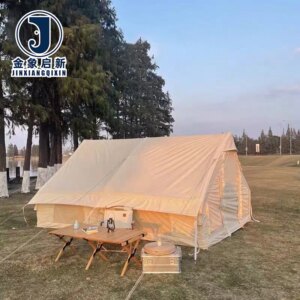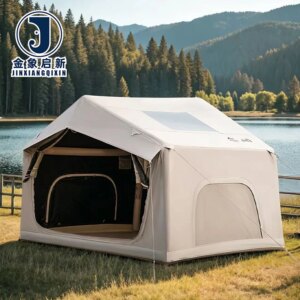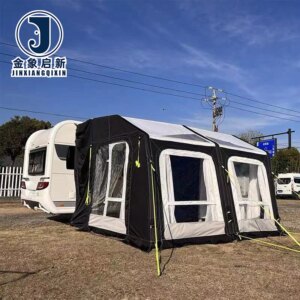

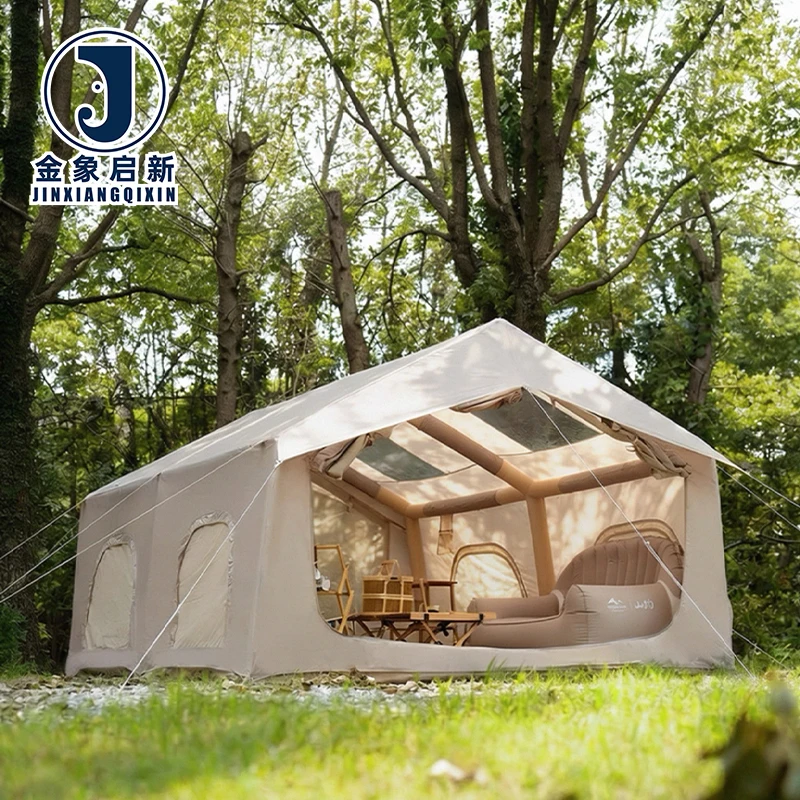
Deep Coating Process Control — our three full production lines manage coating weight and adhesion at every stage, ensuring the PVC tarpaulin used in your inflatable tent structures meets the stated specification roll after roll.
Technical Specifications
| Parameter | Value |
|---|---|
| Product Type | Inflatable Tent |
| Core Material | PVC Tarpaulin |
| Product Form | Inflatable structure, single layer construction |
| Waterproof | Fully coated, waterproof construction |
| UV Resistance | UV-resistant additives incorporated (test basis not stated in source) |
| Tear Resistance | Tear-resistant weave structure |
| Fire Retardant | Available in fire-retardant grades — confirm the grade required for your market |
| Anti-static | Available with anti-static treatment — confirm the standard required for your site |
| Customization | OEM & ODM, sample customization, pattern printing |
| Certifications | ISO 9001, ISO 14001, ISO 45001, CE |
Application Suitability
| Application | Exposure & Requirement |
|---|---|
| Temporary site accommodation for infrastructure projects | Continuous weather exposure, wind load on inflated walls, ground moisture, repeated inflation and deflation cycles |
| Emergency response shelters in disaster relief | Rapid deployment under field conditions, harsh and unpredictable weather, requirement for verifiable fire-retardant compliance |
| Mobile storage for outdoor events | UV exposure over extended event seasons, handling abrasion during transport and setup, protection of stored equipment from rainfall |
| Construction site shelters | Dust and debris impact, high wind load on large-span inflated surfaces, daily crew traffic causing entry-point wear |
| Temporary storage requiring weather protection | Sustained moisture contact, temperature fluctuation affecting internal pressure, long-term UV exposure on roof panels |
What "Flame Retardant" Means Without a Verified Grade
Inflatable tent fabric is often quoted as flame retardant, yet the specific grade and the test standard behind that claim are frequently absent from the shipping documents. A buyer sourcing an inflatable tent fabric manufacturer custom solution for a mining camp or a public event needs to match the material to the local fire code, not to a generic label.
We have seen structures pass visual inspection but fail the site safety audit because the test report referenced a standard that the local authority does not recognise. The consequence is a full material replacement after the tent is already on the ground, costing far more than the original fabric order. Requesting the exact grade and the corresponding test certificate before production starts eliminates that risk entirely. [NEED_CITE: fire classification standards for temporary structures and membrane materials]
Base Fabric and Coating Behaviour Under Inflation Stress
An inflatable tent places the fabric under constant biaxial tension the moment it is pressurised. The base fabric denier and weave density must be matched to that sustained load, not just to a static tensile figure. When the coating adhesion is weak, the PVC layer can delaminate from the base yarns at the seam weld zone, creating a failure point that appears long before the fabric itself reaches its breaking strength.
Our coating process is controlled to maintain consistent adhesion across the full roll width, which is critical when fabricators heat-weld long seam runs on large-span inflatable structures.
Coating Weight Consistency Across Production Runs
Batch-to-batch colour variation is one of the most visible defects once multiple inflatable units are installed side by side at a single site. The root cause is often inconsistent coating weight from one production run to the next, which shifts both the colour density and the surface gloss level.
Dedicated QA and QC checkpoints at every production stage catch these deviations before the roll leaves the line. A 100 percent pre-shipment inspection verifies that each roll in an order matches the approved colour reference, so multi-unit deployments arrive visually uniform. [NEED_CITE: coating weight variation and its effect on colour consistency in PVC tarpaulin]
Reading the Specification Sheet Beyond GSM
GSM alone does not define how the fabric will perform once inflated. A high GSM achieved through heavy filler loading adds weight without improving tensile or tear strength. The base fabric construction — yarn denier, warp and weft density — is what governs how the material resists the internal pressure of an inflatable structure and how it handles wind gusts.
The coating method also matters. Knife-over-roll coating typically delivers higher peel strength than laminating, which directly affects how well heat-welded seams hold under repeated inflation cycles. Surface finish — glossy or matte — influences how easily dirt washes off during outdoor exposure and how reliably ink adheres if pattern printing is specified. Fire-retardant grades available for this fabric must be confirmed against the compliance framework of the destination market, as different authorities accept different test standards.
The Hidden Cost of a Specification Mismatch
Ordering inflatable tent fabric without confirming the fire-retardant grade can result in an entire shipment being rejected at the site compliance check, leaving the project without shelter while replacement material is produced and shipped. Similarly, when the coating adhesion is insufficient for the heat-weld parameters used by the fabricator, seams peel open in the field — often at the exact point where the structure flexes most under wind load.
Colour inconsistency between rolls forces the fabricator to cull panels and reorder, delaying the project timeline and inflating material cost. These failures share one root cause: specifications agreed in conversation but not locked down in writing before production begins. [NEED_CITE: seam peel failure in PVC coated fabrics under cyclic loading]
Why Procurement Teams Source This Fabric Here
Nearly three decades focused on coated fabric means our process control extends from base yarn selection through final coating and winding, not just final visual inspection. Three full production lines and 36 sets of processing equipment support bulk roll output while maintaining the batch consistency that inflatable tent manufacturers depend on for multi-unit orders.
A 10-technician R&D team handles material selection, pattern printing proofs, and sample development, delivering samples within days so that fabricators can validate weld settings and print registration before committing to a full order. Dedicated QA and QC staff inspect every production stage, and a 100 percent pre-shipment inspection ensures that the roll you receive matches the approved specification on GSM, colour, and coating integrity.
Documentation & Verification
- Material specification sheet stating GSM, base fabric denier, coating weight, and colour reference per roll
- Fire-retardant test report matching the grade specified for your destination market
- Anti-static test data supplied where the grade has been confirmed at order stage
- ISO 9001, ISO 14001, ISO 45001, and CE certificates included with shipment documentation
- Pre-shipment inspection record detailing batch-specific GSM, colour, and coating adhesion results
- Certificate of origin and customs documentation for cross-border shipment clearance
Fabrication, Handling & Storage
- Set heat-weld temperature and dwell time to match the PVC coating weight, preventing seam peel on inflated panels.
- Store rolls upright on end-caps to avoid flat-spot deformation that shows as visible ridges after inflation.
- Use compatible PVC-based repair adhesive for field patching, ensuring the coating surface is clean and dry before application.
- Plan panel cutting layout to maximise roll width utilisation and minimise the number of welded seams on load-bearing surfaces.
- Avoid dragging rolls across abrasive ground during site deployment to protect the coating surface from gouges.
- Confirm pattern print registration on the first sample panel before running full roll stock through the printer.
Before You Request a Quote
To match the correct material to your inflatable tent programme, share the end-use environment — whether the structures will serve as emergency shelters, event storage, or site accommodation — along with the wind load and temperature range they must withstand. Specify the fire-retardant or anti-static standard your local authority or site owner requires, and indicate whether you need rolls in stock widths or custom dimensions.
If pattern printing or branded panels are part of the specification, provide the artwork file and colour reference so that a print sample can be developed for approval before bulk production. Confirm whether you require raw roll stock or finished cut-to-size panels to streamline your fabrication workflow.
Frequently Asked Questions
Q: How can I verify the GSM of inflatable tent fabric when the rolls arrive?
A: Each shipment includes a pre-shipment inspection record with roll-specific GSM readings. On arrival, you can cross-check by cutting a measured sample from the roll end and weighing it against the stated value. Any discrepancy should be reported with the roll number so we can trace the production batch and resolve it quickly.
Q: Which fire-retardant grades are available, and how do I match them to my market?
A: Fire-retardant treatment is available in multiple grades. Because acceptance varies by jurisdiction — some authorities require NFPA 701, others DIN 4102 or local equivalents — confirm the exact standard your site demands before ordering. We then supply the corresponding test report with your shipment documentation.
Q: What is the basis for the UV-resistant claim, and how long will the fabric last outdoors?
A: UV-resistant additives are incorporated during the coating process. The specific test basis and the expected outdoor service performance depend on the additive package selected for your order. Request the UV test data for your production batch to evaluate suitability against your local climate conditions.
Q: How does the pattern printing and sample approval process work?
A: Send us your artwork and colour references. Our 10-technician R&D team produces a print sample on the specified PVC tarpaulin base for your approval. Once the colour match and registration are confirmed in writing, bulk printing proceeds using the approved sample as the production reference.
Q: What are the minimum order and lead time for custom-width inflatable tent fabric rolls?
A: Minimum order and lead time depend on the width, colour, and whether pattern printing is required. Stock widths typically ship faster, while custom widths and printed designs require dedicated production runs. Share your required dimensions and annual volume so we can provide an accurate lead time with the quotation.