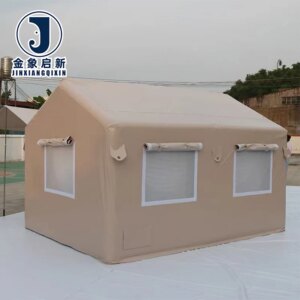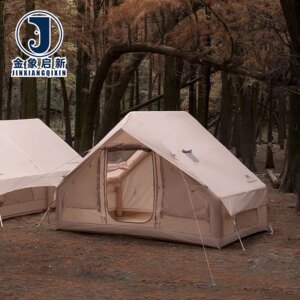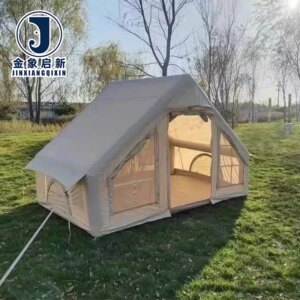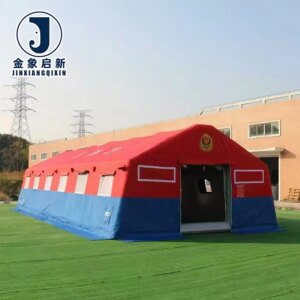
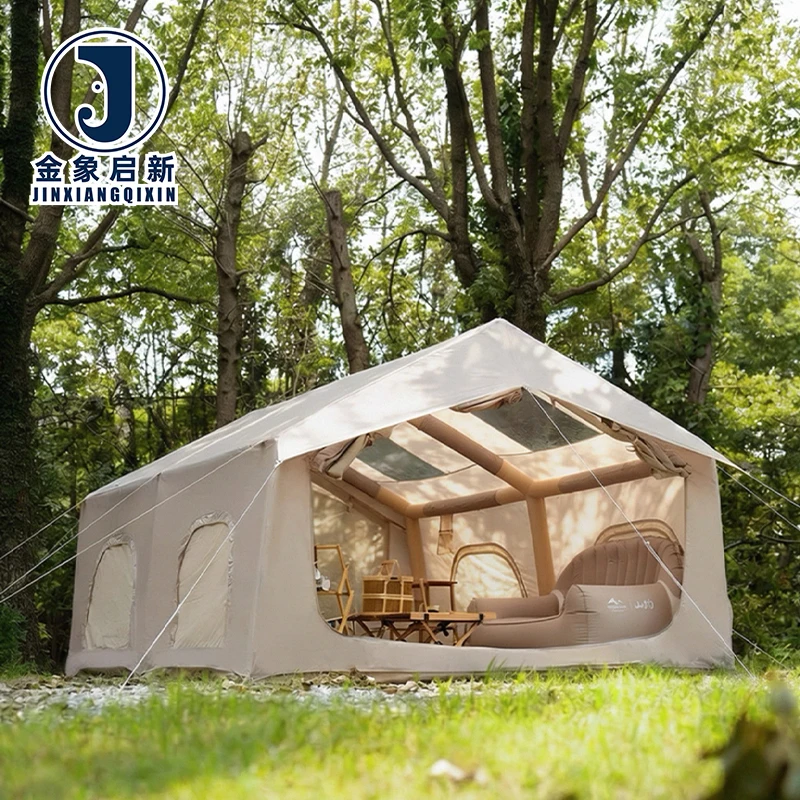
Technical Grade PVC Inflatable Tent for Emergency – Knife Coated
Precision Coating Control — Every roll of PVC inflatable tent fabric undergoes stage-by-stage inspection to ensure coating weight matches the material specification sheet before dispatch.
Technical Specifications
| Parameter | Value |
|---|---|
| Product Type | Inflatable Tent Fabric |
| Core Material | PVC Tarpaulin |
| Product Forms | Single Layer Inflatable Tent |
| Waterproof | Confirmed |
| UV-resistant | Available — confirm test basis required for your market |
| Tear-resistant | Confirmed |
| Fire-retardant | Available in flame retardant grades — confirm the grade required for your market |
| Anti-static | Available — confirm the standard required for your application |
| Certifications | ISO9001, ISO14001, ISO45001, CE |
| Customization | Sample customization, pattern printing, OEM & ODM services |
Application Suitability
| Application | Exposure & Requirement |
|---|---|
| Emergency response command centers at construction sites | Wind loading, rapid inflation cycles, frequent relocation, weather exposure |
| Temporary storage facilities for disaster relief supplies | Continuous inflation pressure, moisture ingress prevention, UV exposure |
| Equipment maintenance shelters in remote locations | Abrasive ground contact, temperature fluctuation, dust and debris ingress |
| Rapid deployment field stations for infrastructure inspection teams | High-frequency pack-unpack cycles, transport abrasion, variable climate exposure |
Why Inflatable Tent Fabric Fails at the Weld Line Before the Fabric Does
The weld seam is only as strong as the coating adhesion it is built on.
Inflatable structures concentrate stress at every welded joint, particularly where the air beam bends under load or wind pressure. When the PVC coating delaminates from the base fabric during a weld, the seam carries only a fraction of the designed load. I have seen coated fabrics pass tensile tests in the body yet fail catastrophically at the weld after repeated inflation cycles [NEED_CITE: tensile and tear test methods for coated fabrics per ISO 1421]. The root cause is almost always inconsistent coating weight or poor adhesion between the PVC layer and the polyester base yarns. An Inflatable Tent Fabric manufacturer custom process that controls coating adhesion at every stage eliminates this failure mode.
Coating Adhesion and Inflatable Structural Integrity
The PVC coating must bond to the base fabric with sufficient peel strength to survive thousands of inflation and deflation cycles. In a single layer inflatable tent, the air beam itself is the load-bearing structure—there is no secondary frame to take over if a seam splits. Coating adhesion is governed by the knife coating process parameters: blade gap, paste viscosity, and oven temperature profile. Our 10-technician R&D team adjusts these variables for each Inflatable Tent Fabric batch to achieve consistent peel strength across the full roll width.
Fire Safety and Static Dissipation in Enclosed Inflatable Shelters
Enclosed inflatable structures concentrate heat and can accumulate static charge, particularly in dry or mining environments. Fire-retardant treatment must be integrated into the PVC compound rather than applied as a surface finish to remain effective after repeated folding and transport. Anti-static properties are equally important where inflatable shelters house sensitive electronic equipment or operate near combustible dust [NEED_CITE: fire classification standards for temporary membrane structures]. We supply certification documentation for both properties on request, allowing you to verify compliance with your local site safety regulations before committing to bulk production.
Reading the Material Specification Sheet Beyond GSM
GSM alone describes total weight, but two fabrics with identical GSM can perform very differently depending on how that weight is distributed between base fabric and coating. A heavier base fabric with higher denier yarns and tighter weave delivers greater tear resistance, while a thicker coating layer improves waterproofing and weldability. For inflatable tent fabric, the balance matters: too much coating relative to base fabric reduces flexibility and increases the risk of cracking at fold points during transport. The base fabric denier, weave density, and coating weight must all be specified and verified independently to predict real-world performance accurately.
The Hidden Cost of Batch-to-Batch Coating Variation
When coating weight varies between rolls in the same order, fabricators discover the problem only after welding. A roll with lighter coating requires different heat and pressure settings to achieve a proper weld, and if the operator does not adjust, the seam fails under inflation pressure. Colour variation between batches also becomes visible once multiple panels are joined into a single inflatable structure, forcing costly rework or rejection [NEED_CITE: coating weight consistency standards for PVC tarpaulin production]. Batch traceability and per-roll weight verification before dispatch prevent both problems.
Why Fabricators Source This Inflatable Tent Fabric Here
Three full production lines and 36 sets of professional processing equipment support bulk volume with consistent coating quality across every roll. Dedicated QA/QC inspection at every production stage catches coating weight deviation and adhesion faults before the fabric reaches the welding table. Sample development within days allows fabricators to validate weld parameters and seam strength before committing to a full production run. The 10-technician R&D team handles material selection, custom width, colour matching, and pattern printing in-house, reducing coordination delays between separate coating and finishing suppliers.
Documentation & Verification
- Material specification sheet stating base fabric denier, coating type, and weight reference for each inflatable tent fabric batch
- UV-resistant and fire-retardant test reports supplied where applicable to the specified grade
- 100% pre-shipment inspection record with batch traceability for every roll dispatched
- ISO and CE certificates, certificate of origin, and customs support documentation included with each shipment
Fabrication, Handling & Storage
- Set weld temperature and dwell time based on the specific PVC coating weight stated on your material specification sheet
- Reinforce air beam junction points with additional PVC patches to distribute inflation stress beyond the primary weld line
- Store rolls vertically on end cores to prevent flat-spot deformation that causes uneven welding tension
- Allow cold-stored rolls to reach ambient temperature before unrolling to avoid coating micro-cracking at fold lines
- Use PVC-compatible solvent cleaners only, as aggressive solvents can soften the coating and reduce weld integrity
Specifying Your Inflatable Tent Fabric Order
Tell us the inflation pressure your structure operates at, the deployment climate, and any fire-retardant or anti-static grade your site safety plan requires. Specify the roll width you need and whether you require pattern printing or custom colour matching across multiple batches. We will recommend the base fabric and coating combination, develop a sample for your weld testing, and quote lead time based on your volume and customisation requirements.
Frequently Asked Questions
Q: How is the PVC coating weight verified on arrival to match the specification sheet?
A: Every roll is weighed and measured during our pre-shipment inspection to confirm actual GSM matches the stated specification. The inspection record accompanies your shipment, showing batch number, roll number, and measured weight so you can cross-check on receipt before cutting.
Q: What fire-retardant grade and test standard can be supplied for inflatable tent fabric?
A: Fire-retardant grades are available and the applicable test standard depends on your market and end-use regulation. Confirm the grade required for your jurisdiction during inquiry, and we will supply the corresponding test report and certification documentation with your shipment.
Q: How do you control colour consistency across rolls in the same inflatable tent order?
A: Colour is matched against a reference standard during compounding, and each production batch is checked before coating begins. Pre-shipment inspection includes visual comparison of rolls within the same order to detect any deviation before dispatch.
Q: What is the lead time and minimum for custom width, colour, or printed inflatable tent fabric?
A: Lead time depends on the customisation scope and order volume. Custom width, colour, and pattern printing are all supported, with sample development completed within days for approval before bulk production begins.
Q: How are welded seams tested to ensure they outlast the base PVC fabric under inflation pressure?
A: Weld samples are taken during production and tested for peel strength to confirm the seam exceeds the base fabric specification. Results are recorded per batch and available in your pre-shipment inspection documentation.