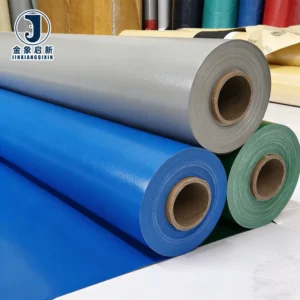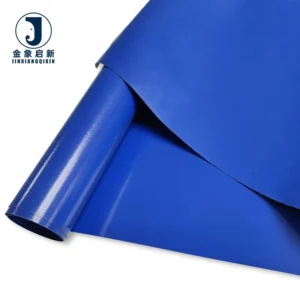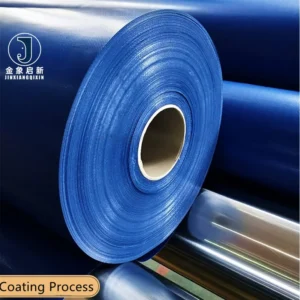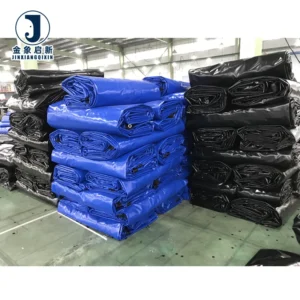
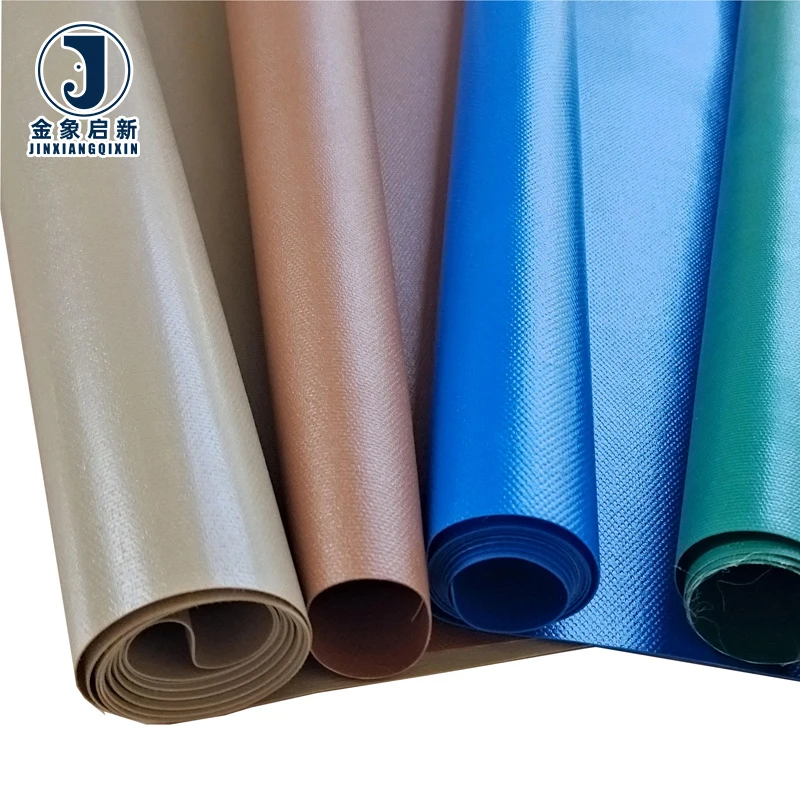
Laminated Coating Control — Every 500gsm roll is weighed and measured in-process to confirm the PVC mass matches the specification before it leaves the line.
Technical Specifications
| Parameter | Value |
|---|---|
| Product Type | PVC Coated Tarpaulin Roll |
| Base Fabric | 1000D Polyester |
| Coating Method | Laminated |
| Weight | 500 GSM |
| Waterproof Rating | Anti-permeable ≥20KPa |
| Flame Retardant | ≤10 seconds (grade not stated — confirm standard required for your market) |
| Low-Temperature Flexibility | Flexible to -30°C without fracture |
| Seam Method | High-frequency heat combined |
| Chemical Resistance | Acid, alkali, brine corrosion resistant |
| Anti-Mildew | Mildew proofing treatment applied |
Application Suitability
| Application | Exposure & Requirement |
|---|---|
| Truck side curtain | Constant flexing at hinges, road debris abrasion, UV and rain exposure |
| Tent and awning fabrication | Tension loading at frame points, prolonged outdoor weathering, colour consistency across panels |
| Roof and carport cover | Standing water load, thermal cycling, wind uplift stress at fixings |
| Boat and shipping cover | Salt spray contact, fold creasing during storage, mildew risk in marine environments |
| Lumber and outdoor tarp | Ground contact moisture, UV exposure, puncture from stacked loads |
What "500 GSM" Actually Means for Coated Fabric Strength
The number on the quotation only matters when the base fabric denier and coating method are specified alongside it.
Buyers frequently compare PVC coated tarpaulin rolls by weight alone, assuming a heavier GSM automatically means a stronger fabric. In practice, a 500gsm laminated fabric built on a 1000D base behaves very differently from one on a 500D base with more coating mass to compensate. The base fabric carries the tensile and tear load; the coating provides waterproofing and surface protection. When the denier is undersized, adding PVC weight does not recover the missing structural performance [NEED_CITE: tensile and tear test methods for coated fabrics per ISO 1421]. Technical buyers who specify on GSM without locking the base fabric denier often discover at fabrication that the material stretches or tears at stress concentrations despite meeting the quoted weight.
How Lamination Differs From Knife Coating in This Weight Class
Laminated PVC tarpaulin is produced by bonding pre-formed PVC films to the base fabric under heat and pressure, creating a uniform coating thickness across the entire surface. At 500gsm, this method delivers consistent waterproof coverage and predictable high-frequency welding behaviour. Knife-coated fabrics at the same weight tend to push PVC into the weave interstices, which can improve adhesion but may leave surface variation. For fabricators running automated weld lines on tent and awning panels, the uniform surface of a laminated roll reduces the need for weld parameter adjustment between batches.
Why 1000D Base Fabric Matters Beyond the Number
The denier of the base yarn determines how load distributes across the woven structure when the PVC coated tarpaulin is tensioned or impacted. A 1000D polyester base provides a thicker yarn cross-section that resists tear propagation — once a puncture or cut occurs, the heavier yarns require more energy for the tear to advance through the weave. This is critical for truck side curtains that flex repeatedly at fold lines and for awning fabric that spans unsupported distances between frame members. The 1000D construction also provides dimensional stability during fabrication, reducing stretch when the material is fed through cutting tables and welding machines [NEED_CITE: coated fabric tear propagation testing per DIN 53363].
Reading the Specification Sheet Like a Technical Buyer
Three parameters on the PVC coated tarpaulin specification sheet interact to define real-world performance. First, the 500gsm total weight splits between base fabric mass and PVC coating mass — understanding this split tells you whether strength comes from the weave or the coating. Second, the ≥20KPa hydrostatic waterproof rating confirms the laminated coating is continuous enough to resist water penetration under pressure, relevant for roof covers and pond-adjacent applications. Third, the -30°C low-temperature flexibility boundary indicates the plasticiser formulation remains functional in cold climates, meaning the material will not become brittle and crack during winter transport or installation. Together, these values let you compare materials on engineering grounds rather than marketing claims.
When Coating Weight and Fabric Denier Do Not Align
A common failure pattern in PVC tarpaulin procurement occurs when the quoted GSM is met but the base fabric is lighter than specified, with excess coating mass making up the difference. The roll passes a weight check but tears easily during fabrication or fails at welded seams after a short service period. Colour variation between rolls in the same shipment compounds this — when panels are installed side by side on a truck or tent structure, inconsistent dye lots become immediately visible to the end user [NEED_CITE: batch colour consistency standards for coated textiles]. Specifying both GSM and denier with pre-shipment verification on each parameter prevents these mismatches from reaching the production floor.
Why Fabricators Source This Material Here
Nearly 30 years of continuous PVC coating production has built deep process control over the relationship between coating weight, base fabric selection, and finished roll consistency. Three full production lines with 36 sets of professional equipment support bulk volume with reliable scheduling, reducing the risk of delayed container bookings. A 10-person R&D team handles custom width, colour matching, and sample development within days rather than weeks. Every roll undergoes dedicated QA and QC inspection at each production stage, with 100% pre-shipment verification of weight and coating integrity. ISO and CE certification underpins the documentation trail that technical buyers require for compliance submissions.
Documentation & Verification
- Material specification sheet confirming 500gsm, 1000D base, and laminated coating method per roll
- Flame retardant test report — confirm the applicable standard before ordering
- Pre-shipment inspection record verifying coating weight and waterproof integrity
- ISO and CE certificates supporting compliance documentation for your market
- Roll packing list with individual roll weights and dimensions for receiving verification
- Certificate of origin and customs documentation for international shipments
Fabrication, Handling & Storage
- Set high-frequency weld parameters for laminated PVC at 500gsm — test seam peel strength before full production runs
- Allow laminated rolls to acclimatise to workshop temperature before unrolling to prevent creasing at the core
- Store rolls upright on end caps to avoid flat spots that distort the 1000D base weave under sustained pressure
- Use PVC-compatible cleaners only — solvent-based products can degrade the laminated coating surface over time
- Plan panel cutting layouts to minimise waste from the standard roll width and reduce seam count on large covers
- Repair minor field damage with PVC-compatible adhesive patches applied to clean, dry coating surfaces
Before You Request a Quote
Share the end-use application, the environmental exposure conditions, and any fire classification or anti-UV standard your market requires so the correct grade can be confirmed. Specify whether you need roll stock at standard widths or custom dimensions, and indicate your estimated annual volume to align production scheduling. If colour matching or surface finish is critical to your fabrication output, request a sample roll for weld testing and colour approval before placing the full order.
Frequently Asked Questions
Q: How is the 500gsm weight verified before shipment?
A: Each roll is sampled and weighed during the pre-shipment inspection to confirm the total mass per square metre matches the specification. The inspection record accompanies the shipment so you can cross-check against your own receiving measurements. Any roll falling outside the agreed tolerance band is flagged before dispatch.
Q: Which flame retardant standard applies to this fabric?
A: The material achieves a flame retardant result of ≤10 seconds, but the specific test standard — such as DIN 4102, NFPA 701, or M2 — must be confirmed based on your market requirements. Request the applicable test report before finalising your specification to ensure compliance with local regulations.
Q: How does laminated coating compare to knife coating for welding?
A: Laminated PVC at 500gsm provides a uniform coating surface that responds consistently to high-frequency heat welding. Fabricators typically find that weld parameters remain stable across the roll, reducing scrap from seam failures. Knife-coated alternatives may require parameter adjustment as the coating penetration varies through the weave.
Q: Can I get custom widths on this 1000D laminated roll?
A: Custom widths are available subject to minimum order quantities and production scheduling. Provide your required width and annual volume during the inquiry stage so the production team can confirm feasibility, lead time, and any tooling requirements specific to your dimensions.