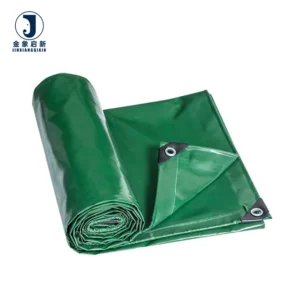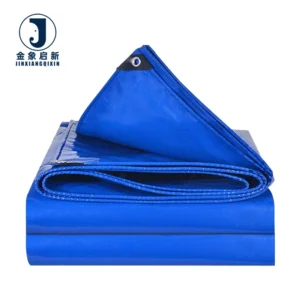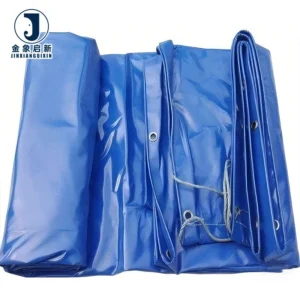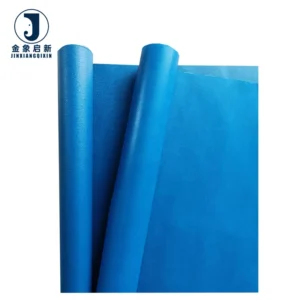
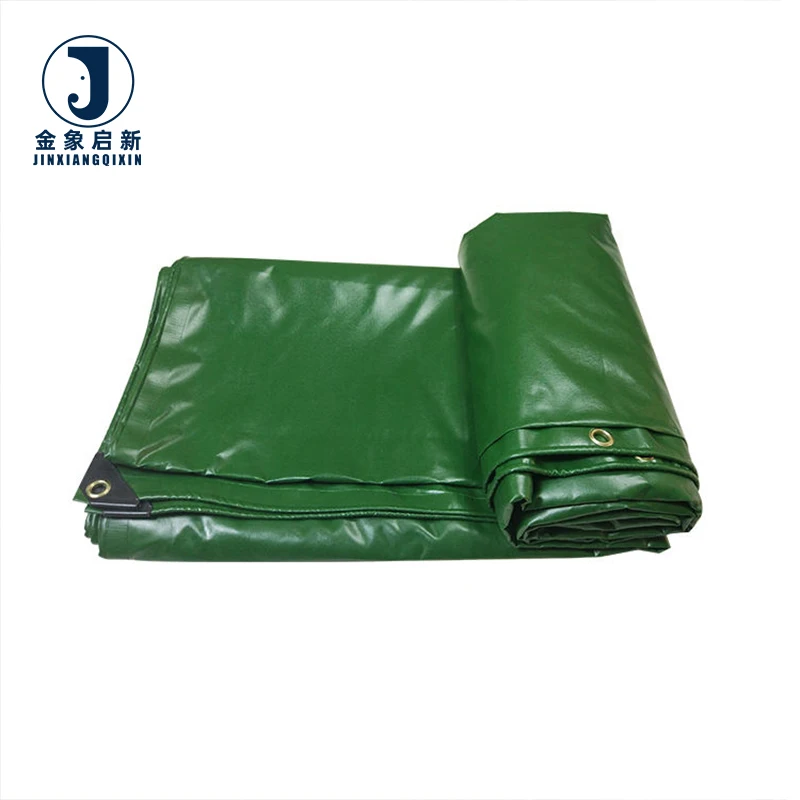
Deep Process Control Over Coating Weight — Every roll of this 500gsm PVC coated tarpaulin fabric ships with a material specification sheet detailing exact GSM, base fabric denier, and coating adhesion values for buyer-side verification before fabrication begins.
Technical Specifications
| Parameter | Value |
|---|---|
| Product Type | PVC Coated Tarpaulin Roll |
| Material Composition | PVC + High-strength polyester mesh fabric |
| Coating Technology | Laminated technology & Hot-melt Coating technology |
| Available Weight Grades | 350gsm / 420gsm / 500gsm / 550gsm / 600gsm / 750gsm |
| Available Thickness | 0.32mm / 0.35mm / 0.4mm / 0.45mm / 0.5mm / 0.65mm |
| Roll Dimensions | 2m width × 75m length / 2.1m width × 50m length |
| Color Options | Blue, Red, Yellow, Light blue, Grey (Customized) |
| Key Features | Waterproof, cold crack resistance, anti-mildew, UV stable, colorfast, outstanding tearing strength for welding |
| Flame Retardant | Available upon request (grade not stated — confirm required standard) |
| Anti-Static Treatment | Standard not stated — verify requirement for your application |
| Repair Method | Hot-air or wedge welding |
| Certifications | ISO 14001, ISO 45001, CE, RoHS |
Application Suitability
| Application | Exposure & Requirement |
|---|---|
| Truck awning and side curtain | Constant flexing at roll-up points, road debris abrasion, prolonged UV exposure, wind load stress at welded seams |
| Tent and temporary shelter cover | Repeated assembly and disassembly, rainwater pooling, seam tension from frame contact, varying temperature cycles |
| Fish tank and pool liner | Permanent water immersion, chemical exposure from water treatment, puncture risk from substrate contact |
| Emergency rain shelter | Rapid deployment, direct weather exposure, tie-down tension at grommet zones, short-to-medium term service |
| Cargo ship cover | Saltwater atmosphere, sustained wind pressure, handling abrasion from crane and rigging contact |
Why Coating Adhesion Matters More Than GSM Alone for PVC Coated Tarpaulin Fabric
The weld seam is where most fabricated covers fail first — and coating adhesion determines whether the seam holds or peels under load.
When a buyer specifies 500gsm and receives material that tests lighter, the problem is not always dishonesty in the coating weight itself. [NEED_CITE: tensile and tear test methods for coated fabrics per ISO 1421] Sometimes the base fabric meets the denier requirement, but the coating bond to the mesh is weak. The PVC layer delaminates at the heat-weld zone, leaving a seam that looks intact but separates under the first real flex. This is why fabricators who work with PVC coated tarpaulin fabric check peel strength at the weld line, not just weight per square metre on the data sheet.
Hot-Melt and Laminated Coating Technology Explained
The base fabric for this PVC coated tarpaulin fabric uses high-tenacity polyester yarns woven into a mesh structure. The coating is applied using both laminated technology and hot-melt coating technology. Laminated coating bonds a pre-formed PVC film to the mesh under heat and pressure, producing a smooth surface with consistent thickness across the roll. Hot-melt coating forces molten PVC into the mesh interstices, creating a mechanical lock between coating and yarn that resists delamination during welding and flexing.
Selecting the Right Coating Method for Your Weld Requirement
Fabricators joining panels by hot-air or high-frequency welding need to know which coating method was used on the roll stock. Hot-melt coated fabric typically delivers stronger peel resistance at the weld line because the PVC penetrates the base fabric rather than sitting on top of it. [NEED_CITE: peel strength testing for welded PVC coated fabrics] Laminated fabric offers a cleaner surface finish suited to applications where visual appearance matters — tent exteriors, printed signage panels, or architectural membrane work. Both methods produce fully waterproof PVC coated tarpaulin fabric, but the failure mode at the seam differs.
Reading the Specification Sheet Beyond Weight and Thickness
A material data sheet for PVC coated tarpaulin fabric should state the base fabric denier and weave density alongside the coating weight. A 500gsm fabric with a 1000-denier base and tight weave will show substantially higher tensile and tear values than a 500gsm fabric built on a lighter base with thicker coating to reach the same total weight. Thickness alone does not predict performance — a 0.5mm sheet with strong coating adhesion outperforms a 0.65mm sheet with poor bond strength when the fabricated product is folded, tensioned, or welded. The relationship between base fabric construction and coating weight determines how the material behaves at stress concentration points like corners, tie-down zones, and seam intersections.
The Hidden Cost of Specifying on Price Per Kilogram Instead of Material Properties
Buyers who select PVC coated tarpaulin fabric based on the lowest cost per kilogram often receive material where the coating is thin and the base fabric is under-specification. [NEED_CITE: common failure modes in coated fabric tarpaulin installations] The roll may measure the correct GSM on a small sample swatch, but when panels are welded and put under tension, the seams peel and the fabric tears along the weave rather than across it. Batch colour variation between rolls in the same shipment becomes visible once panels are installed side by side on a truck curtain or tent structure. These failures surface after fabrication — meaning the labour and hardware costs are already sunk before the material defect is discovered.
Why Fabricators Source This Material From Jinan Jinxiang
Three full production lines with 36 sets of professional equipment support consistent roll-to-roll output across all GSM grades. A dedicated 10-person R&D team handles material selection, sample development, and custom sizing — samples for specific GSM and colour requirements are developed within days, not weeks. QA inspection runs at every production stage with 100% pre-shipment checking, so the PVC coated tarpaulin fabric arriving at your workshop matches the specification confirmed at order stage. The facility holds ISO 14001, ISO 45001, CE, and RoHS certifications, and every shipment includes a full documentation package aligned to your market’s import requirements.
Documentation & Verification
- Material specification sheet stating exact GSM, base fabric denier, and coating weight per roll
- UV stability and flame retardant test reports supplied with applicable grades upon confirmation
- Pre-shipment inspection record covering colour, weight, and dimension checks before dispatch
- Roll packing list with batch reference for traceability across multi-roll orders
- Certificate of origin and customs documentation prepared per destination country requirements
Fabrication, Handling & Storage
- Hot-air welding at temperatures matched to the coating method — confirm parameters for laminated versus hot-melt surfaces before production runs
- Store rolls vertically on pallets to prevent flat-spot deformation that affects unrolling and cutting accuracy on 2m and 2.1m widths
- Allow cold-stored rolls to reach ambient temperature before unrolling to avoid coating micro-cracking on the polyester mesh base
- Use PVC-compatible adhesives and cleaners — solvent-based products may attack the coating surface and compromise waterproof integrity
- Cut panels with allowance for weld seam overlap to maintain full coverage on finished truck awning and shelter dimensions
- Reinforce tie-down and grommet zones with additional fabric patches welded over the base material to distribute point loads
What We Need To Quote Your PVC Coated Tarpaulin Fabric Requirement
To provide an accurate specification and lead time, share your target GSM, required roll width and length, and the end-use application so we can confirm coating method and treatment suitability. If your market requires a specific flame retardant grade or UV stability standard, state the test standard so we match the correct formulation. Let us know whether you need rolls shipped as stock inventory items or finished panels cut to your pattern dimensions, and whether a sample roll is required before bulk production.
Frequently Asked Questions
Q: How is the GSM verified before my PVC coated tarpaulin fabric rolls ship?
A: Each roll undergoes weight verification during the pre-shipment inspection process. The material specification sheet included with your shipment states the measured GSM, base fabric details, and coating weight. You can cross-check these values against your purchase order upon receipt, and our QA records are available for review if any discrepancy arises during your incoming inspection.
Q: Which coating method — laminated or hot-melt — gives better weld seam strength?
A: Hot-melt coating generally delivers stronger peel resistance at welded seams because the PVC penetrates the polyester mesh rather than bonding as a surface layer. Laminated coating provides a smoother finish suited to visible exterior panels. The best choice depends on whether your priority is seam durability under flexing or surface appearance — we can supply test samples of both methods for your evaluation.
Q: Can you provide a flame retardant test report with my order?
A: Flame retardant grades are available upon request. Specify the standard required for your market — such as a national building code or transport safety regulation — and we will confirm the applicable grade and supply the corresponding test report with your shipment. This ensures the documentation matches what your local inspector or compliance body expects to see.
Q: How do you control colour consistency across multiple rolls in one order?
A: Colour matching is managed at the coating stage using controlled pigment dosing and reference samples. All rolls within a single production run are checked side by side before packing to confirm visual consistency. If your project requires panels installed adjacent to each other — such as on a large tent or truck curtain — note this in your order so we allocate rolls from the same batch.