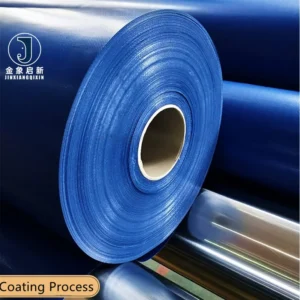
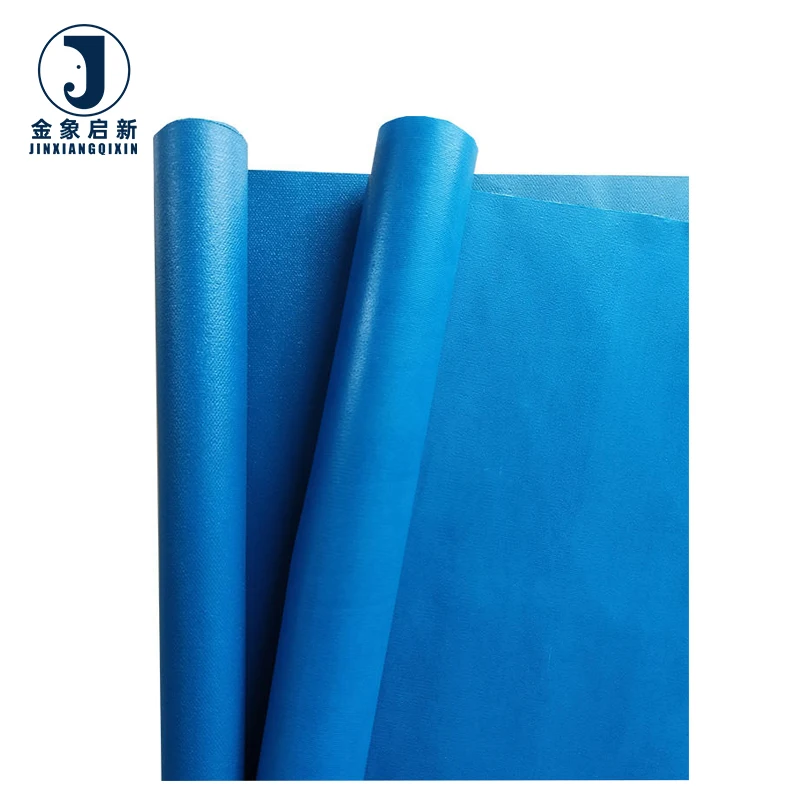
Proven Coating Weight Control — Each roll of PVC coated tarpaulin is verified against the stated GSM before dispatch, supported by in-process QA records across all six weight grades.
Technical Specifications
| Parameter | Value |
|---|---|
| Product Type | PVC Coated Tarpaulin Roll |
| Material | PVC + High-strength polyester mesh fabric |
| Weight (GSM) | 350gsm / 420gsm / 500gsm / 550gsm / 600gsm / 750gsm |
| Total Thickness | 0.32mm / 0.35mm / 0.4mm / 0.45mm / 0.5mm / 0.65mm |
| Roll Size | 2m × 75m / 2.1m × 50m |
| Coating Technology | Laminated technology & Hot-melt coating technology |
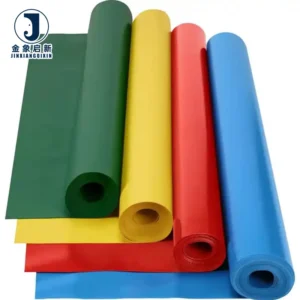
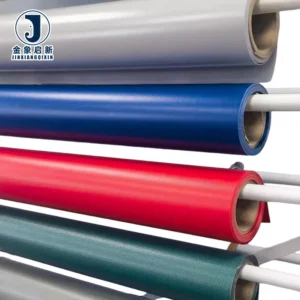
| Color Options | Blue / Red / Yellow / Light blue / Grey (custom colors available) |
| Key Features | Waterproof, cold crack resistant, anti-mildew, sunproof, best color fastness |
| Special Treatments | Flame retardant, anti-static, anti-cold, anti-mildew — confirm the grade required for your market |
| Service Life | 3–7 years under normal circumstances |
| Standards | ISO, CE |
Application Suitability
| Application | Exposure & Requirement |
|---|---|
| Tent and awning fabrication | Repeated assembly and disassembly, UV exposure, weld seam integrity for panel joining |
| Truck awning and cargo ship covers | Constant flexing under wind load, road salt spray, abrasion at tie-down contact points |
| Construction and scaffolding enclosure | Weather exposure over multi-month project timelines, wind-driven rain, dust containment |
| Temporary industrial and equipment covers | Outdoor storage exposure, UV and moisture ingress protection, frequent removal and re-draping |
| Fish tank and pool lining | Permanent water contact, algae and chemical exposure, puncture risk from substrate irregularities |
| Plant and refinery maintenance | Chemical splash exposure, flame retardant compliance for confined work zones |
| Marine and offshore maintenance | Salt atmosphere, UV intensity at sea, mechanical abrasion from deck hardware |
Why Coating Method Matters More Than Stated GSM for PVC Coated Tarpaulin Material GSM Coating Technology
GSM alone does not determine weld strength or peel adhesion — the coating process does.
Technical buyers evaluating PVC coated tarpaulin material GSM coating technology often focus on the weight figure, but two rolls at the same GSM can behave very differently on the fabrication floor. A laminated fabric may show lower peel adhesion at the weld zone, while a hot-melt coated equivalent holds the seam beyond the fabric’s tear threshold. Specifying without naming the coating method invites weld failures that appear only after the cover is installed and loaded. [NEED_CITE: peel adhesion test methods for coated fabrics]
How Laminated and Hot-Melt Coating Affect Fabrication Outcomes
Laminated PVC coated tarpaulin roll fabric bonds a pre-formed PVC film to the polyester base under heat and pressure. This produces a uniform surface finish and consistent thickness, suited to applications where appearance and printability matter. Hot-melt coating applies liquid PVC directly to the woven mesh, penetrating between yarns and creating a mechanical bond. For fabricators running hot-air or wedge welders, the hot-melt construction generally delivers stronger seam adhesion because the coating and base yarn are interlocked rather than layered.
Base Fabric Construction and Its Role in Tear Propagation
The high-tenacity polyester mesh underneath the coating determines how a tear behaves once initiated. A denser weave arrests tear propagation across the warp and weft, while an open mesh relies more heavily on the coating to hold the structure together. When PVC coated tarpaulin material is specified for high-stress applications like truck awnings or scaffolding enclosure, the denier and yarn count of the base fabric matter as much as the coating weight. Confirming the base fabric specification alongside the GSM prevents surprises during fabrication. [NEED_CITE: ISO 1421 tensile and tear test methods for coated textiles]
Reading the GSM-to-Thickness Mapping Across Grades
The six available grades — from 350gsm at 0.32mm through to 750gsm at 0.65mm — represent distinct performance tiers. The lighter grades serve applications where flexibility and pack weight matter, such as temporary covers and pool linings. The mid-range grades suit tent and awning fabrication where the material must handle repeated folding without cracking. The heavier grades provide the substrate mass needed for cargo ship covers and industrial enclosures where wind loading and mechanical contact are constant. Thickness alone does not confirm coating adhesion quality, but it gives fabricators a starting point for dialling in welder temperature and pressure settings.
What Happens When the Coating Specification Does Not Match the Application
A fabricator who orders PVC coated tarpaulin by GSM without specifying the coating technology may receive a laminated roll that delaminates at the weld line under repeated flex cycles. Rolls specified for outdoor enclosure but shipped without confirmed UV treatment can show surface chalking and colour shift within months of installation. When flame retardant treatment is claimed without a batch-referenced test report, the installed cover may fail the fire inspection required by the site contractor. These mismatches are not visible on arrival — they surface only under service conditions. [NEED_CITE: fire classification standards for temporary building enclosures]
Why Fabricators and Specifiers Source This Material Here
Three full production lines and 36 sets of professional equipment allow bulk roll orders to ship on schedule without splitting production across incompatible batches. The dedicated 10-person R&D team handles material selection, colour matching, and sample development so fabricators can validate weld settings before committing to a full order. Every roll undergoes QA at each production stage with full pre-shipment inspection, ensuring the GSM and coating weight on the specification sheet match what arrives at the fabrication shop.
Documentation & Verification
- Material specification sheet stating GSM, base fabric construction, and coating method per roll
- Weight verification record confirming each roll against the stated GSM before dispatch
- Test report for UV and flame retardant grades where applicable, referenced to production batch
- ISO and CE certificates included in the documentation package
- Pre-shipment inspection record covering coating adhesion, colour consistency, and dimensional accuracy
- Certificate of origin and customs documentation for international shipment
Fabrication, Handling & Storage
- Hot-air welding parameters should be calibrated to the specific coating technology — laminated and hot-melt grades respond differently to heat input
- Cold crack resistance varies by treatment grade; confirm the low-temperature threshold before specifying covers for winter deployment
- Rolls should be stored upright on end caps to prevent flat-spot deformation across the 2m or 2.1m width
- When cutting panels from 75m or 50m rolls, plan the nesting layout to minimise offcuts at the selvedge edges
- Anti-mildew treatment is available for humid-climate storage and marine applications — confirm the additive type for compatibility with cleaning agents
What to Include in Your PVC Coated Tarpaulin Material GSM Coating Technology Enquiry
Provide the end-use application and exposure conditions so the correct GSM grade and coating method can be recommended. If your market requires flame retardant or anti-static compliance, state the target standard or certification body so the treatment chemistry can be matched. Specify whether you need rolls in standard widths or custom dimensions, and indicate your annual volume for production scheduling.
Frequently Asked Questions
Q: How do I verify the GSM I ordered is the GSM that ships?
A: Request the pre-shipment weight-per-square-metre test record, which documents the actual measured GSM for each roll in your order. The inspection is completed at the production stage before packaging, and the record is included in your documentation package alongside the material specification sheet.
Q: What is the difference between laminated and hot-melt coated PVC fabric?
A: Laminated fabric bonds a pre-formed PVC film to the polyester mesh under heat and pressure, producing a smooth uniform surface. Hot-melt coating applies liquid PVC directly into the weave, creating a mechanical interlock with the yarns. Hot-melt generally delivers stronger weld seam adhesion, while laminated fabric offers better surface consistency for printing.
Q: Can I get flame retardant and anti-static treatment on the same roll?
A: Both treatments are available as options. The specific grades and compatibility depend on your target market compliance requirements. State the standard you need to meet in your enquiry, and a test report referenced to the production batch will be provided with the documentation package.
Q: What base fabric denier do I need for my tensile strength requirement?
A: The base fabric denier and weave density determine tear resistance before the coating is applied. Share your application’s load conditions and any tensile test standards you must meet. The R&D team will recommend the appropriate base fabric construction and confirm the specification on the material data sheet before production.
Q: How do you ensure colour consistency across multiple rolls in one order?
A: All rolls within a single order are produced from the same dye batch lot, and batch numbering is tracked through the production record. A colour consistency check is completed during the pre-shipment inspection. If panels will be installed side by side, request the batch reference so future reorders can be matched to the same colour lot.