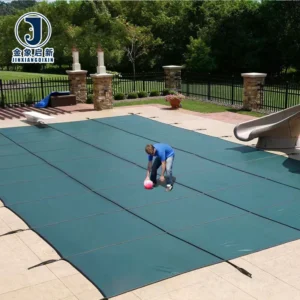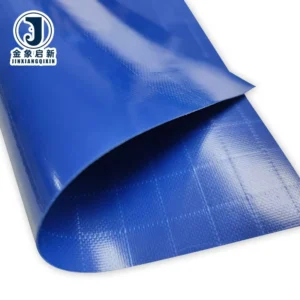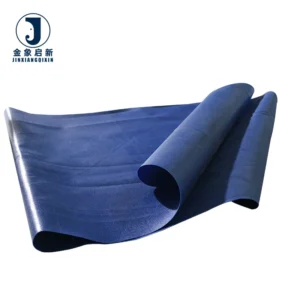
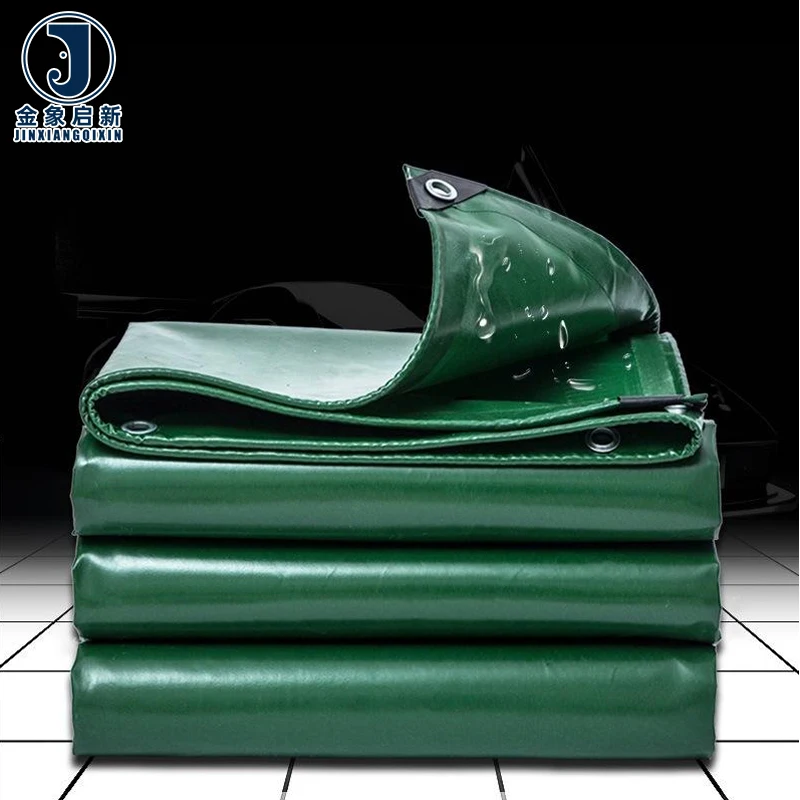
Precision Coating Control — Nearly 30 years of PVC formulation and coating weight management ensure every roll of PVC Coated Tarpaulin leaves the line with verified GSM and consistent adhesion across the full width.
Technical Specifications
| Parameter | Value |
|---|---|
| Product Type | PVC Coated Tarpaulin Roll |
| Coating Material | PVC |
| Waterproof | Yes |
| Breathable | Available on specific constructions (grade not stated) |
| Base Fabric Denier | Available in multiple denier options (confirm requirement) |
| Mesh Count | Available upon specification |
| Coating Method | Knife coated / calendered (confirm application requirement) |
| Weight (GSM) | Available in lightweight to heavy-duty grades (confirm GSM) |
| Width | Custom widths available (confirm roll width) |
| Roll Length | Custom roll lengths available |
| Color | Single and double side colour options |
| Finish | Glossy and matte finish options |
| Flame Retardant Grade | Available in flame retardant grades — confirm the grade required for your market |
| UV Treatment | Available with anti-UV treatment — confirm target exposure and test basis |
| Anti-Static | Available in anti-static grades where required |
| Certification | ISO, CE |
Application Suitability
| Application | Exposure & Requirement |
|---|---|
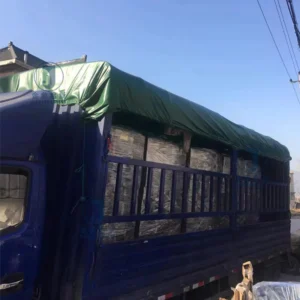
| Truck and trailer side curtains | Constant flexing at load points, road debris abrasion, sustained UV and rain exposure |
| Construction site and equipment covers | Wind loading, puncture risk from scaffolding and tools, prolonged sun exposure |
| Tent and awning fabrication | Tension loading at frame joints, repeated folding and unfolding, colour consistency across panels |
| Pond and reservoir lining | Permanent water contact, soil chemistry interaction, puncture from subgrade irregularities |
| Inflatable and membrane structures | Biaxial stress under air pressure, welded seam integrity, fire compliance for public venues |
Why Coating Weight and Base Fabric Denier Must Be Specified Together
A GSM figure without base fabric context tells you nothing about how the PVC coated tarpaulin will behave at the weld line or under tensile load.
Technical buyers often receive a quotation stating a total GSM, only to find on arrival that the coating is heavier and the base fabric lighter than expected. The base fabric denier and weave density are what carry the tensile and tear load; the coating provides waterproofing and surface protection. When the balance shifts too far toward coating weight, the fabric may feel substantial but tear easily once a cut is made or a flex point develops. [NEED_CITE: tensile and tear test methods for coated fabrics per ISO 1421]
How PVC Coating Formulation Affects Fabric Performance
The PVC compound used in coating determines flexibility at low temperatures, resistance to plasticiser migration, and long-term colour stability. A formulation with insufficient plasticiser will stiffen in cold climates and crack at fold points, while excessive plasticiser causes surface tackiness and attracts dirt. For technical buyers sourcing PVC Coated Tarpaulin by material properties, requesting the coating formulation data sheet is essential to predict field behaviour across seasons.
Knife Coated versus Calendered PVC and What It Means for Welding
Knife coating forces PVC paste into the base fabric weave under blade pressure, creating a mechanical lock between coating and yarn. Calendering presses a pre-formed PVC film onto the fabric with heat and pressure. Knife coated fabric generally shows higher peel strength at welded seams because the coating penetrates deeper into the weave, while calendered fabric can separate at the coating-to-fabric interface under repeated flexing. Fabricators planning hot-air or wedge welding should confirm which method was used before setting machine parameters. [NEED_CITE: coating adhesion and peel strength testing for PVC coated textiles]
Reading GSM, Denier and Coating Weight as a System
Total GSM is the sum of base fabric weight and coating weight on both sides. A heavy total GSM achieved mostly through thick coating will not match the tensile performance of a lighter GSM built on a high-denier, tight-weave base fabric. The denier of the warp and weft yarns directly controls tear propagation resistance — higher denier yarns require more energy to break consecutively. Coating weight governs waterproofing, abrasion resistance and surface durability. Specifying all three parameters independently gives the technical buyer a complete picture of what the roll will deliver on the cutting table.
The Hidden Cost of Specifying on GSM Alone
When a procurement decision rests on total GSM without verifying base fabric denier or coating adhesion, the failure often appears at the most stressed point — the welded seam. A seam on a truck side curtain flexes thousands of times per journey, and if the coating peels from a weakly bonded base fabric, water enters and the weld fails long before the body of the fabric shows wear. Similarly, a tent panel cut from a roll with inconsistent coating weight across its width will show visible shade variation when installed beside the next panel, triggering a rejection that costs far more than the original material savings. [NEED_CITE: coated fabric seam failure analysis under cyclic loading]
Why Material Verification Matters at This Stage of Sourcing
Every roll of PVC coated tarpaulin produced on these lines is backed by a material specification sheet stating the exact GSM, base fabric denier and coating weight agreed at order stage — not a generic product family range. A dedicated QA/QC team inspects coating adhesion, colour consistency and dimensional accuracy at each production stage, with 100 percent pre-shipment inspection before any roll is packed. A 10-person R&D team develops custom samples within days when a specific GSM, colour or flame retardant grade is required for market compliance. Three full production lines and 36 sets of professional equipment maintain batch-to-batch consistency across volume orders, ensuring that the roll you tested in sampling performs identically in full production.
Documentation & Verification
- Material specification sheet stating confirmed GSM, base fabric denier and coating weight per roll
- Test report for UV stability and flame retardant grades where specified at order stage
- Pre-shipment inspection record covering coating adhesion, colour and dimensional checks
- ISO and CE certificates confirming production management standards
- Roll packing list with individual roll weights and dimensions for incoming verification
- Certificate of origin and customs documentation for cross-border shipment
Fabrication, Handling & Storage
- Set hot-air welder temperature based on confirmed coating method — knife coated PVC requires different heat input than calendered
- Store rolls upright on pallets to prevent flat-spot deformation of the coating surface
- Allow rolls to acclimatise to workshop temperature before unrolling to avoid crease memory in cold-stiffened PVC
- Use PVC-compatible solvent cleaners on glossy finish surfaces to maintain coating integrity during maintenance
- Plan cutting layout to minimise offcuts, noting that wider roll widths reduce the number of welded seams needed
- Reinforce eyelet and hem zones with additional PVC patches where the base fabric denier specified is at the lighter end of the range
What to Include in Your Enquiry
Provide the target GSM, base fabric denier preference and the coating method that matches your fabrication process. State the fire classification or anti-static grade required by the end-use market so the correct additive package can be specified. Confirm roll width, roll length and colour references, along with whether glossy or matte finish is needed for the application surface.
Frequently Asked Questions
Q: How is GSM verified — does the stated weight include the coating or just the base fabric?
A: The stated GSM refers to total coated weight including base fabric and PVC coating on both sides. Every order is accompanied by a material specification sheet breaking down base fabric weight and coating weight separately, allowing incoming inspection against the agreed specification before cutting begins.
Q: How does the coating method affect weld behaviour on the production floor?
A: Knife coated PVC penetrates deeper into the base fabric weave, generally producing stronger peel resistance at welded seams. Calendered PVC sits more on the surface and may require adjusted heat settings. Confirm the coating method used on your rolls before finalising welder parameters to avoid seam failure under flexing.
Q: What fire test standards apply and how do I match them to my market?
A: Fire classification requirements vary by country and application — building interiors, public venues and mining ventilation each have different standards. Available flame retardant grades are supported by test reports where specified. Provide the standard required for your target market so the correct formulation can be confirmed before sampling.
Q: How is roll-to-roll colour and GSM consistency maintained across a bulk order?
A: Coating weight and colour are controlled at every production stage with in-process QA checks and 100 percent pre-shipment inspection. Rolls from the same batch are matched against the approved colour reference, and GSM is verified per roll against the material specification sheet before packing.
Q: Can I get a sample roll to test weld behaviour before committing to a full order?
A: Sample rolls are developed within days for custom GSM, colour, finish and treatment requirements. Testing the sample on your own welding equipment is recommended to confirm that coating adhesion, heat response and seam peel strength meet your production standards before bulk dispatch.