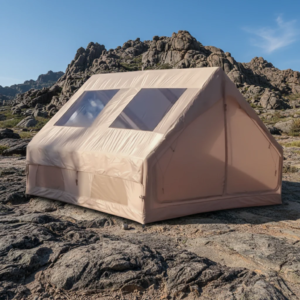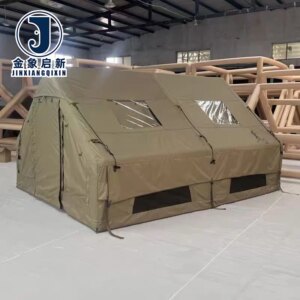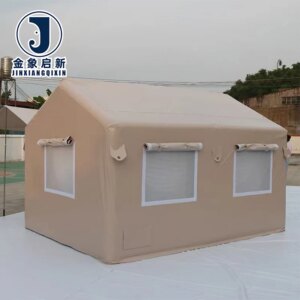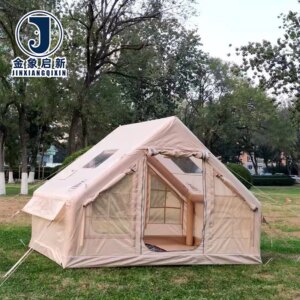
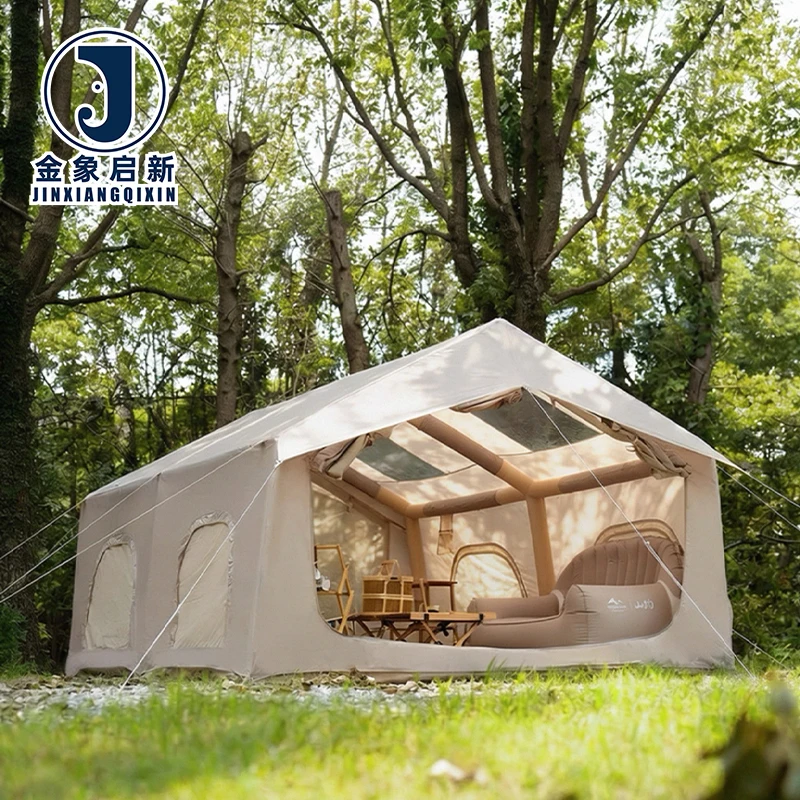
Deep Process Control — coating weight and adhesion verified at every production stage so the inflatable tent fabric you receive matches the material specification sheet you approved, not just the quotation headline.
Technical Specifications
| Parameter | Value |
|---|---|
| Product Type | Inflatable Tent |
| Core Material | PVC Tarpaulin |
| Waterproof | Stated (rating not stated in source) |
| UV-Resistant | Available in UV-treated grades — confirm the treatment level required for your deployment |
| Tear-Resistant | Available in tear-resistant construction — grade confirmed per batch test report |
| Flame Retardant | Available in flame retardant grades — confirm the grade required for your market |
| Anti-Static | Available in anti-static grades — confirm the standard required for your site |
| Season Rating | Four-season design |
| Product Forms | Inflatable structure with quick automatic opening |
| Capacity | 2-3 Person |
| Customization Service | OEM & ODM with sample customization and pattern printing |
| Standards | ISO9001, ISO14001, ISO45001, CE |
Application Suitability
| Application | Exposure & Requirement |
|---|---|
| Emergency disaster relief shelters | Rapid inflation cycles, wind load flexing, continuous weather exposure, verified fire safety compliance |
| Temporary construction site shelters | Mechanical abrasion from tools and debris, UV exposure, flame-retardant and anti-static requirements on site |
| Outdoor event logistics structures | Repeated assembly and disassembly, crowd-adjacent fire codes, colour consistency across multiple units |
| Industrial temporary workspaces | Chemical and dust exposure, ventilation duct integration, anti-static compliance in hazardous zones |
| Emergency supply storage covers | Long-term water contact, UV degradation resistance, structural integrity under inflation load |
What "Fire Retardant" Means When No Grade Is on the Certificate
Fire-retardant inflatable tent fabric must carry a grade tied to a recognised test standard — without it, you have a claim, not a compliance document.
Buyers sourcing PVC Inflatable Tent Material Supplier options often receive a certificate that says "flame retardant" with no reference to a specific standard. The problem is that different markets and different site safety officers require different grades. A mining site in one jurisdiction demands anti-static certification under a specific framework, while a disaster-relief staging area may reference building material classifications. When the fabric arrives without batch-specific test data, the entire deployment can stall at the safety audit stage. [NEED_CITE: fire classification standards for temporary structures and inflatable shelters]
Inflatable structures add a further layer of complexity. The air beams are under constant internal pressure, and any compromise at the weld line or the base fabric can lead to sudden deflation. Fire-retardant treatment must perform not only on flat panels but also at the heat-welded seams where coating adhesion is most stressed. A generic flame-retardant claim on the data sheet does not tell you whether the weld line retains the same rating as the field fabric.
Base Fabric and Coating Interaction Under Inflation Load
The structural integrity of an inflatable tent depends on the relationship between the PVC coating and the base fabric. When the air beams are pressurised, the fabric experiences biaxial stress — tension in both warp and weft directions simultaneously. The base fabric denier and weave pattern determine how that load is distributed, while the coating weight and adhesion strength determine whether the layers stay bonded under flexing. For a PVC Inflatable Tent Material Supplier, controlling this interaction at the coating stage is the single most important variable in preventing delamination during deployment.
Coating Adhesion and Weld Line Performance
Inflatable tent fabrication relies heavily on heat welding to form air-tight beam structures. The weld line is where two coated surfaces are fused together, and its strength depends directly on coating adhesion to the base fabric. If adhesion is weak, the weld can separate under inflation pressure even though the base fabric itself remains intact. Coating weight control during production ensures consistent thermal behaviour at the weld interface, giving fabricators predictable welding parameters across every roll in a batch. [NEED_CITE: heat welding behaviour of PVC coated fabrics and seam strength testing]
How Weight, Weave and Treatment Interact in Inflatable Tent Fabric
GSM alone does not define how inflatable tent fabric performs under load. A heavier coating adds waterproofing and UV protection but also increases the stiffness of the fabric, which affects how the air beams respond to inflation pressure. The base fabric weave — specifically the denier of the yarns and the thread count in each direction — provides the tensile skeleton that resists stretching. When flame-retardant or anti-static treatments are added, they modify the surface chemistry of the coating, which can in turn affect heat welding temperature windows and seam peel strength. Understanding these interactions is what separates a PVC Inflatable Tent Material Supplier that delivers consistent results from one that supplies rolls requiring constant parameter adjustment on the production floor.
The Hidden Cost of Specifying Inflatable Tent Fabric by Price Alone
When inflatable tent fabric is selected primarily on quoted price, the gaps appear during fabrication and deployment. Rolls that arrive lighter than the agreed GSM force fabricators to increase weld temperature to achieve seal integrity, which can degrade the coating and reduce seam strength over time. Flame-retardant treatment applied without batch-specific test documentation means the finished structure may pass visual inspection but fail the safety audit on site. Colour variation between rolls in the same order becomes visible once multiple tents are erected side by side at a disaster relief staging area, forcing selective deployment or complete rejection of the batch. [NEED_CITE: field failure patterns in coated fabric structures related to specification non-compliance]
Why Fabricators Source Inflatable Tent Fabric Here
Three full production lines with 36 sets of professional equipment support bulk roll output with consistent coating weight across the run. A 10-person R&D team handles material selection and sample development, producing samples within days for custom inflatable structure requirements. Dedicated QA/QC operates at every production stage, with 100% inspection before shipment so that what arrives on your loading dock matches the material specification sheet. Near 30 years of focused coated fabric production provides the process depth to control coating adhesion and treatment application at the level inflatable structures demand. ISO9001, ISO14001, ISO45001 and CE certifications provide the compliance framework that procurement teams and site safety officers require.
Documentation & Verification
- Material specification sheet stating base fabric type, coating material, and treatment grades per roll
- Flame-retardant and anti-static test reports tied to batch number where applicable
- Pre-shipment inspection record confirming coating weight verification against stated specification
- ISO9001, ISO14001, ISO45001 and CE certificates available for compliance documentation
- Roll packing list with weight and measurement for container loading verification
- Certificate of origin and customs documentation for cross-border shipment
Fabrication, Handling & Storage
- Heat welding parameters must be calibrated to the specific coating weight of each PVC tarpaulin roll received
- Seam strength testing recommended on first welds from each new roll batch before full production begins
- Store rolls vertically in a dry, shaded area to prevent coating compression marks that affect weld uniformity
- Avoid cold-temperature unfolding below recommended thresholds to prevent coating micro-cracking on PVC tarpaulin
- Surface cleaning should use neutral agents compatible with the specific coating treatment applied
- Pattern printing alignment must account for fabric stretch characteristics under inflation pressure
Before You Send Your Inquiry
Provide the specific application environment and the compliance standards your target market requires for inflatable structures, including any fire-retardant or anti-static grade your site safety officer has specified. Confirm the roll width and annual volume you need, whether you require OEM sample development with pattern printing, and whether you are sourcing raw rolls for your own fabrication or need pre-cut panels. This information allows us to recommend the appropriate coating weight and treatment combination for your inflatable tent production.
Frequently Asked Questions
Q: What flame-retardant grades are available for inflatable tent fabric, and how do I confirm compliance for my market?
A: We offer inflatable tent fabric in flame-retardant grades suitable for various regulatory frameworks. The specific grade required depends on your deployment jurisdiction and site safety requirements. We supply test reports tied to batch numbers so you can verify the rating before fabrication. Confirm the exact standard your market mandates, and we will match the treatment and documentation accordingly.
Q: How do you verify coating weight and GSM accuracy on each roll of inflatable tent material?
A: Every roll undergoes in-process QA/QC checks during production, with 100% pre-shipment inspection confirming coating weight against the material specification sheet. The inspection record documents actual measurements per roll, so you can cross-reference what you receive against what was quoted. This eliminates the gap between stated GSM and delivered material that causes weld parameter issues downstream.
Q: Can you maintain colour consistency across multiple production runs for large inflatable tent projects?
A: Batch colour consistency is controlled through standardised coating formulation and process parameters at each production stage. For projects requiring multiple rolls or repeat orders, we reference the original colour standard and verify against it before dispatch. We recommend requesting a sample from each new batch for approval if the project spans several production cycles.
Q: What is the process for custom width rolls and OEM sample development for inflatable structures?
A: Provide your required roll width, treatment specification, and any pattern printing requirements. Our 10-person R&D team develops samples within days for evaluation. Once approved, production proceeds on our full production lines with the same QA/QC protocols applied to standard widths. Minimum order and lead time are confirmed at the quotation stage based on your specific configuration.
Q: How does the fabric perform at heat-welded seams used in inflatable tent beam construction?
A: Weld seam integrity depends on coating adhesion to the base fabric, which is controlled during our coating process. We recommend that fabricators run test welds from each new roll batch to establish optimal temperature and pressure settings. The material specification sheet provides the coating type and weight data needed to set initial parameters, reducing trial waste during fabrication setup.