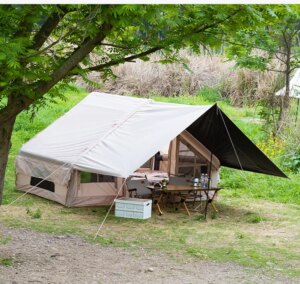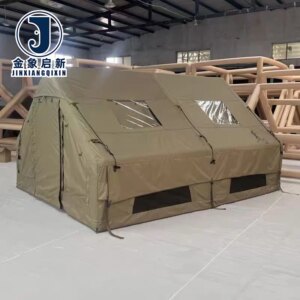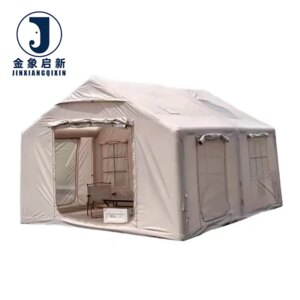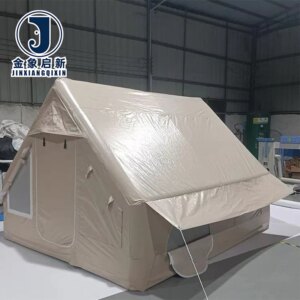


Coated Fabric Expertise — Nearly 30 years of PVC coating process control, validated through dedicated QA/QC pressure testing on every inflatable tent fabric roll before shipment.
Technical Specifications
| Parameter | Value |
|---|---|
| Product Type | Inflatable Fabric |
| Core Material | PVC tarpaulin |
| Construction | Single layer |
| Waterproof | Yes |
| UV Treatment | Available (confirm grade required for your market) |
| Flame Retardant | Available (confirm grade required for your market) |
| Anti-Static | Available (confirm surface resistance standard for your application) |
| Tear Resistance | Available (test standard to be confirmed) |
| Season Rating | Four-season |
| Customization | OEM & ODM, sample customization, pattern printing, material thickness adjustment, custom color matching |
| Certifications | ISO9001, ISO14001, ISO45001, CE |
| Production Facility | 9,180 m² with 3 full production lines and 36 sets of processing equipment |
| R&D Team | 10 technicians |
| Quality Control | Full-process inspection, dedicated QA & QC, pressure testing for airtightness and structural integrity |
Application Suitability
| Application | Exposure & Requirement |
|---|---|
| Inflatable camping tent manufacturing | Repeated inflation/deflation cycles, outdoor UV and moisture exposure, seam airtightness under pressure |
| Commercial outdoor equipment production | Consistent material performance across production runs, compliance with destination-market fire and safety codes |
| Wholesale outdoor gear distribution | Batch-to-batch color and thickness consistency for private-label branding across multiple SKUs |
| Specialized four-season camping lines | Low-temperature flexibility, tear resistance at stress points, surface durability under abrasion and weathering |
Why Stated GSM Alone Does Not Guarantee Inflatable Tent Fabric Performance
A roll that reads the right weight on the label can still fail at the weld line if coating adhesion and base fabric density are uncontrolled.
When sourcing inflatable tent fabric, many buyers anchor decisions on a single GSM figure from the quotation. I have seen coated fabric rolls arrive at the correct weight yet show inconsistent peel strength at heat-welded seams — the exact joints that hold air pressure inside inflatable beams [NEED_CITE: tensile and tear test methods for coated fabrics per ISO 1421]. Without verified coating adhesion values and base fabric denier data, weight becomes a misleading proxy for structural reliability. An Inflatable Tent Fabric manufacturer that only quotes GSM is leaving critical performance variables unaddressed.
What Coating Adhesion Means for Inflatable Beam Integrity
Inflatable tent beams rely on heat-welded seams to hold air pressure under continuous stress. The bond between the PVC coating and the polyester base fabric determines whether the weld holds or delaminates when the beam flexes. An Inflatable Tent Fabric manufacturer with controlled coating processes ensures the PVC layer fuses to the base yarns rather than sitting on the surface, which directly affects how cleanly seams weld and how long they hold under cyclic loading.
Pressure Testing as a Production Gate, Not an Afterthought
Most inflatable fabric defects reveal themselves only after the tent is inflated on site. Full-process inspection with dedicated pressure testing at the factory catches airtightness failures before rolls ship [NEED_CITE: pressure testing protocols for inflatable structure fabrics]. Each production stage — coating, curing, cutting, and welding sample panels — is verified so that the fabric leaving the facility has already demonstrated it can hold air under sustained pressure without leaking at seams or coating micro-cracks.
Reading Between the Specs: Base Fabric Denier and Weave Density
Coating weight and base fabric construction work together to determine how the material behaves under tension. A heavier coating on a loosely woven base may read well on a scale yet tear easily along the weft when an inflatable beam bends. The denier of the polyester yarns and the thread count per centimeter in both warp and weft directions control tear propagation resistance [NEED_CITE: relationship between base fabric construction and tear strength in PVC coated textiles]. For inflatable tent applications where beams carry structural loads, these base fabric parameters matter as much as the coating itself.
The Hidden Cost of Unverified Flame Retardant and UV Claims
Buyers who accept "flame retardant" or "UV resistant" on a quotation without a corresponding test report risk shipment rejection at the destination port or premature fading on retail shelves. Fire safety regulations differ significantly between markets — a grade accepted in one region may not satisfy another [NEED_CITE: international fire classification standards for temporary structures and tent fabrics]. Similarly, UV treatment that is claimed but not verified through accelerated weathering tests can result in color shift and embrittlement far earlier than the product warranty implies. Batch-to-batch color inconsistency compounds the problem when rolls from the same order show visible shade differences after fabrication.
Why Production Consistency Matters More Than Peak Performance
A single sample roll that performs well means little if the next container shows different thickness, altered coating weight, or shifted color. Our R&D team of 10 technicians develops material formulations and locks process parameters before full production begins. Pre-production samples are submitted for buyer approval, and adjustments are made based on feedback — not after the first container ships. Three full production lines with 36 sets of professional equipment allow us to maintain volume output without sacrificing the batch-to-batch uniformity that inflatable tent fabric buyers depend on for repeat manufacturing runs. ISO9001, ISO14001, ISO45001, and CE certifications structure every production decision within a documented quality management framework.
Documentation & Verification
- Material specification sheet detailing PVC coating composition, base fabric construction, and treatment grades per order
- Batch inspection report with verified performance parameters, traceable by production order number
- Pre-shipment pressure test records confirming airtightness integrity of welded sample panels
- Flame retardant and UV test reports provided where applicable to the confirmed grade
- Certificate of origin and customs documentation supporting international trade compliance
Fabrication, Handling & Storage
- Heat-weld temperature and dwell time must be calibrated to the specific PVC coating thickness for clean airtight seams
- Store rolls upright on pallets to prevent creasing that weakens the coating layer at fold lines
- Allow cold-transported rolls to reach ambient temperature before unrolling to avoid coating cracking
- Use PVC-compatible adhesives for patch repairs to maintain bond strength with the coated surface
- Cut pattern layouts to minimize waste across the available roll width for cost-efficient production yield
Request a Material Specification and Sample
To move forward, share your target market’s fire safety and compliance requirements, the material thickness range you are evaluating, and your annual volume estimate. If you need custom color matching or pattern printing for brand integration, provide Pantone or RAL references so our R&D team can prepare lab samples. We will send a pre-production sample for your approval before any bulk order enters the production line.
Frequently Asked Questions
Q: How is material thickness and GSM verified before shipment for inflatable tent fabric orders?
A: Every roll undergoes measurement at multiple points across the width and length using calibrated gauges. Results are recorded in a batch inspection report tied to your order number. Dedicated QA staff compare readings against the agreed specification before release, and any roll outside tolerance is held for rework or replacement.
Q: What flame-retardant grades are available and how do they align with target market fire safety regulations?
A: Flame retardant treatment is available in multiple grades. The appropriate grade depends on your destination market’s fire safety codes for temporary structures and camping equipment. Share your target market and applicable standards during inquiry so we can confirm the correct grade and provide the matching test report with your shipment.
Q: How is batch-to-batch color consistency controlled across large-volume inflatable fabric orders?
A: Color formulation is locked after sample approval and recorded as a production reference standard. Each batch is visually and instrumentally checked against this standard under controlled lighting conditions before release. Rolls showing deviation outside the agreed tolerance are flagged and withheld, ensuring uniform appearance across your entire order.
Q: What OEM customization options are available for inflatable tent fabric?
A: We support material thickness adjustment, custom color matching against Pantone or RAL references, pattern printing for brand identity, and OEM/ODM specifications. Our 10-person R&D team develops samples for your review and adjusts formulations based on your feedback before full production begins.
Q: What certifications and test documentation are provided for international compliance and customs clearance?
A: We provide ISO9001, ISO14001, ISO45001, and CE certificates, a material specification sheet, batch inspection reports, and certificates of origin. Where flame retardant or UV treatment is specified, corresponding test reports are included. Additional documentation for customs clearance is prepared according to your destination country’s import requirements.