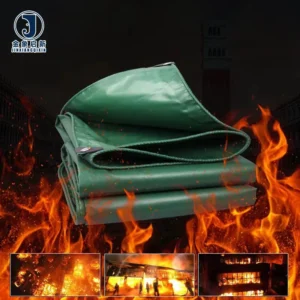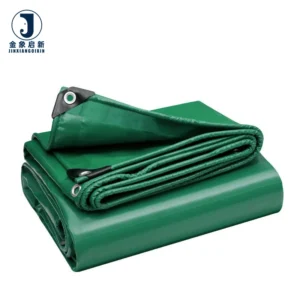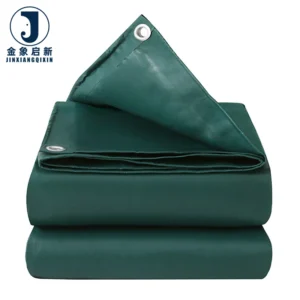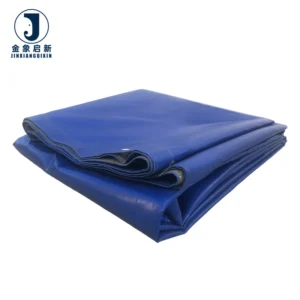
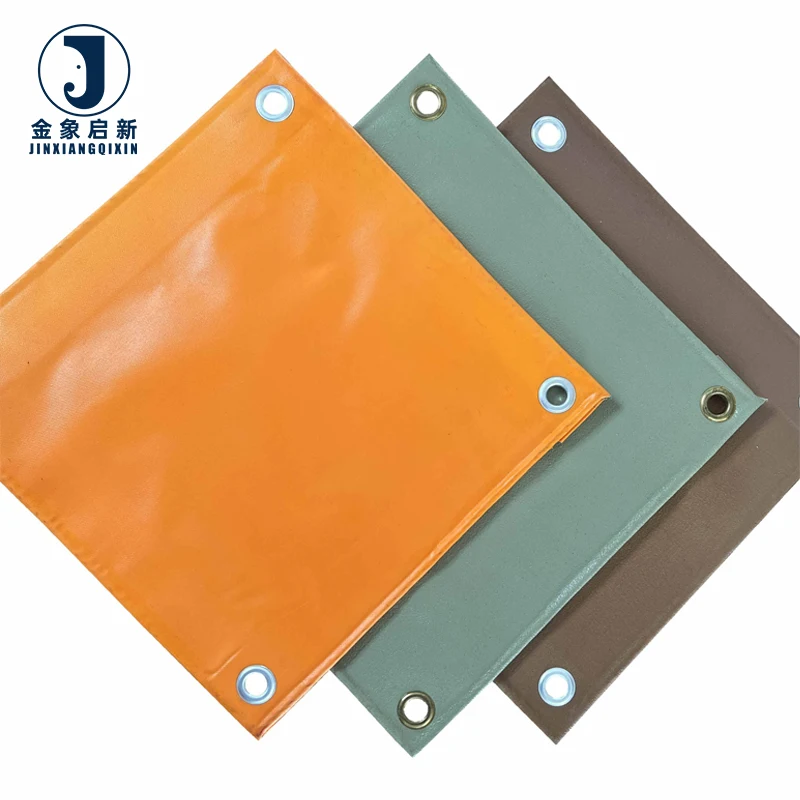
Precision Coating Control — Three dedicated production lines maintain consistent GSM and adhesion across every roll of Anti-Static Printable PVC Coated Tarpaulin, verified through in-process inspection before dispatch.
Technical Specifications
| Parameter | Value |
|---|---|
| Product Type | PVC Coated Tarpaulin |
| Base Fabric | 100% high toughness polyester yarn |
| Coating Material | PVC |
| Coating Technology | Lamination and hot melt coating |
| Base Fabric Denier (Medium-duty) | 500D |
| Weight (Medium-duty) | 400-500 g/m² |
| Thickness (Medium-duty) | 0.35-0.45 mm |
| Tensile Strength (Medium-duty) | Warp 1500-2000 / Weft 1200-1800 N/5cm |
| Base Fabric Denier (Heavy-duty) | 1000D |
| Weight (Heavy-duty) | 700-1000 g/m² |
| Thickness (Heavy-duty) | 0.70-1.0 mm |
| Tensile Strength (Heavy-duty) | Warp 2000-2500 / Weft 1800-2200 N/5cm |
| Base Fabric Denier (Super Heavy-duty) | 500D-2000D |
| Weight (Super Heavy-duty) | 1100-1500 g/m² |
| Thickness (Super Heavy-duty) | 1.2-1.5 mm |
| Tensile Strength (Super Heavy-duty) | Warp 2500-3000 / Weft 2200-2800 N/5cm |
| Cold Crack Resistance | -30°C |
| Key Features | Waterproof, mold proof, printable surface, anti-static treatment, flame retardant available (confirm grade required for your market) |
| Outdoor Durability | Suited to extended outdoor exposure |
Application Suitability
| Application | Exposure & Requirement |
|---|---|
| Exhibition booth and event backdrop | Indoor lighting, dust accumulation, static discharge risk, large-format print fidelity |
| Truck tarpaulin | Road abrasion, wind flex, weather exposure, tie-down point stress |
| Tensioned membrane and inflatable structure | Structural span load, wind uplift, UV exposure, fire compliance |
| Industrial pipe canopy | Permanent outdoor exposure, chemical splash, moisture ingress |
| Outdoor camping and car cover | UV exposure, repeated folding, temperature cycling |
What Material Data Actually Tells You About PVC Coated Tarpaulin Performance
A quoted GSM value becomes meaningful only when paired with base fabric denier, coating method, and verified tensile data.
Technical buyers reviewing PVC coated fabric specifications often encounter a gap between the weight stated on the quotation and the material behaviour observed after delivery. A medium-duty 500D base fabric carrying 400-500 g/m² of PVC coating behaves fundamentally differently from a super-heavy 2000D base at 1100-1500 g/m², yet both may be listed under a single product family on generic supplier catalogues. The coating adhesion method — whether lamination or hot melt — determines how the PVC layer bonds to the polyester yarn at the interface, which in turn governs delamination resistance under flex and peel stress. When you specify Anti-Static Printable PVC Coated Tarpaulin for exhibition or structural use, the tensile data must align with the span or load the fabric will carry. [NEED_CITE: tensile and tear test methods for coated fabrics per ISO 1421]
Coating Technology and Adhesion Integrity
The lamination and hot melt coating processes used for this PVC coated tarpaulin create a mechanical and chemical bond between the PVC layer and the high-toughness polyester base yarn. Hot melt coating drives the PVC compound into the weave interstices under heat and pressure, filling voids that would otherwise allow moisture wicking or delamination initiation. Lamination applies a pre-formed PVC film onto the base fabric under controlled temperature and pressure, producing a uniform surface suited to large-format printing. Both methods affect the welding tear strength at seams — a critical factor when multiple panels are joined for exhibition backdrops or tensioned structures. The chosen coating method influences the minimum welding temperature and dwell time required for a reliable seam.
Anti-Static Treatment and Print Surface Behaviour
The anti-static formulation applied to this PVC coated tarpaulin addresses a specific failure mode in exhibition environments: static charge accumulation on the fabric surface attracts airborne dust particles that degrade print clarity over multi-day events. The printable surface accepts UV, solvent, and latex inks with consistent adhesion across the roll width. [NEED_CITE: anti-static surface resistance standards for coated textiles used in exhibition environments] When panels are installed side by side, colour consistency across rolls becomes visible under directional lighting. The coating surface finish must remain uniform to prevent gloss variation that distorts printed graphics. For fabricators producing large-format backdrops, the cold crack resistance rated to -30°C ensures the material can be transported, unrolled, and tensioned in winter conditions without surface micro-cracking that would compromise print integrity.
Reading the Denier-to-Weight Relationship Across Three Grades
The three-tier weight structure of this PVC coated tarpaulin family maps base fabric denier directly to tensile capacity. The medium-duty grade at 500D and 400-500 g/m² delivers warp tensile values of 1500-2000 N/5cm, suited to lightweight covers and indoor exhibition partitions where structural loading is minimal. Moving to 1000D at 700-1000 g/m², the warp strength increases to 2000-2500 N/5cm — the threshold where truck side curtain and engineering cover applications demand resistance to sustained flex and road debris impact. The super-heavy grade spanning 500D-2000D at 1100-1500 g/m² reaches 2500-3000 N/5cm warp tensile, required for tensioned membrane structures where the fabric carries permanent wind and snow loads. GSM alone does not determine strength; the denier of the base yarn and the density of the weave grid are equally significant. A heavier coating weight on a lower-denier base may produce acceptable GSM on paper but will underperform on tear propagation resistance compared to a balanced denier-to-coating ratio.
The Consequences of Specifying the Wrong Grade
When a fabricator orders PVC coated tarpaulin by GSM alone without confirming the base fabric denier, the delivered material may pass the weight check but fail under application-specific stress. A truck side curtain specified at medium-duty 500D will show early fatigue cracking at the tie-down flex points, even though the quoted 400-500 g/m² was verified on receipt. Exhibition backdrop panels joined by welding may separate at the seam before the fabric body fails, because the welding parameters were set for a different coating thickness than the 0.35-0.45 mm medium-duty grade actually delivered. For tensioned structures, specifying a heavy-duty grade when a super-heavy 1100-1500 g/m² is required means the membrane will deform under sustained wind load, causing permanent set and requiring re-tensioning or replacement. [NEED_CITE: coating adhesion failure modes in tensioned PVC membrane structures]
Procurement Verification Built Into the Supply Process
Jinxiang operates three full production lines with 36 sets of professional equipment supporting bulk capacity and reliable delivery scheduling for PVC coated tarpaulin orders. The 10-person R&D team handles material selection and sample development, allowing custom width and colour requirements to be confirmed before production commitment. Dedicated QA/QC inspection occurs at every production stage, including in-process coating weight checks that catch GSM deviation before the roll is wound. A 100% pre-shipment inspection record is provided with each dispatch, documenting actual weight and visual condition against the specification sheet. ISO and CE certification underpins the quality management system, and the sales process includes sample approval before bulk production begins — reducing the risk of specification mismatch.
Documentation & Verification
- Material specification sheet stating exact GSM, base fabric denier, and coating method for the grade ordered
- Tensile strength test data with stated test standard for the specific grade supplied
- Verification of anti-static or flame retardant treatment against the required market standard
- Roll packing list with individual roll weight and width for receiving inspection
- Pre-shipment inspection record documenting actual GSM and visual condition
- Certificate of origin and customs documentation for international shipment
Fabrication, Handling & Storage
- Hot melt coated grades require matched welding temperature and dwell time — confirm parameters against the 0.35-1.5 mm thickness range before production
- Laminated PVC coating surfaces accept UV and solvent inks; run a print adhesion test on the actual roll before full production
- Store rolls horizontally on padded racks to prevent permanent creasing across the 500D-2000D base fabric weave
- Unroll cold-weather shipments gradually; the -30°C cold crack rating permits handling but avoids sharp folding below freezing
- Use mild detergent for surface cleaning — aggressive solvents may degrade the anti-static treatment on the printable surface
Requesting a Material Match for Your Application
Provide your end-use environment and the mechanical or regulatory requirements the fabric must satisfy. Specify whether you require raw rolls at standard or custom width, or finished panels with welded seams. Confirm the fire classification or anti-static standard your local venue or building code demands, so the correct treatment grade can be proposed. Request a sample roll or swatch if print compatibility or colour consistency across panels is critical to your project.
Frequently Asked Questions
Q: How can I confirm the GSM of Anti-Static Printable PVC Coated Tarpaulin matches the quoted grade on delivery?
A: Each shipment includes a pre-shipment inspection record documenting actual roll weight. You can conduct a cut-and-weigh verification on arrival using the specification sheet as reference. In-process coating weight control during production reduces the likelihood of GSM deviation before the roll leaves the facility.
Q: What is the relationship between 500D, 1000D, and 2000D base denier and the tensile strength of each grade?
A: Higher denier base yarn provides greater tensile and tear resistance when paired with adequate PVC coating weight. The 500D medium-duty grade suits lightweight applications, while 1000D and 2000D grades serve heavy-duty and structural uses. Confirm the grade needed for your specific span or load requirement.
Q: How does lamination versus hot melt coating affect weld seam performance on this PVC coated tarpaulin?
A: Hot melt coating penetrates the weave interstices, producing strong adhesion that supports reliable heat welding. Lamination provides a uniform printable surface. Both methods require matched welding parameters — request a weld sample and conduct a peel test before committing to full panel production.
Q: Can anti-static and flame retardant treatments be combined on the same PVC coated tarpaulin roll?
A: Both treatments are available, but the specific flame retardant grade must be confirmed for your market before production. Request the applicable test standard for both treatments and verify compatibility with your venue or building code requirements prior to ordering.