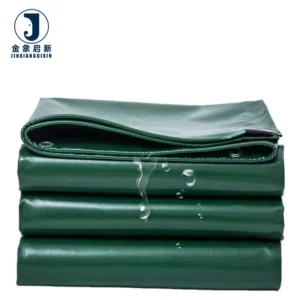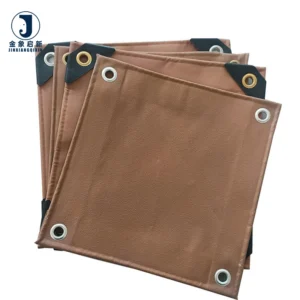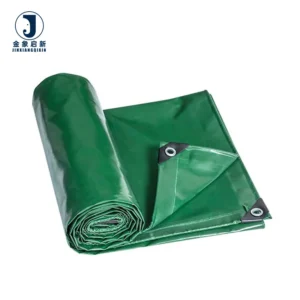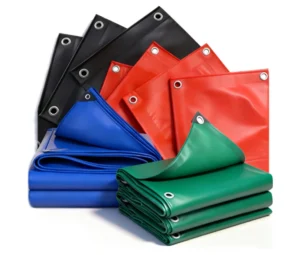
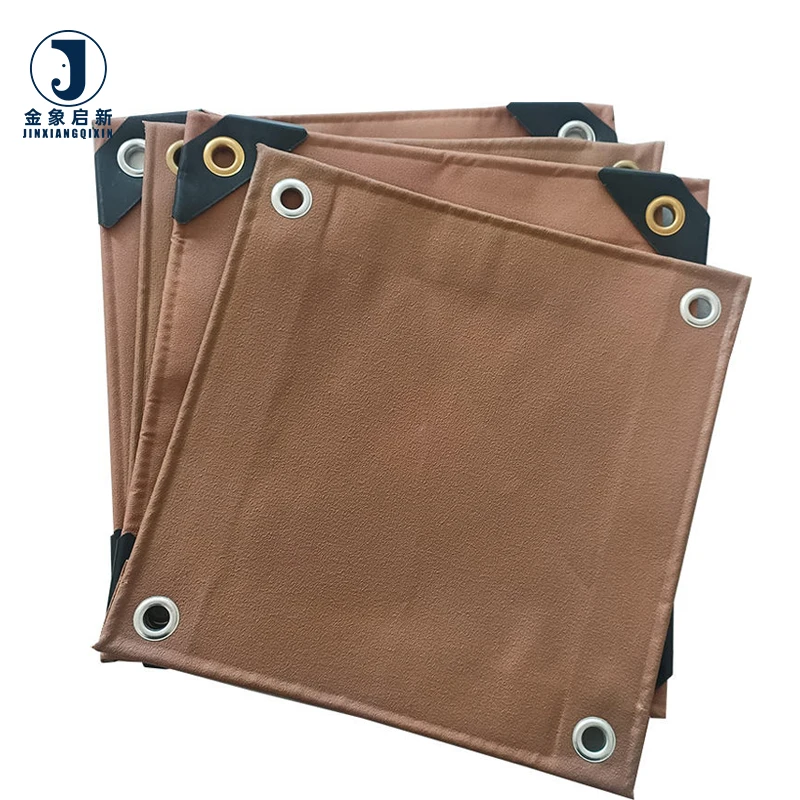
Coating Weight Verification — Every roll of 500gsm 600gsm PVC coated tarpaulin undergoes stage-by-stage QA with 100% pre-shipment weight inspection against the agreed specification.
Technical Specifications
| Parameter | Value |
|---|---|
| Product Type | PVC Coated Tarpaulin |
| Weight Options | 500gsm / 600gsm |
| Coating Material | PVC |
| Flame Retardant | Treatment available (grade not stated) |
| Anti-Static | Treatment available (standard not stated) |
| Anti-Cold | Treatment available |
| Anti-Mildew | Treatment available |
| Waterproof | Yes |
| Weather Resistance | 1-3 years outdoor life |
| Customization | Width, length, color, finishing |
Application Suitability
| Application | Exposure & Requirement |
|---|---|
| Truck cargo cover | Road weather, wind load, flex-point abrasion at corners and tie-down zones |
| Trailer side curtain | Constant folding and unfolding, UV exposure, color consistency across multiple panels |
| Outdoor equipment cover | Rain, dust, mildew in humid storage, repeated handling and folding |
| Pallet wrap for transport | Water ingress prevention, stack compression, warehouse-to-transit exposure |
Why Stated GSM Does Not Guarantee Field Performance
Coating weight and base fabric adhesion matter as much as the GSM number printed on the label.
Buyers regularly receive PVC coated tarpaulin rolls that match the quoted 500gsm or 600gsm on a small swatch but fall short across the full production run. Lighter-than-specified coating means reduced waterproofing at seams and lower tear resistance where the load flexes most. When the PVC layer does not bond fully to the polyester base, delamination appears within the first season of outdoor use [NEED_CITE: tensile and tear test methods for coated fabrics per ISO 1421]. Verifying every roll against the agreed specification before dispatch is the only reliable way to catch these variances.
Coating Adhesion and Base Fabric Integration
The bond between the PVC coating and the polyester base fabric determines whether the material performs as a single integrated structure or separates under stress. In 500gsm and 600gsm grades, the coating thickness must be balanced against the base fabric denier so that peel strength remains consistent across the entire roll. Our knife-coating process applies the PVC layer under controlled tension and temperature, producing uniform adhesion that supports heat welding without bubbling or separation at the weld line.
Treatment Options for Specific Operating Environments
PVC coated tarpaulin in 500gsm and 600gsm grades can be specified with flame retardant, anti-static, anti-cold, or anti-mildew treatments depending on the end-use environment. Each treatment alters the coating formulation, so confirming the required grade with your market’s compliance standard is essential before production begins [NEED_CITE: DIN 4102 fire classification for building materials]. Anti-cold treatment keeps the fabric flexible in low-temperature transit, while anti-mildew additives protect stored loads in humid or tropical conditions.
Reading the Weight and Strength Relationship
GSM alone does not define how a coated fabric handles tensile and tear loads. The base fabric denier and weave density work together with the PVC coating weight to produce the final mechanical performance. A 500gsm fabric with a high-denier base may outperform a 600gsm fabric built on a lighter scrim, particularly in tear propagation resistance. Knife coating, as opposed to laminating or calendering, allows deeper PVC penetration into the weave, improving both peel strength and heat-weld reliability — a critical factor when fabricating truck covers that must withstand repeated flexing at welded seams.
The Cost of Unverified Material Specifications
Receiving a shipment where the GSM is lighter than agreed creates a cascade of downstream failures. Fabricators cut and weld panels expecting a certain stiffness and seam strength, only to find the heat-weld parameters produce weak joints on thinner material. Fleet operators install truck covers that crack at stress points within months instead of years. When flame retardant or anti-static treatment is claimed without supporting test documentation, the installed cover may fail a site safety audit, forcing costly removal and replacement [NEED_CITE: fire safety compliance requirements for transport and temporary structures].
Production Controls Behind Every Shipment
Our three full production lines and 36 sets of professional equipment support bulk output without sacrificing per-roll inspection. A 10-person R&D team develops samples within days when custom widths, colors, or treatment combinations are requested for 500gsm or 600gsm orders. Dedicated QA at each coating stage catches weight variance before the roll reaches the finishing line. One hundred percent pre-shipment inspection confirms GSM, color, and dimensions against the purchase specification. These controls are backed by nearly 30 years of focused coated fabric production experience.
Documentation & Verification
- Material specification sheet stating exact 500gsm or 600gsm weight, base fabric denier, and PVC coating formulation per roll
- Test report for flame retardant or anti-static grades supplied with the applicable order documentation
- Pre-shipment inspection record confirming weight, color, and dimensional compliance before dispatch
- Roll-by-roll packing list with certificate of origin for customs clearance and receiving verification
- ISO and CE certificates covering the production management system for coated fabric products
Fabrication, Handling & Storage
- Heat-weld temperature and dwell time must be calibrated to the specific 500gsm or 600gsm coating thickness to avoid burn-through or weak seams
- Store rolls upright on pallets in a dry, shaded area to prevent flat-spot deformation and surface marking on the PVC layer
- Allow cold-stored rolls to reach ambient temperature before unrolling to prevent cracking in anti-cold treated grades
- Use compatible PVC-based cleaners only; solvent-based products can degrade the coating surface and affect anti-mildew treatment
- Plan panel cutting layouts to minimize off-cuts and maximize roll utilization across the specified width and length
Preparing Your Material Specification
Provide the exposure conditions your covers will face — road weather, temperature range, and flex frequency — so the correct treatment combination can be recommended for the 500gsm or 600gsm grade. Specify whether you require rolls in standard width or custom dimensions, and confirm any flame retardant or anti-static standard your market mandates. Let us know if you need finished panels with welded seams or raw roll stock for your own fabrication line.
Frequently Asked Questions
Q: How is the stated 500gsm or 600gsm verified before shipment and on arrival?
A: Each roll is weighed and measured during pre-shipment inspection against the agreed specification. The inspection record documents actual GSM per roll. On arrival, you can cross-check with the packing list and request a sample swatch test if your receiving procedure requires independent verification.
Q: Which flame retardant test standard applies to the treated grade?
A: Flame retardant treatment is available but the specific grade depends on your market requirement. Confirm whether your application calls for DIN 4102, NFPA 701, or another regional standard before production so the correct formulation is applied and documented with a matching test report.
Q: How are batch color differences controlled across multiple rolls?
A: Color consistency is managed through controlled PVC pigment mixing and stage-by-stage QA during coating. For orders spanning multiple rolls, all production runs from the same batch are grouped together, and the pre-shipment inspection includes a visual color comparison under standardized lighting.
Q: What is the minimum order for a custom width or color in these GSM grades?
A: Minimum order quantities depend on the specific width, color, and treatment combination requested. Custom formulations require a sample approval step before bulk production begins. Provide your required dimensions and annual volume so we can confirm the minimum and lead time for your specification.
Q: How do welded seams compare to stitched seams for PVC coated tarpaulin covers?
A: Heat-welded seams fuse the PVC coating layers together, creating a waterproof joint that matches or exceeds the fabric strength. Stitched seams introduce needle holes that compromise waterproofing and create stress concentration points. For 500gsm and 600gsm truck cargo covers, welded seams are the standard approach at flex zones.