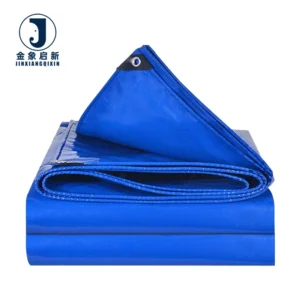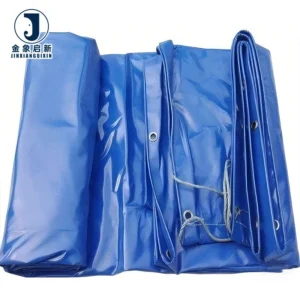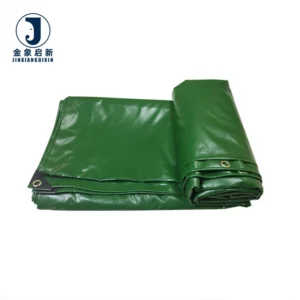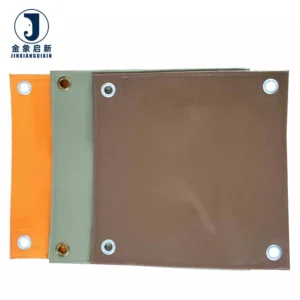
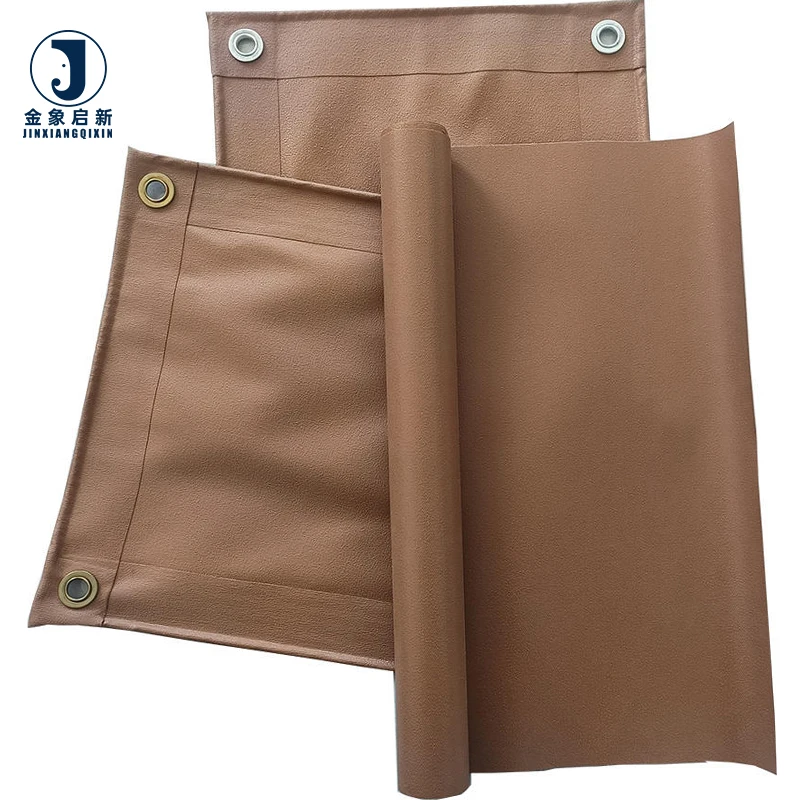
Proven coating adhesion control — nearly 30 years of PVC formulation and lamination experience ensures coating-to-fabric bond integrity is tested at every production stage, not left to chance after delivery.
Technical Specifications
| Parameter | Value |
|---|---|
| Product Type | PVC Coated Tarpaulin |
| Base Fabric Denier | 1000D |
| Weight Options | 550GSM / 900GSM |
| Coating Material | PVC |
| Surface Finish | Self Clean |
| Flame Retardant | Available (grade not stated — confirm the standard required for your market) |
| Anti-Static | Available (standard not stated — confirm the standard required for your application) |
| Anti-Mildew | Available |
| Anti-Cold | Available |
| UV Treatment | Available (test basis not stated — request test report if UV data is needed) |
| Waterproof | Yes |
| Custom Sizing | Available |
Application Suitability
| Application | Exposure & Requirement |
|---|---|
| Truck side curtain and cover | Continuous flexing at load points, road debris abrasion, UV and rain exposure, wind lift under highway speeds |
| Tent and roof cover membrane | Long-term weathering, thermal expansion cycles, pooled water drainage, structural tension at seam lines |
| Flood barrier and containment | Permanent water contact, hydrostatic pressure, ground chemistry interaction, puncture from debris |
| Car and equipment cover | UV degradation, dust and moisture ingress, surface scratching from tie-down friction |
Why a Material Data Sheet Matters More Than the Quoted GSM
A quoted GSM without an accompanying material specification sheet leaves tensile strength, coating adhesion and treatment claims unverifiable on arrival.
Technical buyers routinely receive PVC Coated Tarpaulin 550GSM / 900GSM rolls that weigh lighter than the data sheet promised. When coating weight is reduced without notice, the drop in tear resistance and seam weld strength does not show up until the fabric is under load. I have seen heavy-grade coated rolls fail at the weld line because the adhesive bond depended on a coating thickness that was no longer present. Every order we ship includes a material specification sheet stating exact base fabric denier, coating weight and treatment status — so you can cut a test swatch and verify on receipt. [NEED_CITE: ISO 1421 test methods for tensile properties of rubber or plastic coated fabrics]
How 1000D Base Fabric Defines the Performance Ceiling
The denier of the base yarn determines how much force the woven scrim can absorb before individual fibres begin to break. A 1000D polyester base provides the structural backbone that allows PVC Coated Tarpaulin 550GSM / 900GSM to carry tension across wide unsupported spans — the kind you find on truck side curtains and large roof membranes. Lower denier fabrics may achieve similar GSM through heavier coating, but once the coating cracks, the weaker base fabric tears rapidly. The 1000D construction gives the coated composite a higher baseline tear resistance independent of the PVC layer.
Coating Method and Its Effect on Weld Integrity
The PVC coating is applied to the 1000D base fabric through a controlled lamination process that determines how deeply the polymer penetrates the weave structure. When coating penetration is consistent across the roll, high-frequency or hot-air welding produces seams where the bond strength approaches the base fabric tear strength. Inconsistent penetration creates localised weak points at the weld — exactly where the load flexes most during transport or wind events. Our production lines maintain continuous coating weight monitoring so that the 550GSM and 900GSM grades remain uniform from the core to the outer wrap of every roll. [NEED_CITE: hot air welding parameters for PVC coated polyester fabrics]
Reading the Specification Sheet: What Each Parameter Controls in Practice
The 1000D base fabric denier governs the tensile and tear performance of the composite material, but weight in GSM determines flexibility, drape behaviour and how the fabric handles during fabrication. Choosing between 550GSM and 900GSM involves balancing these factors: the lighter grade offers easier handling and folding for applications like temporary covers and car shrouds, while the heavier grade provides greater mass for wind resistance in permanent roof membranes and flood barriers. The self-clean surface finish reduces particulate adhesion, which matters for outdoor structures where accumulated dirt traps moisture and accelerates mildew growth. Optional treatments — flame retardant, anti-static, anti-mildew and anti-cold — should be specified at the inquiry stage because they affect coating formulation, lead time and the documentation package shipped with the order. Understanding which parameters drive which field behaviours prevents over-specifying on cost or under-specifying on durability.
The Cost of Specifying GSM Without Checking the Full Composition
Ordering by GSM alone invites two failure modes that appear months after installation. First, a lighter base fabric compensated by a thicker coating layer may meet the weight target but delivers lower tensile strength — the coating cracks under tension and the weak scrim tears along the warp or weft direction. Second, batch-to-batch colour variation becomes visible once multiple rolls are installed side by side on a truck fleet or tent structure, forcing costly replacements. These problems originate at the specification stage, not on the production floor. Requesting a full material specification sheet and reviewing roll-to-roll consistency data before committing to a purchase order eliminates both risks. [NEED_CITE: colour consistency measurement methods for coated technical textiles]
What the Production Process Delivers for This Material
Our facility operates three full production lines and 36 sets of professional equipment, giving us the capacity to run 550GSM and 900GSM grades simultaneously without cross-contamination. A 10-person R&D team handles material selection, custom sizing and sample development — so if your truck cover application requires a specific width or treatment combination, samples are produced within days rather than weeks. Dedicated QA/QC inspection runs at every production stage with 100% pre-shipment verification, meaning each roll is weighed and visually inspected before packing. ISO and CE certified processes govern the coating formulation and lamination parameters, providing traceability from raw yarn to finished roll.
Documentation & Verification
- Material specification sheet stating exact 1000D denier, 550GSM or 900GSM weight and coating composition per roll
- Test reports for UV and flame retardant grades supplied when treatment is specified and confirmed
- Pre-shipment inspection record documenting weight verification and visual quality per roll
- ISO and CE certificates covering the production facility and coating process controls
- Roll packing list with individual roll weights and dimensions for receiving verification
- Certificate of origin and customs documentation for international shipment
Fabrication, Handling & Storage
- High-frequency welding recommended at temperatures calibrated to 550GSM or 900GSM coating thickness for consistent seam strength
- Store rolls upright on pallets to prevent flat-spot deformation of the 1000D base fabric under self-weight
- Unroll at ambient temperature to avoid crease memory in the self-clean surface finish layer
- Clean with neutral pH detergent to preserve the self-clean coating treatment without chemical degradation
- Allow welded seams to cure fully before applying tension loads during truck cover or tent installation
- Cut patterns should account for the 1000D fabric weave direction to maximise tear resistance at stress points
Preparing Your Inquiry
To move from specification to sample, provide the target application and exposure conditions so we can recommend the appropriate GSM grade and treatment combination. Confirm any fire safety or anti-static standards required by your local regulatory authority, as this determines the coating formulation. Specify whether you need roll stock for your own fabrication line or pre-cut panels, along with required widths and estimated annual volume.
Frequently Asked Questions
Q: How does GSM relate to tensile and tear strength in this fabric?
A: GSM reflects total weight of base fabric plus coating, but tensile strength depends primarily on the 1000D base yarn. Two fabrics at identical GSM can have very different strength profiles if one uses a lighter base with heavier coating. Request our material specification sheet to see base fabric weight and coating weight listed separately for both 550GSM and 900GSM grades.
Q: Can I get a test report for flame retardant or anti-static treatment?
A: Test reports are supplied when a specific flame retardant or anti-static grade is confirmed at the inquiry stage. Provide the standard your project requires — such as a local building code classification or industrial safety regulation — and we will confirm which grade is available and include the corresponding documentation with shipment.
Q: How is GSM verified to match the quotation?
A: Every roll undergoes weight verification during pre-shipment inspection. The material specification sheet shipped with your order states the exact GSM, base fabric denier and coating composition. You can cut a measured sample from the received roll and weigh it on a calibrated scale to confirm the stated value independently.
Q: What welding method works best with this PVC coated tarpaulin?
A: High-frequency welding and hot-air welding both produce strong seams on 1000D PVC coated fabric. Welding parameters — temperature, speed and pressure — must be adjusted to the specific GSM grade. We provide recommended welding guidelines with sample material so you can establish your machine settings before full production.
Q: Can custom width and length be produced in a single order?
A: Custom widths and lengths are available for both 550GSM and 900GSM grades. Our 10-person R&D team develops samples within days for custom requirements. Provide the exact dimensions and quantity at the inquiry stage so we can confirm production feasibility and lead time for your specification.