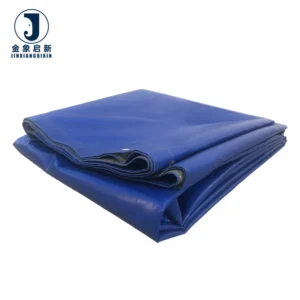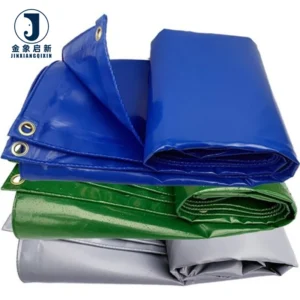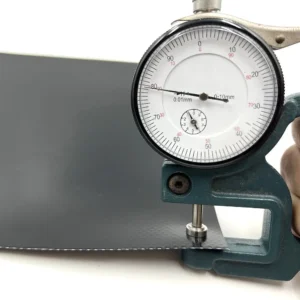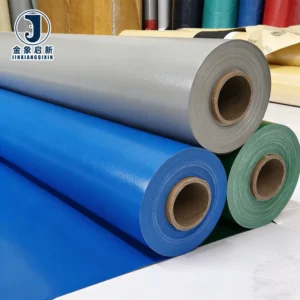
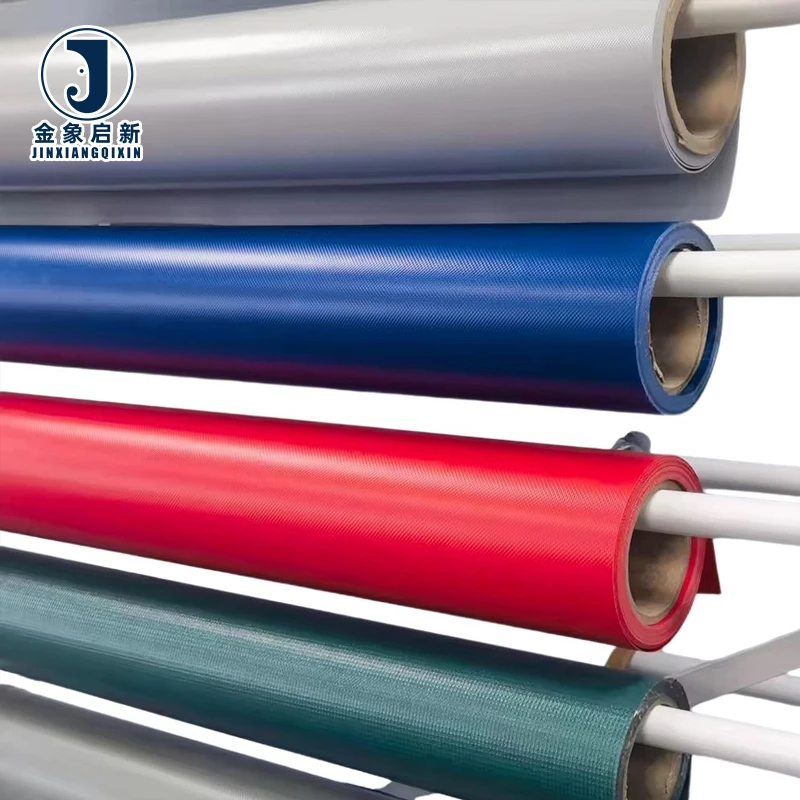
Process Control Depth — nearly 30 years focused on coated fabric, delivering verified coating weight and adhesion consistency across every roll of 1000D PVC Tarpaulin Roll destined for tent and tensile structure applications.
Technical Specifications
| Parameter | Value |
|---|---|
| Product Type | PVC Tarpaulin Roll |
| Base Fabric Denier | 1000D |
| Blackout Construction | Yes — blocks light transmission |
| UV Treatment | Anti-UV (test basis not stated in source) |
| Flame Retardant | Fire retardant (grade not stated in source) |
| Antibacterial & Mildew Proof | Yes |
| Oil & Stain Resistance | Yes |
| Acid & Alkali Resistance | Yes |
| Temperature Resistance | High temperature and cold resistant |
| Anti-Oxidation | Yes |
| Weather Resistance | Yes |
| Flexibility | Highly flexible, crack resistant |
| Self-Cleaning Surface | Yes |
| Welding Compatibility | HF, Hot Air, Sewing |
| Tensile Strength | Excellent (test standard not stated in source) |
| Tear Strength | Excellent (test standard not stated in source) |
| Peeling Resistance | Excellent (test standard not stated in source) |
Application Suitability
| Application | Exposure & Requirement |
|---|---|
| Event exhibition shade tents | Intense UV exposure, frequent assembly and teardown, light-blocking for interior comfort |
| Tensile and architectural membrane structures | Sustained structural tension loads, wind flutter, long-term weathering |
| Stadium architectural structures | High-profile public use requiring fire-retardant compliance, UV stability across large spans |
| Portable storage structures | Abrasion from stored goods, moisture ingress, temperature fluctuation |
| Airport hangars | Wide-span tension, fuel and chemical exposure, strict fire safety codes |
| Shade systems and shadings | Continuous solar radiation, self-cleaning requirement for aesthetic retention |
Why "Flame Retardant" Without a Documented Grade Is a Procurement Risk
A 1000D PVC Tarpaulin Roll specified for public-use tent structures must carry a fire-retardant grade that matches the building code of the installation jurisdiction — a generic claim without a test certificate leaves the fabricator exposed at the inspection stage.
Fabricators who have sourced coated fabric for tensile structures know the moment of reckoning: the site inspector asks for the fire classification report, and the roll label says "fire retardant" with no standard referenced. The structure may be fully fabricated, seams welded, hardware installed — yet approval stalls [NEED_CITE: fire classification standards for tensile membrane structures vary by jurisdiction]. This is not a material failure; it is a documentation gap that halts a project at its most expensive phase. Available in flame retardant grades — confirm the grade required for your market before placing the order.
Base Fabric Denier and Its Role in Structural Tension
The 1000D base fabric provides a high-density yarn foundation that determines the tensile and tear baseline of this PVC Tarpaulin Roll before any coating is applied. For tensile membrane structures where the fabric is pulled under sustained load across steel cable networks, the denier count and weave construction set the upper limit of what the finished material can withstand. A 1000D yarn structure resists tear propagation when a puncture or cut initiates under tension, a behaviour critical for large-span architectural applications where fabric replacement is measured in significant cost and downtime.
Coating Chemistry and Multi-Functional Surface Treatment
The coated surface of this blackout tent fabric integrates antibacterial, mildew-proof, oil-resistant, and acid-alkali-resistant treatments into a single pass. For event exhibition tents that are repeatedly deployed in humid environments, mildew resistance prevents odour buildup and fabric degradation between uses. The self-cleaning surface treatment allows rain to carry away particulate matter, reducing maintenance frequency for permanently installed shade systems. Blackout construction blocks light transmission entirely, which is essential for exhibition interiors where controlled lighting environments are required [NEED_CITE: blackout PVC coated fabric light transmission testing methods].
Reading the Specification Sheet Beyond the Headline Numbers
When evaluating a 1000D PVC Tarpaulin Roll for tent and shelter applications, the relationship between base fabric denier, coating weight, and finished GSM is the core engineering equation. The 1000D denier defines yarn thickness and contributes to tensile strength, but the coating method and weight determine peel resistance and weld behaviour. A knife-coated fabric typically delivers stronger adhesion between coating and base fabric than a laminated construction, which directly affects how well welded seams hold under structural flexing. The blackout layer adds opacity but also contributes to overall coating thickness, influencing both flexibility at low temperatures and the heat input required during HF or hot air welding. Specifiers should request a full material specification sheet stating GSM, base fabric denier, coating method, and coating weight as separate values rather than accepting a single headline number.
The Hidden Cost of Specifying on GSM Alone
Procurement teams that approve a PVC Tarpaulin Roll based on a quoted GSM figure without verifying coating weight and base fabric denier independently expose themselves to material that arrives lighter than agreed. A roll that measures below the specified GSM on arrival may have achieved its weight through a heavier base fabric with a thinner coating — compromising the UV and flame-retardant treatment layers that sit within the coating. For tent fabricators installing panels side by side, coating weight inconsistency between rolls produces visible colour variation once the structure is erected [NEED_CITE: batch-to-batch colour consistency standards for coated architectural fabrics]. Welded seams on underweight coating layers fail before the base fabric does, precisely at the flex points where structural membranes experience the highest cyclic loading.
Why Technical Buyers Source This Fabric Here
Three full production lines and 36 sets of professional equipment support bulk roll output with on-time delivery for project-driven tent and shelter orders. A 10-person R&D team handles material selection, custom sample development, and welding parameter guidance specific to this 1000D blackout construction. Dedicated QA and QC at every production stage includes pre-shipment inspection of every roll for coating adhesion, colour consistency, and dimensional accuracy. Samples are developed within days for custom width, colour, or treatment requirements, allowing fabricators to validate weld compatibility before committing to a production order. Nearly 30 years of focused coated fabric production provides process control depth over coating weight and adhesion that generic trading companies cannot replicate.
Documentation & Verification
- Material specification sheet stating GSM, base fabric denier, coating method, and weight per roll
- UV resistance test report with stated test duration and method referenced
- Fire-retardant grade certification matched to the specific production batch
- Pre-shipment inspection record confirming colour and coating consistency across all rolls
- Certificate of origin and customs documentation for international shipment
Fabrication, Handling & Storage
- HF and hot air welding parameters should be confirmed with the mill for this 1000D blackout coating thickness before production begins
- Sewn seams require UV-resistant thread matched to the fabric weight to prevent thread degradation before panel failure
- Store rolls upright on pallets to prevent permanent creasing in the blackout coating layer
- Allow cold-stored rolls to reach ambient temperature before unrolling to avoid coating crack at fold lines
- Use only pH-neutral cleaners on the self-cleaning surface to preserve the treatment layer integrity
What We Need to Quote Accurately
Provide your target market’s fire-retardant classification requirement, the intended structure type and span dimensions, and the annual volume or project quantity so we can confirm available flame retardant grades and lead time. Specify whether you require full rolls or cut-to-size panels, and indicate any custom width or colour requirements. Request a sample roll section to validate welding parameters and confirm blackout opacity against your project specification before placing a bulk order.
Frequently Asked Questions
Q: What test standard supports the anti-UV and fire-retardant claims on this blackout tent fabric?
A: Available in flame retardant and anti-UV grades with test documentation. The specific test standard and grade must be confirmed against your installation jurisdiction’s building code requirements before ordering. Request the test report matched to your production batch during the sample approval stage to ensure compliance documentation is complete at delivery.
Q: Which welding method gives the strongest seam on this 1000D PVC fabric?
A: HF welding generally delivers the strongest molecular bond on PVC coated fabrics of this denier, but hot air welding is also compatible and may be preferred for field repairs or complex three-dimensional seams on tensile structures. Sewing is suitable for non-structural joins. Request welding parameter recommendations from the mill for this specific coating thickness before production.
Q: How is GSM verified on arrival to ensure coating weight matches the specification?
A: Request a pre-shipment inspection record documenting per-roll weight measurements. On arrival, cut a measured sample from each roll and weigh it to verify against the material specification sheet. Discrepancies between quoted and actual GSM should be flagged immediately before fabrication begins, as coating weight directly affects weld performance and treatment durability.
Q: How do you control colour consistency across multiple rolls in one order?
A: Colour consistency is controlled through coating formulation management and verified during pre-shipment inspection. For tensile structures where panels install side by side, request an inspection record confirming visual colour matching across all rolls in your order. Specify a single production batch for the entire project quantity to minimise variation.
Q: What is the relationship between 1000D denier and tensile strength for architectural membrane loads?
A: The 1000D base fabric denier defines yarn thickness and weave density, which together set the tensile and tear baseline. For architectural membranes under sustained structural tension, the base fabric carries the load while the coating protects against environmental degradation. Request the tensile and tear test report to verify that measured values meet your structural engineer’s specification [NEED_CITE: tensile and tear test methods for coated fabrics per ISO 1421].