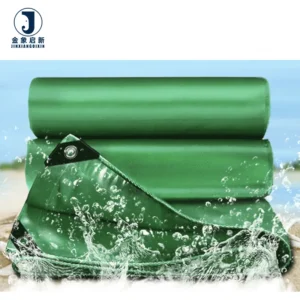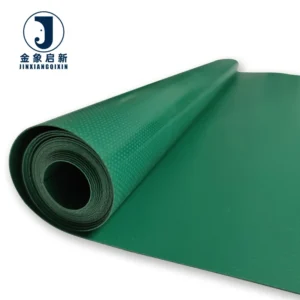
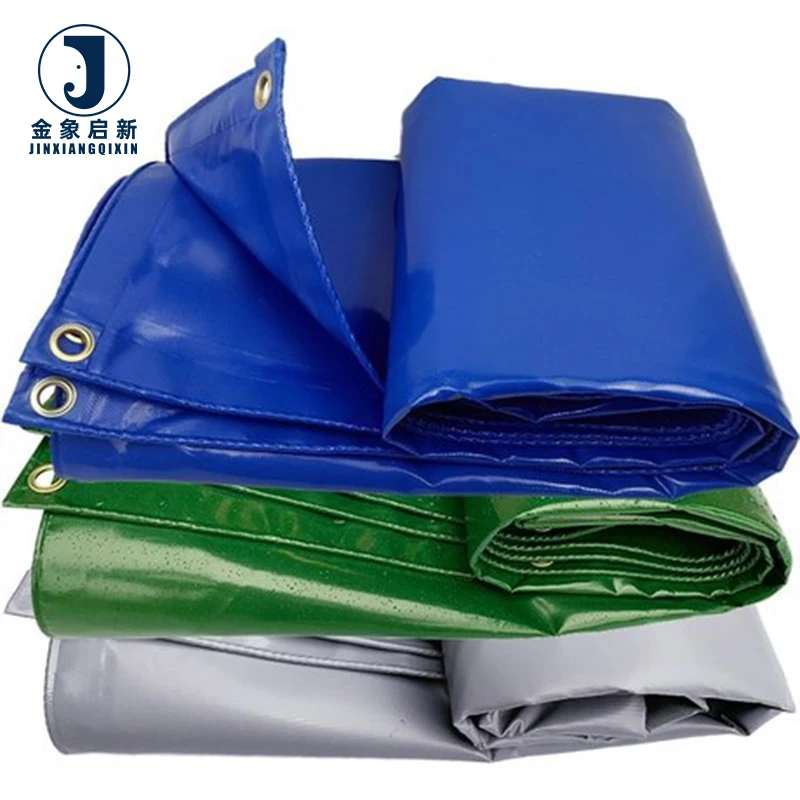
Precision Coating Weight Control — Every roll of 650gsm PVC coated tarpaulin is verified against the stated GSM at production stage, eliminating the gap between quotation and delivery that causes fabricators to reject shipments.
Technical Specifications
| Parameter | Value |
|---|---|
| Product Type | PVC Tarpaulin Roll |
| Weight | 650 GSM |
| Base Fabric | 100% high tenacity polyester yarns |
| Coating Material | PVC |
| Coating Technology | Laminated technology & Hot-melt Coating technology |
| Waterproof | Fully waterproof coated construction |
| Anti-Mildew | Treated |
| Cold Crack Resistance | Treated |
| Color Fastness | High color fastness (test basis not stated) |
| Special Treatments Available | Flame retardant, anti-static, anti-cold, anti-mildew, 3P |
| Outdoor Life Assurance | 3-5 years (source value — verify against manufacturer catalog) |
Application Suitability
| Application | Exposure & Requirement |
|---|---|
| Truck and trailer covers | Constant flexing at load points, road debris abrasion, UV exposure, wind loading on seams |
| Construction site covers | Prolonged weather exposure, puncture risk from materials handling, UV degradation |
| Tent and awning fabrication | High-frequency welding along seam lines, colour consistency across multiple panels |
| Inflatable and membrane structures | Air-tight weld integrity, dimensional stability under tension, surface finish for printing |
| Industrial covers and equipment protection | Chemical splash, abrasion from loading and unloading, long-term water contact |
Why GSM and Coating Method Together Determine Weld Performance
Hot-melt coating locks the PVC into the polyester yarn structure, which means the weld line fails at the fabric rather than the coating interface.
Fabricators routinely report that coated fabrics peel at the heat-weld seam long before the body of the material shows wear. This separation typically originates from weak adhesion between the PVC layer and the base fabric — a problem that intensifies when the material flexes under load. A PVC Coated Tarpaulin 650gsm polyester built with laminated and hot-melt coating technology addresses this failure mode directly. The coating penetrates the weave rather than sitting on the surface, giving the weld zone a substrate to bond into. [NEED_CITE: adhesion strength test methods for PVC coated fabrics per ISO 1421]
Base Fabric Construction and Its Role in Tear Propagation
The 100% high tenacity polyester yarn base provides the structural backbone that determines how a tear behaves once initiated. When a welded seam on a truck side curtain flexes at every corner, the force concentrates at the weld edge. High tenacity yarns resist the tear from running along the weft or warp, containing the damage to a small area instead of a full panel split. This PVC Coated Tarpaulin 650gsm polyester relies on that yarn tenacity to maintain panel integrity through repeated load cycles.
Coating Adhesion and Heat-Weld Behaviour
Laminated technology combined with hot-melt coating creates a bond between the PVC and polyester that holds up during high-frequency welding. When a fabricator applies heat and pressure to join two panels, the coating must re-flow and merge without delaminating from the yarn beneath. Hot-melt coated fabrics achieve this because the PVC has already been driven into the base fabric during production. The result is a weld zone with consistent thickness and reliable peel strength across the entire seam length. [NEED_CITE: coating adhesion and peel strength standards for industrial coated textiles]
Reading the Specification Sheet Beyond the GSM Number
A 650 GSM weight tells you how much material is in each square metre, but it does not describe how that weight is distributed between base fabric and coating. A heavier coating with a lighter base yarn will feel stiff and may crack along fold lines in cold weather. Conversely, a dense base fabric with a thinner coating will show strong tensile numbers but may struggle with waterproofing at the surface. The laminated and hot-melt coating approach on this roll ensures the coating weight is bonded into the weave structure rather than applied as a surface film. For fabricators comparing materials, the coating method matters as much as the GSM figure when predicting how the fabric will behave at the weld table and in the field.
The Real Cost When Roll-to-Roll Consistency Breaks Down
When a bulk order of coated fabric arrives with visible colour variation between rolls, the entire project schedule shifts. Panels cut from different rolls get installed side by side on a truck curtain or awning, and the mismatch becomes obvious in daylight. Beyond the cosmetic issue, coating weight variation between rolls means that welding parameters set on the first roll may burn through or under-bond on the next. This inconsistency forces fabricators to recalibrate machines mid-run and increases reject rates. [NEED_CITE: batch consistency requirements for coated fabrics in transport applications]
Why Technical Buyers Source This 650gsm Construction Here
The 10-person R&D team develops custom samples within days, allowing fabricators to test weld parameters and colour matching before committing to a production run. Three full production lines and 36 sets of professional equipment maintain batch consistency across high-volume roll orders, so the 650 GSM weight and colour reference stay uniform from first roll to last. Dedicated QA/QC inspection at every production stage catches coating weight drift and surface defects before the material reaches the packing area. The coating process control over adhesion and GSM accuracy is built into production, not added as a final check. Nearly 30 years of focused coated fabric manufacturing means the process parameters for this PVC Coated Tarpaulin 650gsm polyester grade are established and repeatable across orders.
Documentation & Verification
- Material specification sheet confirming 650 GSM, polyester base fabric, and hot-melt coating method per order
- Test reports for flame retardant and anti-static grades where applicable to your market requirements
- Pre-shipment inspection record with roll-by-roll GSM and colour consistency verification
- ISO and CE certificates available with each international shipment
- Certificate of origin and customs documentation for cross-border logistics
Fabrication, Handling & Storage
- High-frequency welding parameters should be calibrated to the hot-melt coating thickness for consistent seam strength
- Store 650gsm rolls upright on a flat surface to prevent permanent creasing across the coating surface
- Cold crack treated rolls should still be unrolled and allowed to reach ambient temperature before cutting
- Anti-mildew treatment does not replace proper ventilation during long-term roll storage in humid climates
- Clean finished panels with mild detergent to preserve the PVC coating surface and colour fastness
- Plan cutting layout to maximise yield from standard roll width and minimise offcut waste at seam lines
What We Need to Quote Your Project Accurately
Provide the end-use application and exposure conditions so we can confirm whether the standard construction meets your requirements or if flame retardant, anti-static, or anti-cold treatment is needed. Specify the roll width, colour reference, and estimated annual volume to allow accurate lead time and loading planning. If your market requires a specific fire classification or anti-static certification, share the standard name so we can match the available test documentation before sampling.
Frequently Asked Questions
Q: How is the 650gsm weight verified before shipment and how can I re-check on arrival?
A: Every roll undergoes GSM verification during production and again at the 100% pre-shipment inspection stage. On arrival, you can cut a measured sample from the roll edge, weigh it on a calibrated scale, and calculate the grams per square metre to confirm it matches your specification sheet.
Q: What flame retardant grades are available for this 650gsm PVC coated polyester construction?
A: Flame retardant treatment is available in multiple grades depending on your market requirements. We recommend confirming the specific classification needed — such as M2, B1, or NFPA 701 — at the inquiry stage so we can supply the matching test report with your shipment documentation.
Q: How does laminated versus hot-melt coating affect adhesion strength and weld behaviour?
A: Hot-melt coating drives PVC into the polyester yarn structure, creating stronger adhesion at the coating-to-substrate interface. This means high-frequency welds bond through the full coating thickness rather than sitting on a surface film, reducing delamination risk at flex points.
Q: Can I expect consistent colour across multiple rolls in a bulk order?
A: Batch consistency is maintained through dedicated QA/QC at every production stage. Each roll is checked against the colour reference during pre-shipment inspection, and the inspection record ships with your order so you can verify roll-to-roll matching on receipt.
Q: How long does sample development take for custom width or treatment requirements?
A: The 10-person R&D team develops samples within days for custom width, colour, or treatment specifications. We recommend requesting a sample roll to test your welding parameters and confirm colour matching before placing a full production order.