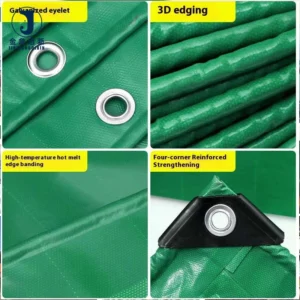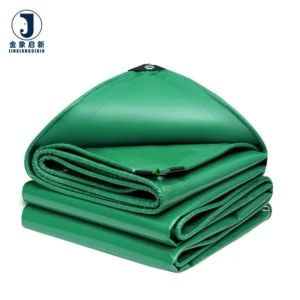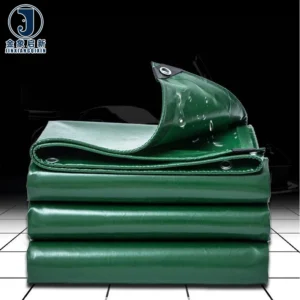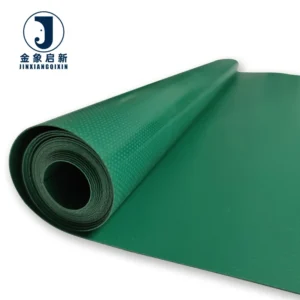
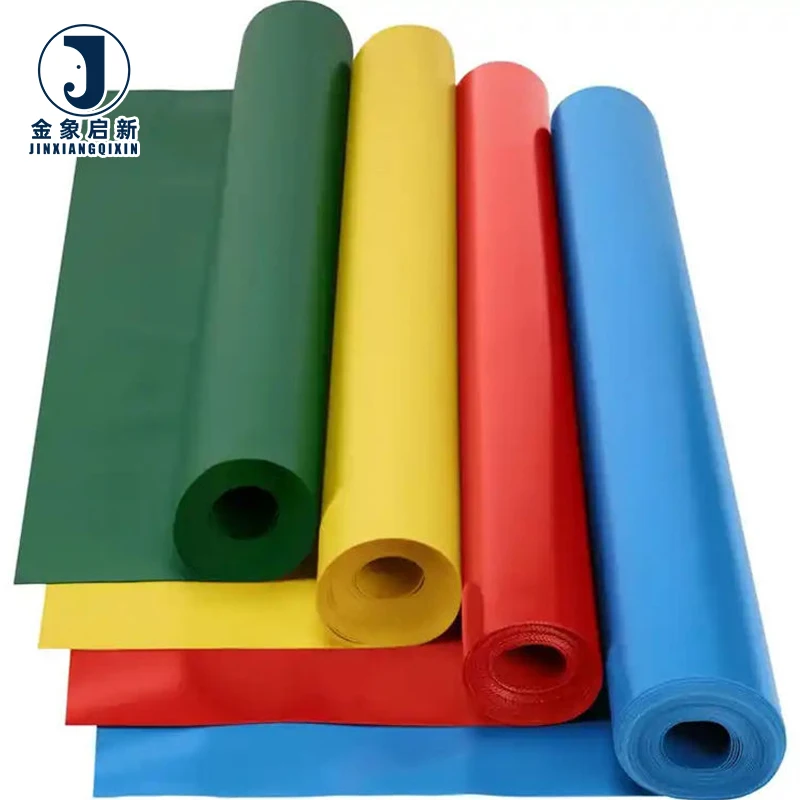
Coating Process Control — This 500D500D 1817 PVC coated tarpaulin roll is built on a base fabric construction where coating weight and adhesion are monitored at every stage, closing the gap between quoted GSM and delivered material for technical buyers specifying on documented properties.
Technical Specifications
| Parameter | Value |
|---|---|
| Product Type | PVC Coated Tarpaulin Roll |
| Base Fabric Denier | 500D*500D |
| Mesh Count | 18×17 |
| Coating Material | PVC |
| Welding Compatibility | HF, Hot Air, Sewing |
| Surface Finish | Self-Cleaning |
| Flame Retardant | Claimed — grade and test standard not stated |
| UV Resistance | Claimed — test basis not stated |
| Anti-Mildew & Antibacterial | Claimed — standard not stated |
| Oil & Stain Resistance | Claimed |
| Acid & Alkali Resistance | Claimed |
| Temperature Resistance | High temperature and cold resistant — range not stated |
| Anti-Oxidation | Claimed |
| Flexibility | Highly flexible, crack resistant |
| Certifications | ISO, CE |
Application Suitability
| Application | Exposure & Requirement |
|---|---|
| Tensile membrane structures | Constant tension load, UV exposure, wind uplift — requires verified coating adhesion and documented tensile data |
| Airport hangar roofs | Extended weather, temperature fluctuation, fire safety compliance — needs certified flame retardant grade per local building code |
| Stadium architectural membranes | Large panel welding, crowd safety, long-term colour stability — demands roll-to-roll batch consistency |
| Portable storage structures | Repeated assembly and flex at seams, abrasion at contact points — weld integrity critical at fold lines |
| Shade systems | Continuous sun exposure, self-cleaning surface for maintenance reduction — UV treatment grade must match exposure duration |
Why Material Data Matters More Than Marketing Claims for PVC Coated Tarpaulin Roll 500D*500D
A spec sheet without test references is a wish list, not a specification.
Technical buyers sourcing PVC coated tarpaulin roll 500D*500D GSM material coating technology data often receive quotation sheets listing "UV resistant" or "flame retardant" with no standard cited behind the claim. When the fabric arrives on a tensile structure site or inside an airport hangar project, the installing contractor needs a test report — not a bullet point — to pass inspection. The gap between a claimed treatment and a documented one is where project delays and rejections happen. [NEED_CITE: fire classification standards for architectural membrane materials]
Coating Weight and Base Fabric Construction
The 500D×500D denier combined with an 18×17 mesh count sets the tensile baseline before any coating is applied. PVC coating adds weight, waterproofing, and surface behaviour, but it cannot compensate for a base fabric that is under-built for the tension load it will carry. Specifying on GSM alone misses how the weave density distributes stress across warp and weft yarns during installation tensioning.
Weld Behaviour Across Fabrication Methods
Fabricators joining panels for tensile or membrane structures rely on seam strength that matches the parent fabric. This material supports HF welding, hot air welding, and sewing — each producing a different seam character. HF welding creates a molecular bond in the PVC layer, hot air suits field repairs and complex geometries, and sewing with sealed stitch lines serves applications where mechanical fastening is preferred. The coating adhesion quality determines whether the weld fails before the fabric does at flex points.
Treatment Grades and What Documentation to Request
Flame retardant, UV stabiliser, and anti-mildew treatments are listed for this PVC coated tarpaulin roll 500D*500D GSM material coating technology grade, but the test standards backing each claim should be confirmed before specification. Architectural membrane projects typically require a recognised fire classification — confirm the grade required for your market and request the corresponding test report. UV treatment duration should be matched to the installed service environment, not assumed from a product label. [NEED_CITE: UV exposure test methods for coated technical textiles]
Reading the Specs Beyond the Headline Numbers
The 500D×500D denier means each yarn in both warp and weft carries the same mass — a balanced construction that distributes load evenly rather than biasing strength in one direction. The 18×17 mesh count is close to square, which keeps tear propagation resistance consistent regardless of tear direction. PVC coating applied over this base must penetrate the weave sufficiently to lock yarns in place; poor penetration leaves yarns free to shift under load, reducing effective tear strength even when GSM appears adequate. Coating method — whether knife-over-roll, dip, or calender — directly affects peel strength at welded seams, which is often the first failure point on installed membrane panels. The self-cleaning surface finish reduces maintenance on shade systems and architectural roofs where dust accumulation would otherwise degrade appearance and light transmission over time.
What Happens When Specifications Are Not Verified Before Shipment
Colour variation between rolls in a single order becomes visible only after panels are installed side by side on a tensile structure — by which point removal and replacement costs far exceed the savings from skipping pre-shipment inspection. Coating weight that arrives lighter than quoted reduces both waterproofing reliability and weld integrity. Flame retardant grades that lack documentation cause rejection at building inspection, halting an entire stadium or hangar project until compliant material is sourced and installed. [NEED_CITE: common failure modes in architectural membrane installations]
Why Technical Buyers Source This Fabric Here
Deep process control over coating weight and adhesion is maintained across three full production lines, with dedicated QA/QC at every production stage ensuring the 500D×500D base fabric receives consistent PVC coverage roll after roll. A 10-person R&D team handles material selection and sample development, producing samples within days so fabricators can run weld tests and confirm seam behaviour before committing a full order. Every roll undergoes 100% inspection before shipment, catching coating defects and colour drift that would otherwise surface on site. The facility supports custom width, colour, and treatment combinations with dedicated production runs rather than blending into stock batches, maintaining the batch consistency that tensile structure projects demand.
Documentation & Verification
- Material specification sheet stating GSM, base fabric denier, weave count, and PVC coating method
- Test reports for UV and flame retardant grades referenced to recognised standards where applicable
- ISO and CE certificates with pre-shipment inspection record confirming roll-to-roll consistency
- Colour reference and roll packing list supporting batch traceability across the full order
- Certificate of origin and customs documentation for international shipment clearance
Fabrication, Handling & Storage
- HF welding recommended for structural seams on this 500D×500D PVC coated fabric to achieve molecular bond strength
- Hot air welding suitable for field repairs and complex geometry joints on membrane panels
- Store rolls vertically on pallets to prevent flat-spot deformation of the PVC coating layer
- Allow cold-stored rolls to reach ambient temperature before unrolling to avoid coating crack damage
- Use PVC-compatible cleaners only to preserve the self-cleaning surface finish on installed shade systems
- Plan panel cutting layout to minimise offcut waste given the available roll width and mesh count
What to Include in Your Enquiry
Provide the specific application and exposure conditions — whether the fabric will serve as a tensile membrane roof, a shade canopy, or a portable structure cover — along with the fire safety classification required by your local building authority. Confirm the roll width and linear meterage needed per colour, and whether you require the material in roll form or as pre-cut panels with edge finishing.
Frequently Asked Questions
*Q: How should I verify GSM when the PVC coated tarpaulin roll 500D500D arrives?**
A: Request a pre-shipment inspection record that includes per-roll weight sampling. On receipt, cut a measured sample from each roll, weigh it, and compare against the stated GSM on the material specification sheet. Significant deviation indicates coating weight inconsistency that affects both tensile behaviour and weld performance across your project.
Q: What fire test standard supports the flame retardant claim for architectural use?
A: The flame retardant grade is claimed but the specific test standard is not stated in the base data. For architectural membrane applications, confirm which classification your building code requires — such as B1 per DIN 4102, M2, or NFPA 701 — and request the corresponding test report before placing a full order.
Q: How does UV treatment affect long-term performance on tensile structures?
A: UV treatment is claimed for this fabric, but the stabiliser grade and test basis are not stated. Request documentation showing the UV exposure test method and duration used. Match the treatment level to your installation’s latitude and expected sun exposure to avoid premature surface degradation on stadium or shade system roofs.
Q: Which welding method gives the strongest seam on this 500D×500D fabric?
A: HF welding typically produces the highest peel strength on PVC coated polyester by fusing the coating layers at molecular level. Hot air welding works well for complex shapes and field repairs. Sewing with sealed stitch lines is an alternative where mechanical fastening is preferred. Run test welds to confirm which method suits your fabrication setup.
Q: How is colour consistency controlled across multiple rolls in one order?
A: Roll-to-roll colour consistency is managed through dedicated QA/QC at every production stage and 100% inspection before shipment. Request a colour reference sample before production and confirm the inspection protocol covers visual and instrumental colour checks across all rolls in your batch to prevent visible variation after installation.