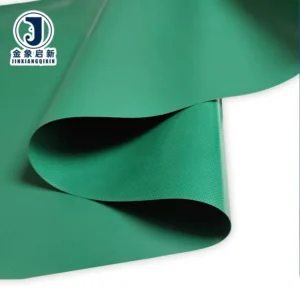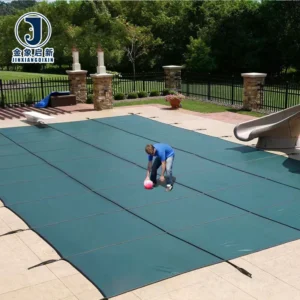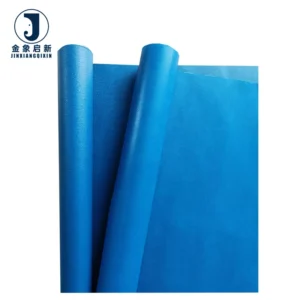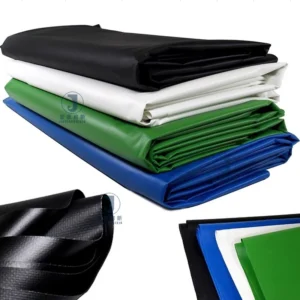
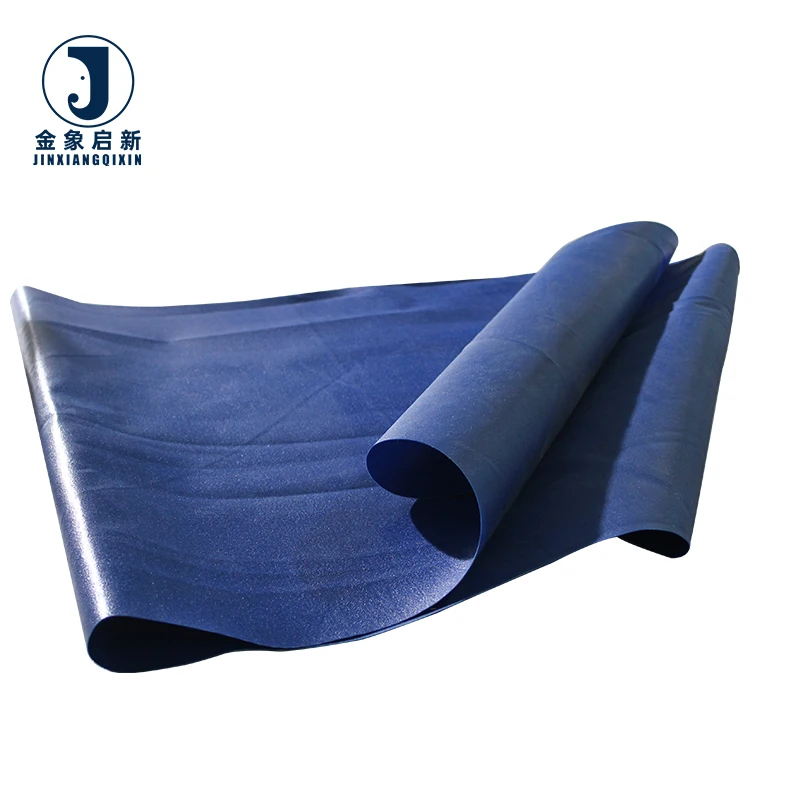
Deep Process Control Over Coating Weight — Nearly three decades of PVC formulation experience ensures that every roll of coated tarpaulin fabric ships with verified GSM, matching the material specification sheet exactly.
Technical Specifications
| Parameter | Value |
|---|---|
| Product Type | PVC Coated Tarpaulin Roll |
| Specification | 550g 600g 650g 900 GSM |
| Base Fabric | PVC coated polyester fabric |
| Weight Options | 550 GSM / 600 GSM / 650 GSM / 900 GSM |
| Total Thickness | 0.2–0.4 mm (8 mil–16 mil) |
| Waterproof | Yes — fully coated construction |
| UV Treatment | Available (test basis not stated) |
| Flame Retardant | Available in flame retardant grades — confirm the grade required for your market |
| Tear Resistance | High (test method not stated) |
| Mildew Resistance | Yes |
| Anti-aging | Yes |
| Surface Finish | Glossy or matte (custom) |
| Color Options | Blue, Blue/Orange, Green, Grey, Black, Clear, Grey/Green, Orange, or custom color |
| Custom Width & Length | Available |
| Reinforcement Options | Eyelets and reinforced hems available |
| Printing | Custom pattern printing available |
| Standards | ISO and CE certified facility |
Application Suitability
| Application | Exposure & Requirement |
|---|---|
| Truck and trailer side curtains | Constant flexing at load points, road debris abrasion, sustained UV and weather exposure |
| Custom truck covers | Tie-down tension at eyelet zones, wind flap fatigue, rain and sun cycling |
| Roof tent and awning panels | Tensile load from frame tension, prolonged sun exposure, mildew in humid storage |
| Equipment and construction site covers | Puncture risk from sharp edges, pooling water, dust and chemical contact |
| Inflatable and membrane structures | Internal air pressure load, UV degradation on exposed surfaces, flame retardant compliance for public spaces |
| Agricultural pond and reservoir liners | Permanent water contact, soil chemistry interaction, puncture from substrate |
Why Quoted GSM Rarely Matches What Arrives on the Dock
Coating weight drift during production is the primary reason technical buyers receive fabric lighter than specified.
When sourcing PVC coated tarpaulin roll stock for fleet fabrication or membrane projects, the GSM stated on the quotation often does not survive the journey to the receiving dock. Coating compound dilution, base fabric substitution with a lighter denier yarn, or inconsistent lamination pressure can all reduce the final weight without visible warning. For fabricators welding seams on truck side curtains or tensioning membrane panels, underweight material means the weld line fails before the fabric reaches its rated load. [NEED_CITE: tensile and tear test methods for coated fabrics per ISO 1421] Technical buyers defending a specification in front of a fleet manager or project engineer need documentation, not assurances.
Coating Adhesion and the Knife-Over-Edge Process
The bond between the PVC coating layer and the polyester base fabric determines whether the material delaminates under flex load or holds together through years of tension cycling. Knife-over-edge coating applies the PVC compound directly onto the woven substrate under controlled blade pressure, forcing the coating into the yarn interstices rather than simply sitting on the surface. This PVC coated tarpaulin roll range benefits from that direct adhesion method, which supports reliable heat welding performance at seam zones — the area where truck covers and side curtains experience concentrated stress during operation.
GSM-to-Strength Mapping Across the Four Grades
The 550 GSM grade suits lighter applications where flexibility and ease of handling matter more than extreme puncture resistance, such as temporary equipment covers or short-term site enclosures. Moving to 600 GSM and 650 GSM adds coating mass and typically a denser base weave, improving tear propagation resistance for truck side curtains that flex continuously in transit. The 900 GSM grade targets heavy-duty membrane structures, pond liners, and inflatable applications where internal pressure or substrate contact demands maximum tensile capacity. [NEED_CITE: relationship between coating weight and tear strength in PVC polyester composites] Selecting the correct grade prevents both over-specification waste and under-performance failures in the field.
Reading the Specification Sheet Beyond the GSM Number
GSM alone tells you how much the fabric weighs per square metre, but it does not reveal how that weight is distributed between base fabric and coating. A 650 GSM roll with a high-denier, tightly woven polyester base and thinner coating will resist tear propagation better than a 650 GSM roll with a light base and thick coating layer. Base fabric denier and weave density control how a tear initiates and spreads, while coating weight governs waterproofing, UV shielding, and weld receptivity. Surface finish — glossy or matte — affects not only appearance but also how the fabric sheds dirt, accepts printed branding, and responds to cleaning solvents over its service life. Total thickness in the 0.2–0.4 mm range correlates with stiffness and drape behaviour, influencing how easily fabricators can fold, seam, and install the material on frames or structures.
What Happens When the Wrong Grade Reaches the Fabrication Floor
A truck cover fabricated from a lighter GSM grade than the flex-point abrasion demands will show seam separation within the first season of highway use. If a membrane structure installer receives rolls with inconsistent colour across a single batch, the visual mismatch becomes obvious once panels are tensioned side by side on the frame. Flame retardant grades specified for a public-space inflatable but supplied without the required certification documentation will fail the fire marshal inspection, halting the project. [NEED_CITE: fire classification standards for temporary membrane structures in public venues] These consequences are not material defects — they are specification mismatches that a thorough pre-order verification process would have caught.
Procurement Advantages Backed by Production Infrastructure
Three full production lines and 36 sets of professional equipment provide the capacity to deliver bulk PVC coated tarpaulin roll orders with consistent coating weight across every roll in the shipment. A dedicated 10-person R&D team handles material selection, custom colour matching, and sample development within days, allowing buyers to verify GSM, finish, and coating adhesion before committing to a full production run. QA and QC checkpoints at every production stage — from base fabric inspection through coating application to final winding — ensure that what ships matches the material specification sheet. With ISO and CE certification supporting the production system, documentation accompanies each order rather than being promised after payment. Samples are developed rapidly for custom width, colour, and printing requirements, giving technical buyers physical confirmation before bulk fabrication begins.
Documentation & Verification
- Material specification sheet stating exact GSM, base fabric construction, and coating composition per roll
- UV and flame retardant test reports provided where applicable — request test basis for your market
- Pre-shipment inspection record with roll-by-roll weight verification and colour consistency check
- ISO and CE certificates included in shipment documentation package
- Roll packing list with individual roll identification for traceability
- Certificate of origin and customs support documentation for international shipments
Fabrication, Handling & Storage
- Heat welding parameters must be matched to the specific GSM grade — 900 GSM requires higher temperature and dwell time than 550 GSM for full seam fusion
- Store rolls horizontally on padded racks to prevent permanent creasing in the PVC coating layer, especially in colder conditions
- Cut panels from glossy-finish rolls with a sharp blade on a clean surface to avoid surface scoring that compromises waterproofing
- Reinforced hems and eyelet zones on heavier grades distribute tie-down tension across multiple yarns, reducing tear initiation at load points
- Allow cold-transported rolls to reach ambient temperature before unrolling to prevent coating crack damage at fold lines
Requesting the Right Specification for Your Project
When submitting an enquiry for PVC coated tarpaulin roll stock, include the end-use application, expected environmental exposure conditions, and any fire safety or compliance requirements specific to your market. Specify the GSM grade, preferred surface finish, and whether you need custom colour matching or pattern printing across the production run. Indicate required roll widths, estimated annual volume, and whether you are purchasing roll stock for in-house fabrication or need pre-cut panels with eyelets and hems. Requesting a sample roll or swatch set before bulk commitment allows you to verify coating adhesion, weld behaviour, and colour consistency against your production standards.
Frequently Asked Questions
Q: How is GSM verified and what documentation accompanies each roll shipment?
A: Every roll undergoes weight verification during the pre-shipment inspection process. A material specification sheet accompanies the shipment, stating the exact GSM, base fabric denier, weave density, and coating compound type. This ensures that the PVC coated tarpaulin roll you receive matches the specification agreed at order stage, with documented evidence rather than verbal assurance.
Q: What is the relationship between GSM, tensile strength, and tear resistance in this fabric?
A: GSM reflects total weight per square metre but does not isolate the contribution of base fabric versus coating. Tensile strength depends primarily on polyester yarn denier and weave density, while tear resistance is influenced by how tightly those yarns are woven. Higher GSM grades in this range typically combine heavier coating with denser base construction for improved overall mechanical performance.
Q: Are UV and flame retardant treatments backed by third-party test reports?
A: UV treatment and flame retardant grades are available across this PVC coated tarpaulin roll range. Independent test reports can be provided upon request — specify the test standard or certification required by your local regulations so the correct documentation is prepared before shipment. Always confirm the grade needed for your application and market.
Q: How is roll-to-roll colour consistency controlled across bulk orders?
A: Colour matching is managed through controlled pigment formulation and in-process inspection at the coating stage. Each production run undergoes batch consistency checks before winding and packing. For large orders spanning multiple production batches, buyers can request colour reference samples for side-by-side comparison before final dispatch.
Q: Which seam method — heat welding or stitching — suits each GSM grade?
A: Heat welding is generally preferred for all grades in this PVC coated tarpaulin roll range because it creates a continuous bonded seam that maintains waterproofing integrity. Heavier grades such as 900 GSM require adjusted welding temperature and pressure settings. Stitching with sealed thread may be used for structural reinforcement in high-load zones, combined with welded overlap for water protection.