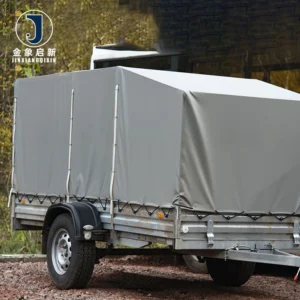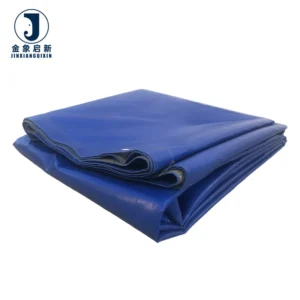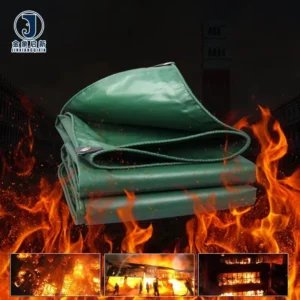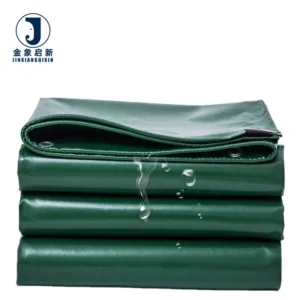
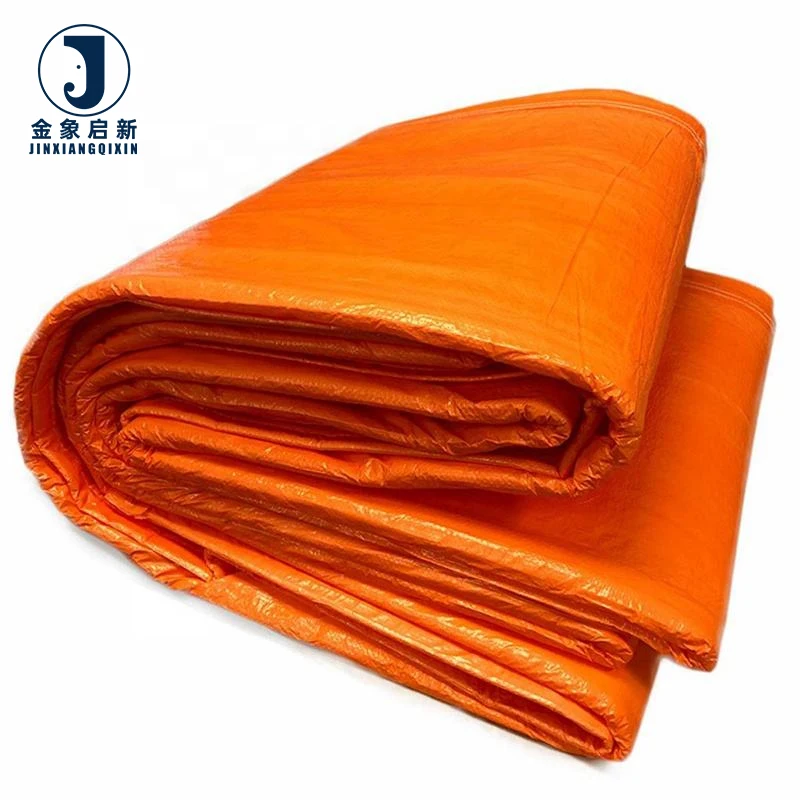
Closed-cell foam core engineering — multi-layer PE construction with controlled density and verified thickness per batch, supporting repeatable thermal retention across every blanket shipped.
Technical Specifications
| Parameter | Value |
|---|---|
| Product Type | Insulated Tarpaulin Blanket |
| Dimensions | 6ftx24ft / 8ftx25ft / 12ftx20ft / 12ftx24ft |
| Thickness Options | 2x2mm / 3×1.5mm / 1x4mm / 5mm / 6mm / 8mm / 12mm |
| Material Structure | PE cloth + closed cell PE foam core + PE cloth |
| Color Options | Orange / Black / White / Silver / Customized color |
| Grommet Configuration | Aluminum grommets, hole distance 61cm and 91.5cm |
| Surface Treatment | UV resistant treatment built into base fabric (test basis not stated) |
| Edge Finish | Reinforcement stitch, ripstop construction |
| Waterproof | Yes (surface fabric) |
Application Suitability
| Application | Exposure & Requirement |
|---|---|
| Cold-weather concrete curing | Direct ground contact, low ambient temperatures, moisture exposure, sustained thermal retention over curing period |
| Heated enclosure insulation | Wind load on vertical panels, temperature differential across membrane, repeated installation and removal |
| Construction site wind block | Sustained lateral wind pressure, grommet pull-out risk, UV exposure during extended deployment |
| Equipment temperature control | Outdoor low-temperature exposure, condensation risk, need for flexible wrap-around coverage |
Why Foam Core Density Matters More Than Stated Thickness
A thicker blanket does not automatically retain more heat if the foam cell structure collapses under its own weight or handling stress.
When specifying an insulated concrete curing blanket tarpaulin aftermarket supplier, buyers often compare products by total thickness alone. The problem is that two blankets both labelled 8mm can perform very differently on site. If the closed-cell PE foam core has inconsistent cell density, heat transfers through compressed zones far faster than expected. I have seen curing blankets that measured correctly on a calliper at the warehouse but showed visible compression lines after one week of folding and transport — those compressed zones become thermal bridges once laid over fresh concrete. The relationship between core density and thermal resistance is well documented in building insulation standards, yet tarpaulin specifications rarely address it directly [NEED_CITE: closed-cell foam thermal conductivity and density correlation per ASTM C518].
How the Multi-Layer PE Construction Holds Heat Where It Counts
The outer PE cloth layers on this insulated concrete curing blanket serve a dual role: they block water ingress during rain or wet curing, and they protect the foam core from mechanical damage during handling. The closed-cell structure within the core traps air in discrete pockets, limiting convective heat loss across the blanket surface.
This is fundamentally different from open-cell foams or fibre batts, which absorb moisture and lose insulating value once wet. For concrete curing in freezing conditions, maintaining a consistent thermal envelope over the slab surface is the entire purpose of the blanket — and the insulated tarpaulin material coating technology here addresses that by keeping the core isolated from both surface water and ground moisture.
Grommet Spacing and Edge Reinforcement Under Real Wind Loads
The aluminum grommets are set at 61cm and 91.5cm intervals around the perimeter. On vertical enclosure walls or wind-exposed curing setups, this spacing determines how the load distributes across the blanket when wind pulls against it [NEED_CITE: wind load calculations for temporary enclosure membranes per ASCE 7].
The reinforcement stitching at the edges works with ripstop construction to prevent a small tear at a grommet from propagating across the panel. I have watched blankets without ripstop fail in a single storm event — one torn eyelet becomes a two-metre split by morning. The combination of stitched reinforcement and ripstop weave addresses the specific stress points where insulated concrete curing blankets see the most mechanical abuse on active construction sites.
Reading the Thickness Options Against Your Curing Requirements
Total thickness across the available range — from 2x2mm to 12mm — is not simply a matter of picking the highest number. The 2x2mm and 3×1.5mm options use a dual-layer foam construction, which may offer better flexibility for wrapping irregular shapes or draping over formed concrete. The single-layer options at 5mm through 12mm provide increasing thermal mass for flat slab curing in progressively colder conditions.
What matters for specifiers is matching the blanket thickness to the lowest expected ambient temperature and the required curing duration. A 6mm blanket may hold a slab above the minimum curing temperature in mild cold, while the same blanket would be inadequate for a multi-day cure in sub-zero exposure. The PE cloth outer layers contribute to overall waterproofing but do not add meaningful insulation — the foam core thickness is where thermal performance lives.
What Happens When Insulated Blanket Specifications Do Not Match Site Conditions
Selecting a blanket that is too thin for the ambient temperature means the concrete drops below curing threshold before reaching adequate strength — and the cost of that failure is not the blanket, it is the demolished slab and the re-pour. I have also seen the reverse: oversized blankets that are too heavy and rigid for the crew to handle properly, resulting in gaps at overlaps where heat escapes.
Grommet spacing that does not match your tie-down hardware means improvisation on site, which usually means rope through undersized holes and point loads that tear the fabric within days. The insulated concrete curing blanket tarpaulin aftermarket supplier you choose should be confirming these details against your actual site conditions before production starts, not after [NEED_CITE: concrete curing temperature requirements per ACI 306].
Why Procurement Verification Matters for Insulated Tarpaulin Orders
Every blanket that leaves our facility passes through inspection at each production stage. The closed-cell foam core density is checked against specification before lamination to the outer PE cloth layers. Thickness is measured at multiple points across each panel, not just at the edges.
Grommet placement is verified against the stated 61cm and 91.5cm intervals, and reinforcement stitching is inspected for consistency. We have operated three full production lines with 36 sets of professional equipment for nearly 30 years, and our 10-person R&D team develops samples within days when your project requires a non-standard size or colour. This matters for insulated concrete curing blankets because site schedules do not wait — if your sample takes weeks to arrive, your pour window closes.
Documentation & Verification
- Material specification sheet confirming foam core density, PE cloth weight, and total thickness per variant
- UV test report provided when anti-UV performance is a stated procurement requirement
- Pre-shipment inspection record documenting measured thickness and grommet spacing per panel
- Roll or panel packing list with dimensional breakdown for site receiving verification
- Certificate of origin and customs documentation for international insulated tarpaulin shipments
Fabrication, Handling & Storage
- Heat sealing parameters must account for the PE foam core melting point to avoid core collapse at weld lines
- Grommet installation at 61cm intervals requires matching tie-down hardware spacing to distribute load evenly
- Store blankets flat or loosely rolled to prevent permanent compression of the closed-cell PE foam core
- Avoid dragging blankets across abrasive surfaces to protect the outer PE cloth waterproof layer
- Clean with mild detergent only — solvent-based cleaners may degrade the PE surface treatment
- Field repairs on minor tears should use compatible PE adhesive patches applied to dry surfaces
What We Need to Quote Your Insulated Blanket Project
To provide an accurate specification recommendation, share your lowest expected ambient temperature, the required curing duration, and whether the blankets will be used flat over slabs or vertically as enclosure walls. Confirm your preferred grommet spacing or let us know what tie-down hardware you are using on site.
If you need a non-standard dimension beyond the four listed options, provide the cut size and quantity so we can assess production feasibility and material yield. Colour requirements or site-specific labelling should be noted at inquiry stage to avoid lead time extensions.
Frequently Asked Questions
Q: How do I select the right blanket thickness for my curing temperature and duration?
A: Thickness selection depends on your lowest expected ambient temperature and the hours or days the concrete must stay above minimum curing temperature. Thicker foam cores retain heat longer but add weight and reduce flexibility. Share your specific site conditions and cure requirements so we can recommend the appropriate option from the 2x2mm through 12mm range.
Q: Can these blankets be overlapped to cover large slab areas?
A: Yes, the blankets can be overlapped at the edges to extend coverage across large pours. The aluminum grommets at 61cm and 91.5cm spacing allow adjacent blankets to be laced together or secured to a common tie-down line. Overlap distance should account for wind exposure to prevent heat loss at the joints.
Q: What service life can I expect with repeated use and folding?
A: Service life depends on handling practices, storage conditions, and exposure intensity. The ripstop construction and reinforcement stitching are designed to resist tear propagation during repeated deployment. The closed-cell PE foam core resists moisture absorption, which helps maintain insulation performance across multiple uses when blankets are stored dry and uncompressed.
Q: Are custom sizes available beyond the standard dimensions listed?
A: Custom cut sizes are available. Our R&D team develops samples within days for non-standard dimensions. Provide your required size, quantity, and any specific grommet spacing needs. Minimum order quantities apply for custom dimensions and should be confirmed at the inquiry stage along with your project timeline.
Q: What happens to insulation performance if the blanket gets punctured?
A: The closed-cell PE foam structure limits moisture ingress at puncture points because each cell is individually sealed, unlike open-cell foams that wick water through the core. Small punctures in the outer PE cloth layer should be patched promptly to maintain waterproofing and prevent mechanical damage from expanding the tear.