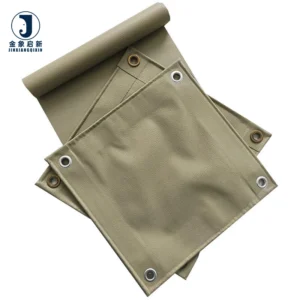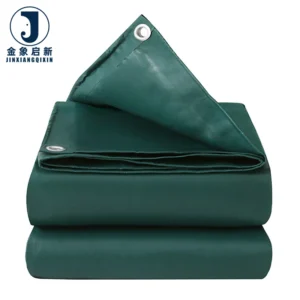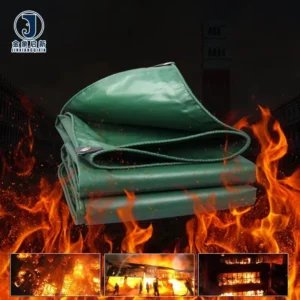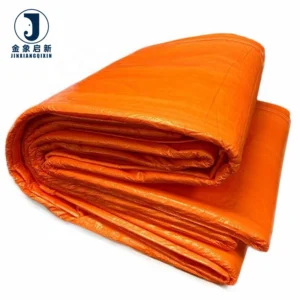
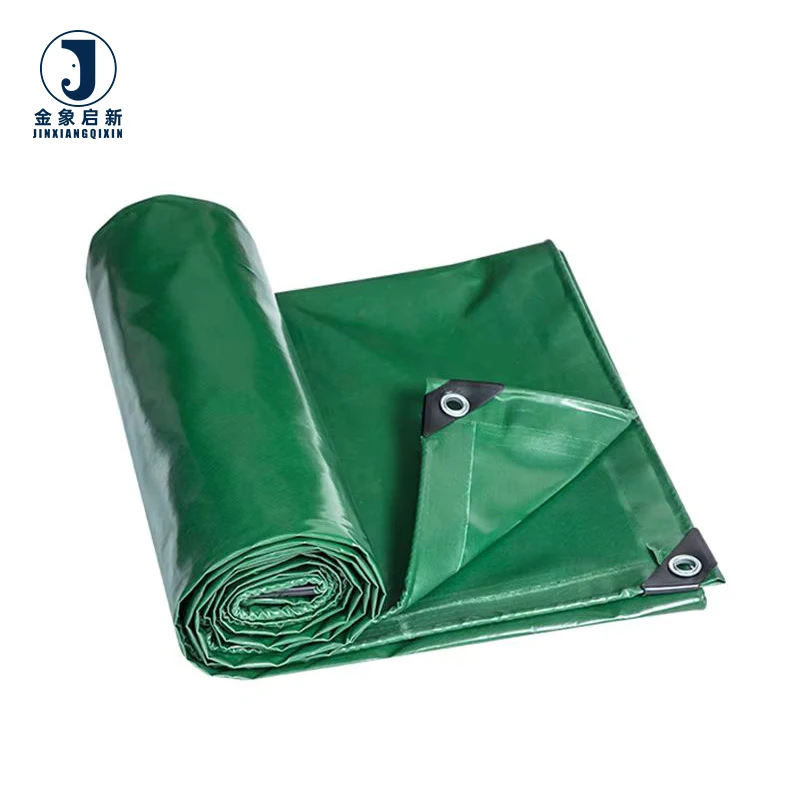
Coating Adhesion Control — Hot melt coating technology applied across three dedicated production lines ensures the PVC bond to the polyester base survives both high-tension installation and hot-air welding at seam lines.
Technical Specifications
| Parameter | Value |
|---|---|
| Product Type | PVC Coated Fabric |
| Base Fabric | 100% high toughness polyester yarn |
| Yarn Denier | 500D–2000D (grade dependent) |
| Weight Range | 400–500 / 700–1000 / 1100–1500 g/m² (product family — confirm the grade for your project) |
| Thickness | 0.35–0.45 / 0.70–1.0 / 1.2–1.5 mm (product family — confirm the grade for your project) |
| Coating Technology | Hot melt coating / lamination technology |
| Tensile Strength (Warp) | 1500–3000 N/5cm (grade dependent) |
| Tensile Strength (Weft) | 1200–2800 N/5cm (grade dependent) |
| Key Features | Flame retardant, anti-static, cold resistant, mold proof, waterproof (grades available — confirm the grade required for your market) |
| Color Fastness | Best color fastness claimed (grade not stated — request test report) |
| Welding Tear Strength | Excellent (test basis not stated — request weld test data) |
| Outdoor Durability | 3–5 years (source value — verify against project exposure) |
Application Suitability
| Application | Exposure & Requirement |
|---|---|
| Stadium and arena tensile roofs | Long-span fabric panels under continuous tension; UV and weather exposure; wind uplift loads at anchor points |
| Airport terminal membrane canopies | Fire safety compliance for public assembly; large visible surface requiring color consistency across rolls |
| Architectural facade membranes | Tensioned installation with welded seams at panel joins; thermal cycling and moisture exposure |
| Industrial pipe canopies | Tensioned protective covers over piping infrastructure; abrasion from wind-driven particulate; access for maintenance |
Why Tensile Strength Numbers Alone Mislead Membrane Buyers
Specifying PVC coated tarpaulin for membrane structure fabric by GSM alone misses the relationship between yarn denier, weave density, and coating adhesion that actually determines how the panel behaves under load.
The base fabric architecture and coating bond together define structural performance, not weight per square metre in isolation.
I have reviewed projects where the tensile test passed at the coupon level but the installed membrane failed at the weld. The reason was not insufficient GSM. It was that the coating formulation and base fabric density did not produce the adhesion strength needed for the specific welding temperature and pressure the fabricator used. When membrane structure projects span large areas, every weld seam is a structural joint. The fabric must transfer load through that joint without delamination [NEED_CITE: tensile and tear test methods for coated fabrics per ISO 1421]. A heavier fabric with poor coating adhesion will underperform a lighter fabric with a properly bonded coating system.
Hot Melt Coating and Its Effect on Seam Integrity
Hot melt coating technology forces the PVC compound into the interstices of the polyester base fabric under heat and pressure, creating a mechanical and chemical bond that goes beyond surface adhesion. For membrane structure applications where every panel edge is heat-welded, this bond strength determines whether the seam holds or the coating peels away from the yarn under tension. The PVC coated tarpaulin membrane structure fabric gsm you select must pair the right coating weight with a base fabric dense enough to absorb the compound and maintain adhesion through repeated thermal cycling.
Base Fabric Denier and the Tensile Load Path
The denier of the polyester yarn — ranging across 500D, 1000D, and up to 2000D within this product family — sets the individual yarn strength. But in a woven base fabric, the warp and weft density determines how load distributes across multiple yarns when a panel is tensioned. A 2000D yarn in a loose weave will not outperform a 1000D yarn in a tight weave under biaxial stress. For stadium roof structures where wind uplift creates complex multi-directional loading, specifying denier without confirming weave density leaves a gap in your engineering data [NEED_CITE: biaxial stress testing standards for architectural membrane fabrics]. Always request the full base fabric construction sheet before approving material for structural calculations.
How GSM, Coating Weight, and Yarn Denier Interact
The total weight of a PVC coated fabric is the sum of the base fabric weight and the coating weight applied to both faces. A higher GSM can come from more PVC, a heavier base fabric, or both — and the performance implications are very different. More coating increases waterproofing and surface durability but adds dead weight that the support structure must carry. A heavier base fabric increases tensile and tear strength without proportionally increasing coating thickness, which is usually the preferred path for tensioned membrane structures. Understanding this split is essential when comparing quotations that quote GSM without breaking down the base fabric versus coating contribution. The hot melt coating process used here allows tighter control over coating weight distribution, reducing the risk of thin spots that become failure points under UV exposure and thermal cycling.
The Hidden Cost of Inconsistent Coating Weight Across a Roll
When coating weight varies along a roll, the thin sections age faster, lose plasticiser sooner, and become brittle before the rest of the panel. In a membrane structure, this means one section of a continuous roof may require replacement while the remainder is still serviceable. For large stadium canopies where fabric panels are welded on site, a coating weight variation also causes inconsistent welding behaviour — the same temperature and pressure setting produces a strong weld in one section and a weak or burned weld in another. Fabricators end up adjusting parameters mid-run, introducing human error into what should be a controlled process [NEED_CITE: coating weight consistency impact on heat welding performance]. Batch-to-batch and roll-to-roll verification before dispatch reduces this risk.
Why Fabricators Choose This Supply Chain
Three full production lines with 36 sets of professional equipment provide the capacity to supply multiple rolls for a single stadium roof project without splitting the order across different machines or shifts. The 10-person R&D team handles material specification matching, developing sample panels that let you verify welding parameters and coating adhesion before committing to full production. Dedicated QA and QC at every production stage with 100% pre-shipment inspection catches coating weight deviations and color inconsistencies before they reach the fabrication floor. Custom width and length orders are supported without the extended lead times typically associated with non-stock membrane grades. Hot melt coating technology on these lines produces the consistent coating-to-fabric bond that structural weld seams require.
Documentation & Verification
- Material specification sheet stating exact GSM, base fabric denier, and coating method for the grade supplied
- Tensile strength test report referencing the test standard applied, not just a pass figure
- Color reference sample approved before full production to confirm visual match across all rolls in the order
- Pre-shipment inspection record documenting coating thickness and weight verification per roll
- Flame retardant test report matching the grade specified for your local building authority requirements
Fabrication, Handling & Storage
- Hot-air welding parameters must be calibrated to the specific coating thickness of the grade you receive; request the recommended temperature and speed range for the hot melt coating applied
- Store rolls upright on pallets in a covered area to prevent flat spots that become visible as surface irregularities once the membrane is tensioned
- When cutting panels from heavy-grade rolls (above 1000 g/m²), allow for the increased stiffness in your fold and bend radii to avoid coating cracks at tight corners
- Clean with neutral pH detergent only; solvent-based cleaners can attack the PVC surface and reduce color fastness on visible architectural facades
- Plan panel layout to minimise transverse welds, as each weld line is a potential point of differential aging compared to the field of the fabric
Requesting a Quotation
To specify the right grade for your membrane structure project, provide the span dimensions, expected wind and snow loads, and the fire safety classification required by the building authority in your jurisdiction. Indicate whether you need rolls in standard widths or custom widths to reduce on-site welds, and confirm the total roll quantity so we can schedule production in a single batch for color consistency. If your structural engineer requires material samples for testing, state the sample size and delivery timeline alongside your inquiry.
Frequently Asked Questions
Q: What GSM weight is appropriate for a stadium roof membrane structure?
A: The correct GSM depends on span length, expected wind uplift, and the fire classification required. Heavier grades with higher denier base fabric are typically specified for long-span roofs. Request a material specification sheet breaking down the base fabric weight versus coating weight, and share your structural engineer’s load calculations so we can recommend the matching grade from the available range.
Q: Can you supply flame retardant certification accepted in my local market?
A: Flame retardant grades are available, and the specific classification needed depends on your country’s building code for public assembly structures. Provide the standard your building authority references — such as DIN 4102, NFPA 701, or a national equivalent — and we will supply the matching test report with the material documentation package for your project approval.
Q: How is color consistency maintained across multiple rolls for one project?
A: All rolls for a single project order are produced in one batch using the same coating compound mix. A color reference sample is approved before production begins, and each roll is checked against it during pre-shipment inspection. This prevents the visible panel-to-panel variation that becomes apparent once the membrane is installed and viewed in direct sunlight.
Q: Do you provide fabric samples for structural engineer approval?
A: Yes. Sample panels are developed within days for custom requirements, allowing your engineer to conduct tensile, tear, and weld strength testing on the actual material before the full order enters production. Specify the sample dimensions and any particular test requirements when you submit your inquiry so we can prepare the correct grade and coating formulation.