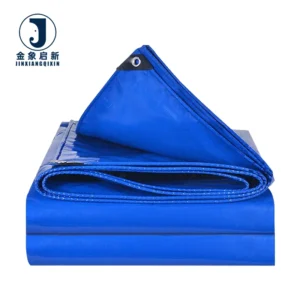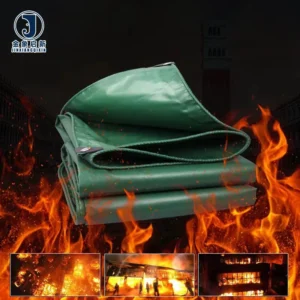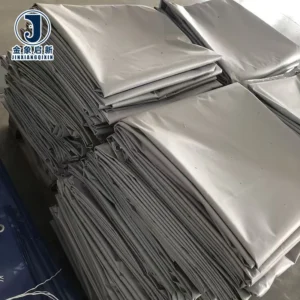
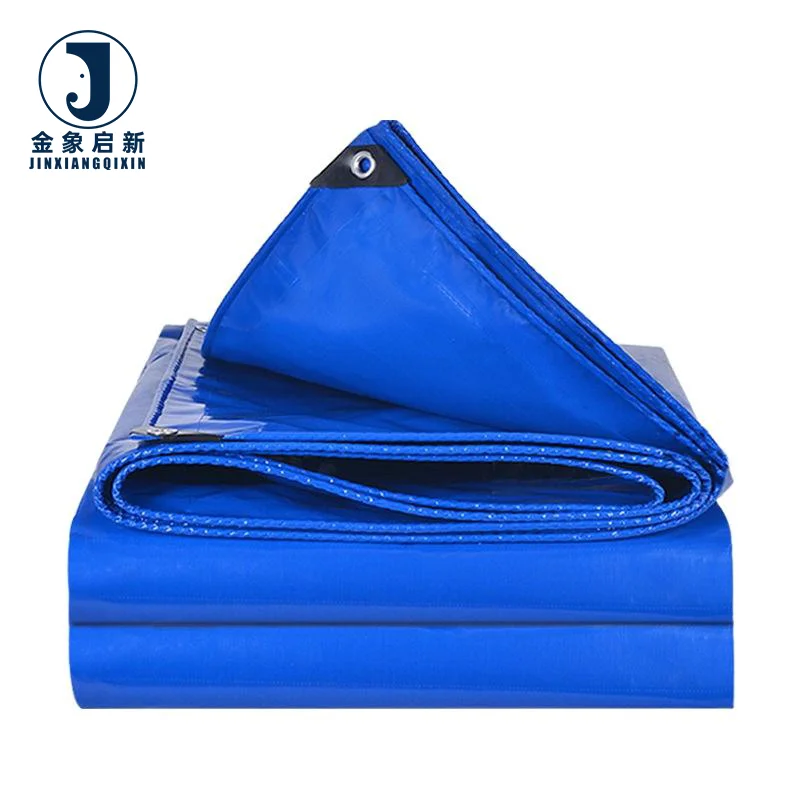
Deep Coating Process Control — Every roll of PVC coated tarpaulin leaving our facility is verified against its stated GSM and coating weight through 100% pre-shipment inspection, ensuring material properties match the specification sheet you received at quotation stage.
Technical Specifications
| Parameter | Value |
|---|---|
| Product Type | PVC Coated Tarpaulin |
| Base Material | High-strength polyester mesh fabric |
| Coating Material | PVC |
| Coating Technology | Laminated & Hot-melt coating |
| Available Weight | 350gsm / 420gsm / 500gsm / 550gsm / 600gsm / 750gsm |
| Available Thickness | 0.32mm / 0.35mm / 0.4mm / 0.45mm / 0.5mm / 0.65mm |
| Roll Width | 2m / 2.1m |
| Roll Length | 75m (2m width) / 50m (2.1m width) |
| Surface Finish | Glossy or Matt |
| Waterproof | Double-sided 100% waterproof |
| Colour Options | Blue / Red / Yellow / Light blue / Grey / Customised |
| Cold Crack Resistance | Stated |
| Anti-Mildew | Stated |
| Anti-Static | Treatment applied (grade available on request) |
| UV Protection | Sunproof treatment applied (test basis available on request) |
| Flame Retardant | Available in flame retardant grades — confirm the grade required for your market |
| Standards | ISO, CE |
Application Suitability
| Application | Exposure & Requirement |
|---|---|
| Poultry & Agricultural Curtains | Constant humidity, ammonia exposure, daily mechanical rolling, temperature fluctuation |
| Temporary Construction Enclosures | Wind load, rain, UV exposure, dust containment, scaffold abrasion |
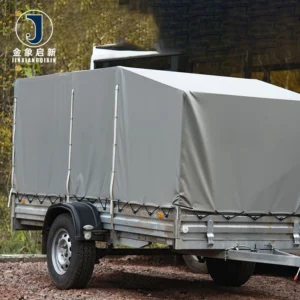
| Truck Side Curtains & Awnings | Road debris impact, constant flexing at tie-down points, UV degradation |
| Equipment & Industrial Covers | Chemical splash, outdoor weathering, repeated deployment and folding |
| Pond & Fish Tank Liners | Permanent water immersion, soil chemistry, puncture from substrate |
| Tent & Membrane Structures | Wind uplift, rain pooling, UV load, weld seam integrity under tension |
Why a Quoted GSM Is Only Half the Story for PVC Coated Fabric
Coating weight and base fabric denier together determine whether a PVC coated tarpaulin performs as expected or fails at the first stress point.
Procurement teams regularly receive rolls that match the quoted GSM on the label but deliver less material than the specification sheet promised. The discrepancy often comes from a lighter base fabric compensated by a thicker coating layer — a combination that looks right on the scale but tears easily under tension. For technical buyers specifying PVC coated tarpaulin for fabrication, the relationship between GSM, base yarn denier, and coating thickness is where real performance lives [NEED_CITE: tensile and tear test methods for coated fabrics per ISO 1421]. Without this breakdown, you are buying a number, not a material.
How Laminated and Hot-Melt Coating Define Fabric Behaviour
The PVC coated tarpaulin in this range uses both laminated and hot-melt coating technology, each producing different performance characteristics. Laminated coating bonds a pre-formed PVC film to the polyester mesh under heat and pressure, delivering a uniform coating thickness and a smooth surface suited to printing and heat welding. Hot-melt coating applies liquid PVC directly into the mesh structure, penetrating deeper between yarns and creating a stronger mechanical bond. The choice between the two affects peel strength, flexibility at low temperatures, and how the material behaves at welded seams during fabrication.
Surface Finish and Its Role in Field Performance
Selecting between a glossy and matt surface is not purely aesthetic. A glossy finish sheds water and dirt more readily, making it suited to poultry curtains and agricultural enclosures where wash-down cleaning is routine. A matt surface reduces glare and provides better ink adhesion for custom printing, which matters for branded truck covers or event tent panels. Both finishes on this PVC coated tarpaulin are applied to a double-sided waterproof construction, so the choice depends entirely on the end-use environment and fabrication method [NEED_CITE: surface finish impact on weld strength and print adhesion in coated fabrics].
Reading GSM, Thickness, and Tensile Strength Together
A 750gsm PVC coated tarpaulin at 0.65mm thickness will resist puncture and sustained load far better than a 350gsm grade at 0.32mm, but GSM alone does not predict tear propagation behaviour. Tear strength depends heavily on the base polyester mesh — specifically yarn denier and the density of the weave in both warp and weft directions. A high GSM built primarily from coating weight rather than dense yarn will score well on a scale but split under the stress concentrations found at eyelet holes and welded corners. For fabricators welding truck covers or tent structures, understanding the base fabric construction is as critical as knowing the total weight. Thickness correlates with coating mass, which influences flexibility: thinner grades fold and drape more easily, while heavier grades hold shape under wind load but require higher heat settings during welding [NEED_CITE: relationship between polyester mesh denier and tear propagation in PVC coated fabric].
The Cost of Overlooking Roll-to-Roll Consistency
When colour varies between rolls in the same order, the problem only becomes visible after installation — panels hung side by side on a building enclosure or welded together on a truck curtain show obvious shade differences that force rejection of the entire batch. This is not a cosmetic complaint; it represents wasted material, labour, and project delay. Colour consistency depends on pigment dosing accuracy during coating and on maintaining uniform oven temperatures across the production run. For buyers ordering multiple rolls of PVC coated tarpaulin in a single colour, requesting a pre-shipment colour reference sample from the production batch is a practical safeguard. Similarly, coating weight variation within a roll creates soft spots that fail prematurely under load, even though the average GSM across the roll meets specification [NEED_CITE: batch colour consistency standards for coated technical textiles].
What Process Control Means for This Material Range
Three full production lines with dedicated coating stations allow laminated and hot-melt processes to run independently, preventing cross-contamination of coating formulations. A 10-person R&D team develops custom colour matches and validates GSM-to-thickness ratios before production begins. QA/QC inspection at every stage — base fabric incoming check, mid-line coating weight measurement, and 100% pre-shipment roll inspection — catches deviations before they reach the buyer. This PVC coated tarpaulin range carries ISO and CE certification, with documentation traceable to specific production batches. Samples for custom widths, colours, and treatment grades are developed within days, allowing specification validation before committing to a full order.
Documentation & Verification
- Material specification sheet stating exact GSM, base fabric denier, and coating weight for each roll
- UV and flame retardant test reports supplied where applicable to the ordered grade
- Pre-shipment inspection record confirming weight and colour against the approved sample
- Roll packing list with individual roll numbers traceable to production batch
- Certificate of origin and customs documentation for cross-border shipment
Fabrication, Handling & Storage
- Hot-melt coated grades require higher weld temperatures than laminated grades; confirm settings on a sample offcut before full production
- Glossy surface PVC coated tarpaulin responds well to high-frequency welding; matt surface may need adjusted pressure for consistent seam strength
- Store rolls upright on pallets in a dry, shaded area to prevent permanent creasing and edge damage
- Allow cold-stored rolls to reach ambient temperature before unrolling to avoid coating crack at low temperature
- Cut patterns to maximise yield from the 2m or 2.1m roll width and minimise welded seams in high-stress zones
Specify Your Requirement Before Ordering
Technical buyers should confirm the target GSM range, required surface finish, and any treatment grades — such as flame retardant or anti-static — needed for their specific market or project compliance. Provide the end-use application, expected environmental exposure, and whether rolls or finished cut-to-size panels are required. Colour references, custom widths, and annual volume estimates help us allocate production capacity and maintain batch consistency across repeat orders.
Frequently Asked Questions
Q: How is GSM verified and what documentation accompanies each shipment?
A: Every roll undergoes weight verification against the stated GSM during 100% pre-shipment inspection. A material specification sheet detailing GSM, base fabric construction, and coating weight accompanies the shipment, along with a pre-shipment inspection record, roll packing list, and certificate of origin. Test reports for UV and flame retardant grades are included where applicable.
Q: What is the difference between laminated and hot-melt coating for this PVC coated tarpaulin?
A: Laminated coating bonds a pre-formed PVC film to the polyester mesh, producing a uniform thickness ideal for printing and heat welding. Hot-melt coating penetrates deeper into the mesh structure, delivering stronger mechanical adhesion and better peel strength. Your choice depends on the fabrication method and end-use conditions.
Q: How do GSM and thickness correlate to tensile and tear strength?
A: Total GSM reflects combined base fabric and coating weight, while tear strength depends primarily on polyester yarn denier and weave density. Thickness indicates coating mass, influencing flexibility and weld behaviour. We provide full material breakdowns so you can evaluate each property independently for your application.
Q: How is colour consistency maintained across multiple rolls in one order?
A: Pigment dosing is controlled digitally during coating, and oven temperatures are monitored continuously across the production line. Rolls within a single order are produced in the same batch run. A pre-shipment colour reference sample can be provided for buyer approval before dispatch.
Q: Can I get a test report for anti-static or UV treatment?
A: Anti-static treatment is applied to this PVC coated tarpaulin range, and UV protection treatment is available. Test reports are supplied with the shipment for the specific grade ordered. Confirm the test standard required by your market or project specification at the inquiry stage.