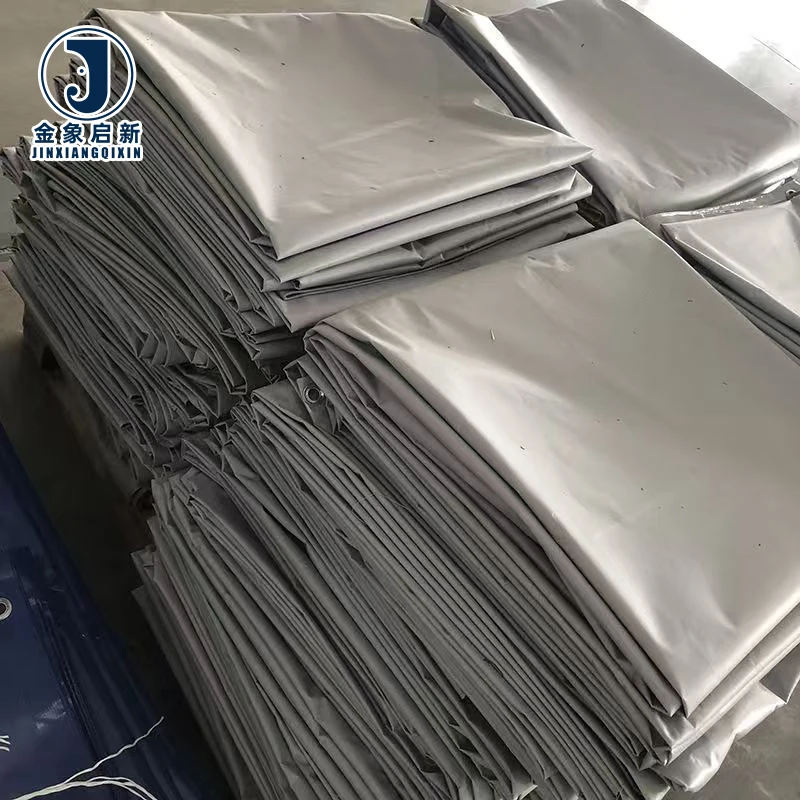
Process-Controlled Coating Weight — Every 650gsm roll is weighed at three coating stages with documented in-process QA records before dispatch.
Technical Specifications
| Parameter | Value |
|---|---|
| Specification | PVC Coated Fabric 650gsm |
| Product Type | PVC Coated Tarpaulin |
| Base Fabric | 1000D high toughness polyester yarn |
| Coating Material | PVC |
| Coating Method | Lamination technology and hot melt coating technology |
| Total Thickness | 0.70–1.0 mm (product family range — confirm the grade for this item) |
| Tensile Strength | Meridian 2000–2500 / Latitude 1800–2200 N/5cm (test basis not stated in source) |
| Weight | 650 GSM |
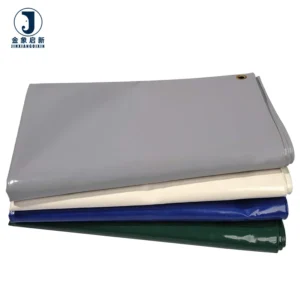
| Color Options | Blue, Blue/Orange, Green, Grey, Black, Clear, Grey/Green, Orange, or custom color |
| Cold Resistance | Cold resistant cracking formulation |
| Mold Protection | Mold proof treatment |
| Anti-Static | Available (grade not stated in source) |
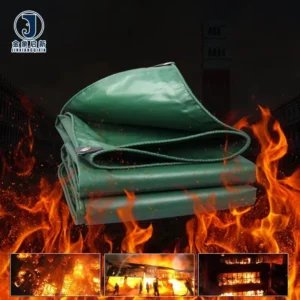
| Flame Retardant | Available as special treatment (grade not stated in source) |
| UV Treatment | Available (test basis not stated in source) |
| Welding Tear Strength | Excellent (no numerical value or standard provided) |
| Color Fastness | Best (no numerical value or standard provided) |
| Certification | ISO, CE |
Application Suitability
| Application | Exposure & Requirement |
|---|---|
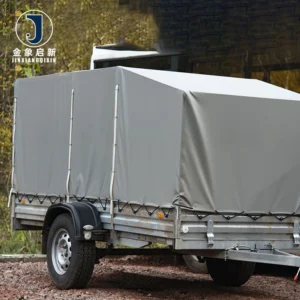
| Heavy truck tarpaulin covers | Constant road weather exposure, load flex at corners, abrasion from tie-down straps and cargo edges |
| Trailer side curtains | Repeated folding and unfolding, highway wind load, UV exposure during parked periods |
| Engineering protective cloth | Construction site dust and debris, equipment contact abrasion, temporary outdoor storage |
| Industrial equipment covers | Static long-term outdoor exposure, moisture ingress prevention, periodic handling and repositioning |
Why 650gsm Alone Does Not Guarantee Tear Resistance on the Highway
GSM tells you how much material is on the roll — the base fabric denier and weave density determine whether the PVC coated tarpaulin 650gsm survives the first winter storm on a loaded trailer.
Buyers who specify on weight alone often discover that two fabrics at the same GSM behave completely differently once installed on a moving vehicle. A loosely woven base with heavy coating compound may reach the target weight but fails at the flex points where the load shifts during braking. Conversely, a tightly woven 1000D yarn structure distributes tensile stress across the weave rather than concentrating it at a single thread intersection. [NEED_CITE: tensile and tear test methods for coated fabrics per ISO 1421] The difference only becomes visible after the fabric has been cut, welded and exposed to real highway conditions — by which time the entire fleet is already running with substandard covers.
How Hot Melt Coating Adhesion Affects Weld Integrity
The hot melt coating technology used for this PVC coated tarpaulin 650gsm creates a direct bond between the PVC layer and the 1000D polyester base yarn, eliminating the gap where moisture and mechanical stress can separate the layers. When lamination technology is applied correctly, the coating penetrates the weave structure rather than sitting on the surface as a film. This means that when a fabricator applies heat to join two panels, the weld fuses through a homogenous material cross-section rather than an interface between coating and substrate. Panels that delaminate at the weld line almost always trace back to coating methods that rely on surface adhesion without structural penetration.
Tensile Directionality and What the Numbers Mean for Truck Covers
The reported tensile strength runs higher in the meridian direction than in the latitude direction, which reflects the weaving orientation of the 1000D base fabric. For truck and trailer covers, the warp threads typically run along the length of the vehicle, absorbing the longitudinal forces generated during acceleration and braking. The weft threads handle the lateral wind load and the tension from side tie-downs. Specifying PVC coated tarpaulin 650gsm without understanding this directional balance can result in covers that hold up well along the length of the trailer but develop stress tears across the width where the cross-threads carry a disproportionate share of the load. [NEED_CITE: ISO 1421 tensile strength testing methodology for coated fabrics]
The Relationship Between Coating Weight, Denier and Real-World Durability
A 650 GSM finished weight achieved through a 1000D base fabric means the coating-to-yarn ratio is balanced for structural contribution rather than relying on excess PVC compound to reach the target weight. When the base denier is lower — say 500D — the manufacturer must add more coating mass to hit 650 GSM, producing a heavier, stiffer fabric that may crack at fold lines in cold weather. The cold resistant cracking formulation in this grade addresses that specific failure mode by modifying the PVC plasticiser blend to maintain flexibility at low temperatures. Thicker coating alone does not improve puncture resistance if the underlying yarn structure is too light to distribute the impact force across adjacent threads. The total thickness range of 0.70–1.0 mm within this product family reflects different coating build levels — confirming the exact grade for your application ensures the weight, thickness and base denier all align with the mechanical demands of your specific trailer configuration. [NEED_CITE: relationship between GSM, denier and tensile performance in coated polyester fabrics]
What Happens When Specification Gaps Reach the Dock
A quoted GSM that is not verified at each production stage can result in finished rolls arriving lighter than the agreed specification, a problem that typically surfaces only when the buyer cuts into the material and notices the difference in hand feel and stiffness. Flame retardant grades claimed without a test report mean the fabric may pass a visual inspection but fail the site safety audit when the contractor cannot produce documentation for the building inspector. Colour variation between rolls in the same shipment becomes visible the moment two panels are installed side by side on a trailer — a problem that forces the fleet operator to either accept an inconsistent appearance or reject the entire delivery. Welded seams that fail before the fabric itself tears almost always point to a mismatch between the heat sealing parameters and the actual coating thickness delivered, particularly when the coating weight varies from roll to roll within a single order. [NEED_CITE: common failure modes in PVC coated tarpaulin field installations]
Why Fabricators and Fleet Specifiers Source This Grade Here
Nearly 30 years of focused coated fabric production means the hot melt coating parameters for this 650gsm grade are set from accumulated process data, not trial and error on each production run. Three full production lines with 36 sets of professional equipment provide the capacity to deliver container-quantity orders of PVC coated tarpaulin 650gsm without splitting production across machines with different coating characteristics. The 10-person R&D team develops custom colour matches and cut-to-size samples within days, allowing fleet operators to verify fitment on their specific trailer models before committing to a full production order. Dedicated QA and QC at every stage, with 100% inspection before shipment, means each roll is checked against the specification sheet rather than relying on batch-level sampling.
Documentation & Verification
- Material specification sheet stating 650gsm weight, 1000D base fabric and coating composition per roll
- Test reports for UV and flame retardant grades provided where applicable to your market requirements
- Pre-shipment inspection record with roll-by-roll weight verification against quoted GSM
- ISO and CE certificates included with each shipment for compliance documentation
- Roll packing list with individual roll weights and dimensions for receiving verification
Fabrication, Handling & Storage
- Set hot melt welding temperature and dwell time to match the 0.70–1.0 mm thickness range of this PVC coated tarpaulin 650gsm grade
- Position eyelets through reinforced hem sections to distribute tie-down load across multiple 1000D yarn intersections
- Store rolls vertically on their cores in a shaded area to prevent flat-spot deformation of the lamination coating
- Allow cold-stored rolls to reach ambient temperature before unrolling to prevent cracking of the cold resistant formulation
- Use mild detergent without solvents when cleaning to preserve the mold proof surface treatment on the PVC layer
- Plan panel layout to minimise cross-grain welds where the latitude tensile strength is lower than the meridian direction
What to Include in Your Enquiry
Provide your trailer model dimensions, annual volume estimate and whether you need finished sheets with eyelets or roll stock for your own fabrication. Specify any fire safety or UV resistance requirements for your operating region so we can confirm the available treatment grades and corresponding test documentation. If you require a specific colour match or custom width, include your reference standard so we can develop a sample for approval before production.
Frequently Asked Questions
Q: How is the 650gsm weight verified before shipment and how can I recheck on arrival?
A: Each roll undergoes weight verification during pre-shipment inspection, with results recorded against the quoted specification. On arrival, you can cut a measured sample from the roll, weigh it on a calibrated scale and calculate the GSM by dividing the sample weight by its area in square metres. Our inspection records are available for cross-reference with your receiving check.
Q: What flame retardant grades are available and which test standards do they meet?
A: Flame retardant treatment is available as a special order option for this 650gsm grade. The specific grade and test standard depend on your market requirements — common frameworks include DIN 4102, NFPA 701 and local building codes. Provide your target standard in the enquiry so we can confirm the exact formulation and supply the corresponding test report with your shipment.
Q: How do welding and seam strength compare to the base fabric tensile rating?
A: The hot melt coating and lamination technology produces a homogenous material cross-section that allows welded seams to approach the base fabric strength when correct heat parameters are used. We provide recommended welding temperature and dwell time settings matched to the coating thickness of this grade. Poor weld strength typically traces back to incorrect machine settings rather than material limitation.
Q: What base fabric denier options are available and how do they affect tensile performance?
A: This 650gsm grade uses a 1000D polyester base fabric, which provides the structural backbone for the stated tensile strength values. Higher denier yarns increase tear propagation resistance but also add stiffness and weight. For this product family, other denier options exist at different GSM levels — confirm your required balance of flexibility and mechanical strength when specifying.
Q: What is the typical lead time for custom-sized sheets with special treatment requirements?
A: Lead times depend on the custom specification complexity, order volume and current production schedule. Standard colour rolls ship faster than custom colours or special treatments that require separate coating runs. Provide your required dimensions, treatment grade and target delivery date in your enquiry so we can confirm a realistic production timeline before order placement.