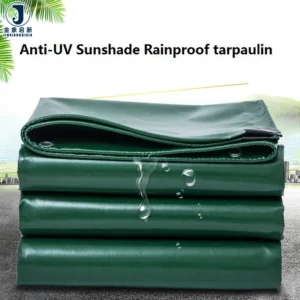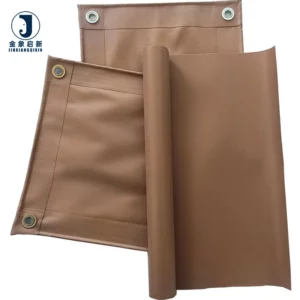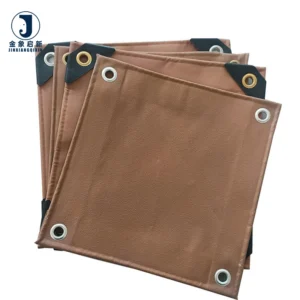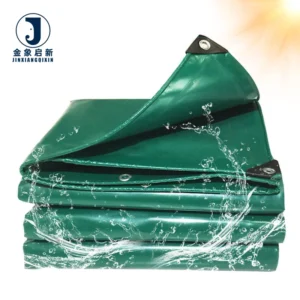
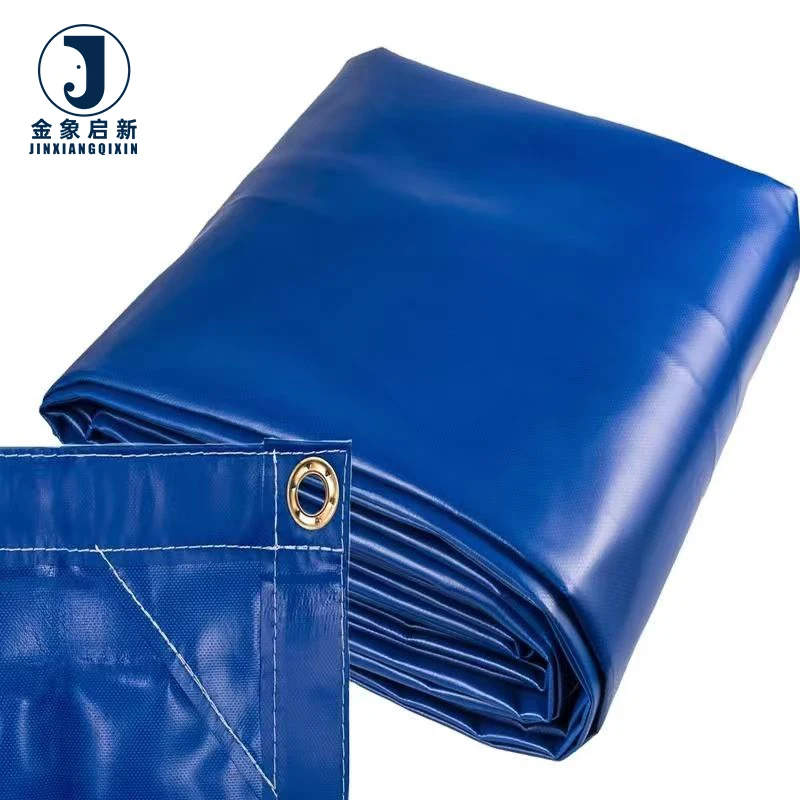
Coating Weight Control — Every roll of PVC coated tarpaulin undergoes dedicated QA inspection for coating adhesion and total weight, ensuring the material dispatched matches the approved specification without deviation.
Technical Specifications
| Parameter | Value |
|---|---|
| Product Type | PVC Coated Tarpaulin |
| Weight (GSM) | 250gsm-1500gsm |
| Base Fabric Denier | 200DX300D, 500DX500D, 840DX840D, 1000DX1000D |
| Coating Material | PVC |
| Coating Method | Coated and laminated |
| Maximum Width | 3 m |
| Surface Finish | Glossy or matte |
| Temperature Range | -15ºC to 70ºC |
| UV Treatment | Customized (test basis not stated in source) |
| Flame Retardant Grade | Treated (grade not stated in source) |
| Anti-Fungal | Treated |
| Waterproof | Yes |
| Colour Options | Blue, yellow, black, green, white, etc. |
| Printing Option | OEM/ODM custom printing welcomed |
Application Suitability
| Application | Exposure & Requirement |
|---|---|
| Truck and train side curtains | Constant flexing at load points, road debris abrasion, UV and rain exposure; requires high tear resistance and consistent weld behaviour |
| Sunshade and protection awnings | Prolonged solar exposure, wind loading, thermal cycling; needs dimensional stability and UV treatment matched to regional climate |
| Swimming pool covers | Permanent water contact, chemical treatment exposure, puncture risk from maintenance equipment; demands fully waterproof construction |
| Top cover materials for transport | Vertical rain impact, tie-down strap abrasion, temperature extremes during transit; requires high tensile strength and coated seam integrity |
Why GSM Alone Fails to Predict Real-World PVC Coated Tarpaulin Performance
GSM tells you what the fabric weighs, not what it can survive.
Technical buyers specifying PVC coated tarpaulin often anchor decisions to a single GSM figure on the quotation. The problem emerges on arrival when the roll is lighter than agreed, or when two rolls from the same batch show visible weight variation across the width [NEED_CITE: tensile and tear test methods for coated fabrics per ISO 1421]. A 650 GSM roll with poor coating adhesion will delaminate at the weld line before a lower-GSM roll with superior process control shows any sign of failure. Coating weight distribution, base fabric denier selection, and the bond between PVC layer and polyester substrate together determine how the material performs under tension, abrasion and thermal cycling. We verify total fabric weight and coating adhesion at every production stage, so the roll you receive reflects the exact specification you approved — not a nominal target.
Base Fabric Denier and Its Role in Tensile Behaviour
The base fabric denier directly governs how PVC coated tarpaulin resists tensile and tear forces. A 200DX300D construction suits lighter awning and shade applications where flexibility and low roll weight matter. Moving to 840DX840D or 1000DX1000D increases yarn thickness in both warp and weft, raising the force required to initiate and propagate a tear. For side curtain and transport cover fabricators, specifying the correct denier ensures the fabric withstands the repeated flexing that occurs when a loaded trailer moves through corners and over uneven surfaces. The coating then locks the weave in place and provides waterproof and chemical protection, but it cannot compensate for an underspecified base cloth.
Coating Versus Lamination: How Construction Affects Performance
The choice between coated and laminated PVC construction shapes adhesion strength, weld behaviour and long-term durability. Knife coating forces PVC paste into the base fabric weave under controlled pressure, creating a mechanical bond that penetrates the yarn structure. Lamination bonds pre-formed PVC films to the fabric surface using heat and pressure [NEED_CITE: PVC coating and lamination process comparison for industrial textiles]. Coated construction typically delivers higher peel strength, which matters when welded seams must flex repeatedly without separating. Laminated construction offers a smoother surface finish and can be more cost-effective for applications where extreme peel strength is not critical. Both methods are available across the denier range, and the selection depends on the mechanical demands of the end use.
Reading the Specification Sheet Beyond Weight
Three parameters on the material specification sheet deserve as much attention as GSM. First, base fabric denier determines the structural backbone — two rolls at identical GSM with different denier constructions will show different tear propagation behaviour. Second, coating method and weight distribution affect how the fabric responds to heat welding; uneven coating leads to inconsistent melt behaviour at the seam. Third, surface finish — glossy or matte — influences not only aesthetics but also dirt retention, print adhesion and how easily the surface cleans after exposure. Temperature range from -15ºC to 70ºC defines the operational envelope, and specifying UV or flame retardant treatment without a confirmed test basis leaves compliance to chance. Request the test report tied to the specific production batch before approving bulk release.
The Hidden Cost of Specifying on Price Per Kilogram
When buyers select PVC coated tarpaulin primarily on cost per kilogram, the consequences surface after installation. Rolls with insufficient coating weight at the edges show premature UV degradation while the centre remains intact, creating a patchwork failure pattern across the same panel. Flame retardant treatment claimed without a supporting test report leads to rejected site inspections and forced replacement [NEED_CITE: fire safety compliance requirements for temporary structures and transport covers]. Colour variation between rolls in a single shipment becomes visible once panels are installed side by side on a large awning or truck curtain, triggering disputes and partial rework. These failures do not appear on the quotation — they appear on the job site, where the cost of replacement far exceeds the savings from the initial purchase.
Why Technical Buyers Source This PVC Coated Tarpaulin Here
Process control over coating weight and adhesion is maintained across three full production lines with 36 sets of professional equipment, giving consistent output from the first roll to the last in any batch. The 10-person R&D team handles denier selection, custom colour matching, surface finish specification and sample development, with samples turned around within days for validation before bulk commitment. Every roll passes dedicated QA/QC inspection at each production stage, and 100% pre-shipment verification confirms GSM, colour consistency and coating integrity against the approved specification. Full documentation — from material specification sheets to test reports for UV and flame retardant grades — accompanies every dispatch. ISO and CE certified production supports export compliance across North American, European and Asian markets.
Documentation & Verification
- Material specification sheet stating exact GSM, base fabric denier, coating method and colour reference per roll
- Test reports for UV and flame retardant grades issued against the specific production batch
- Pre-shipment inspection record confirming weight, colour and adhesion across the entire order
- ISO and CE certificates included with dispatch documentation for customs and compliance clearance
- Roll packing list with individual roll weights and dimensions for receiving verification
Fabrication, Handling & Storage
- Heat welding parameters should be adjusted for glossy versus matte finish to achieve consistent seam strength
- Store rolls horizontally on pallets to prevent edge creasing across the 3 m width
- Allow cold-stored rolls to reach ambient temperature before unrolling to avoid coating crack damage
- Match needle and thread specification to base fabric denier when sewing hems on heavier grades
- Use PVC-compatible cleaners only; solvent-based products may degrade the coating surface over time
- Cut panels with allowance for thermal expansion within the -15ºC to 70ºC operating range
What We Need to Specify Your PVC Coated Tarpaulin Correctly
Provide the end-use application and the mechanical or environmental exposure conditions the fabric will face — including expected wind loading, UV intensity and temperature extremes in your region. If your market requires a specific flame retardant standard or UV test basis, state the grade and standard number so we can confirm treatment capability and supply the corresponding test report. Share your required width, colour references and whether you need roll stock or finished cut sizes with hemming. Let us know if you require samples for weld testing or colour approval before we proceed to bulk production.
Frequently Asked Questions
Q: How is GSM verified on PVC coated tarpaulin before shipment?
A: Our QA team measures total fabric weight per square metre at multiple points across the roll width during production and again at pre-shipment inspection. Each roll is checked against the GSM stated on the approved material specification sheet, and the inspection record is included with dispatch documentation so you can cross-reference on arrival.
Q: What test basis supports the anti-UV treatment claim?
A: UV treatment is customised to the buyer’s market and exposure requirements. We provide test reports tied to the specific production batch upon request. Confirm the UV test standard required in your region — such as ISO 4892 or ASTM G154 — so we can align treatment and documentation to your compliance needs.
Q: Which flame retardant grades are available and how do I specify?
A: Flame retardant treatment is applied based on the standard required by your end market, such as M2, B1 per DIN 4102, or NFPA 701. State the grade and standard you need at inquiry stage. We confirm the applicable treatment and supply the corresponding batch-specific test report with your shipment documentation.
Q: How does coated versus laminated construction affect weld behaviour?
A: Knife-coated PVC penetrates the base fabric weave, creating higher peel strength that supports repeated flexing at welded seams. Laminated PVC bonds film to the surface and may require adjusted welding temperature and dwell time. Request samples of both constructions to test weld parameters on your equipment before committing to bulk.
Q: How is colour consistency controlled across multiple rolls in one order?
A: Colour is matched against the approved reference at the coating stage, and each roll is visually inspected under controlled lighting during pre-shipment QC. Rolls from the same production run are grouped together for dispatch. If your installation places panels side by side, request the inspection record to confirm batch-level colour uniformity before release.