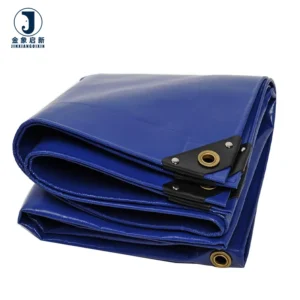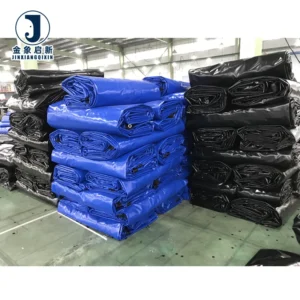
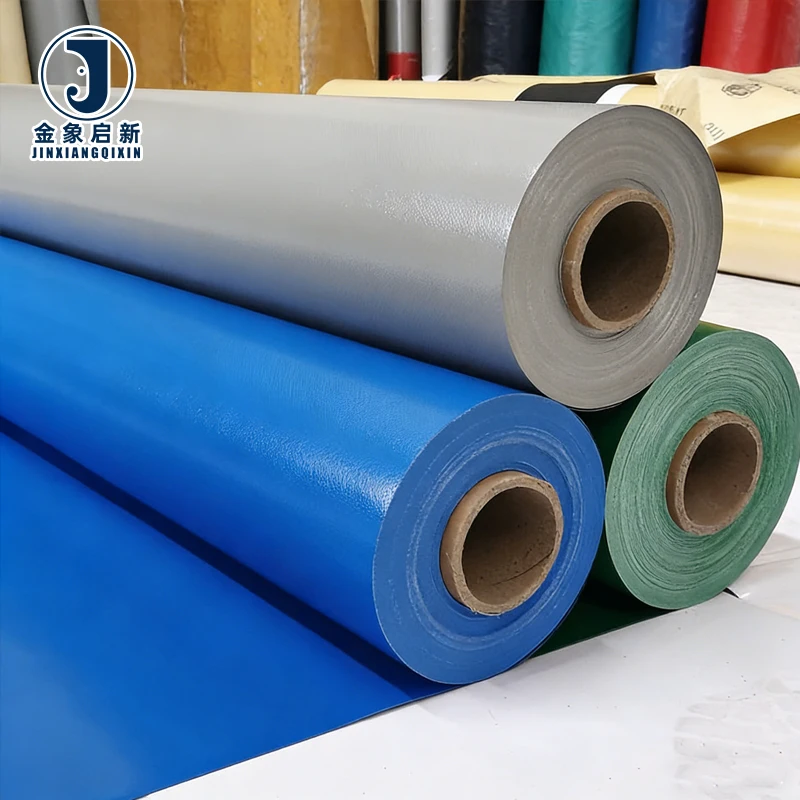
Process-Controlled Coating Weight — Every roll of 610gsm 650gsm 800gsm PVC coated tarpaulin leaves the line with a verified GSM record, ensuring the material on your cutting table matches the specification sheet you approved.
Technical Specifications
| Parameter | Value |
|---|---|
| Product Type | PVC Coated Tarpaulin Roll |
| Weight (GSM) | 610gsm, 650gsm, 800gsm |
| Coating Material | PVC |
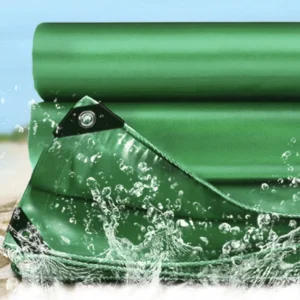
| Waterproof Rating | Water Resistant |
| Flame Retardant Grade | Available in flame retardant grades — confirm the grade required for your market |
| UV Treatment | Anti-UV treatment applied — verify test basis for your exposure conditions |
| Tensile Strength | High tensile strength base fabric — confirm test standard for your specification |
| Finish | Ripstop woven pattern available |
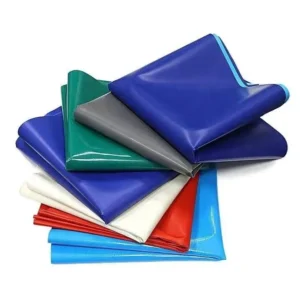
| Color | Blue and other solid colours available |
| Format | Roll |
| Standards | ISO, CE |
Application Suitability
| Application | Exposure & Requirement |
|---|---|
| Tent and Awning Fabric | Extended UV exposure, wind load tension, repeated folding and transport, seam integrity under dynamic load |
| Truck and Transport Covers | Road abrasion, constant flexing at tie-down points, weather exposure at highway speed, weld line stress |
| Inflatable Products | Internal air pressure, repeated inflation cycles, seam airtightness, puncture resistance at contact points |
| Outdoor Equipment Covers | Standing water, debris impact, UV degradation, thermal cycling between day and night temperatures |
Why Stated GSM Does Not Always Match What Arrives on Your Dock
PVC coated tarpaulin 610gsm 650gsm 800gsm rolls are weighed and recorded per roll before dispatch, not averaged across the production batch.
Technical buyers and fabricators frequently receive rolls where the coating weight falls below the quoted figure. The material feels lighter on the table, the tensile response under the sewing foot is different, and the finished product fails earlier than engineered. This mismatch traces back to inconsistent coating application during manufacture, where speed is prioritised over thickness control. [NEED_CITE: coating weight variation and its effect on tensile performance in PVC coated fabrics]
When the GSM on your material specification sheet does not match the physical roll, downstream consequences follow: weld temperatures need adjustment, the fabric behaves differently on the cutting table, and your own quality records carry inaccurate data.
How Base Fabric and Coating Work Together to Define Performance
The tensile and tear behaviour of a PVC coated tarpaulin roll depends on the interaction between the polyester base fabric denier, the weave density, and the PVC coating weight applied to each side. A higher GSM figure alone does not guarantee greater strength — a heavy coating over a low-denier base fabric may show acceptable weight on the scale but tear readily along the warp or weft.
The ripstop woven pattern, where available, introduces thicker yarns at regular intervals in the grid, limiting tear propagation once the fabric is punctured. This structure matters most in applications like truck side curtains and inflatable products where a small cut can spread rapidly under tension.
Coating Application and Its Effect on Weld Behaviour
The method used to apply the PVC coating — whether knife coated, laminated, or calendered — determines how the material behaves during fabrication. Knife coating typically produces a stronger bond between the PVC layer and the polyester base, which translates to higher peel strength at the weld line. This is critical when fabricators heat-weld seams for truck covers or inflatable structures, because the weld must match or exceed the strength of the parent fabric.
When the coating adhesion is weak, the PVC layer delaminates from the base fabric under stress, and the welded seam fails before the body of the material does. [NEED_CITE: peel strength requirements for heat-welded PVC coated fabric seams per ISO standards] Fabricators running high-speed welding lines need consistent coating thickness across the full roll width to maintain stable welding parameters without stopping for adjustment.
Reading the Specification Sheet Beyond the GSM Number
GSM tells you the total weight per square metre, but it does not separate the contribution of the base fabric from the contribution of the coating. Two rolls rated at 650gsm can have very different base fabric densities and therefore very different tear resistance values. The material specification sheet should break down the base fabric denier, the thread count per inch in warp and weft, and the coating weight per side so that the technical buyer can assess the actual structural contribution of each layer.
The anti-UV treatment and flame retardant grades are additive properties that depend on the chemical formulation of the PVC compound, not on the weight of the coating. These treatments must be confirmed by third-party test reports referenced to specific standards, because the visual appearance of the fabric gives no indication of its UV stability or fire classification. Confirm the exact grade required for your market before placing the order, as different regions enforce different fire safety codes for tensile structures and transport covers.
Colour consistency across rolls in the same shipment is a separate quality variable controlled by the pigment batching process. When multiple rolls are installed side by side — on a tent roof, a row of truck trailers, or a membrane structure — even slight colour variation becomes visible. Requesting a colour reference standard on the specification sheet allows incoming inspection to flag drift before the material reaches the cutting table.
What Happens When the Specification Does Not Match the Application
Selecting a PVC coated tarpaulin grade without matching the GSM, coating adhesion, and treatment package to the actual service conditions leads to failures that appear after installation, not at the point of purchase. A truck side curtain made from a grade with insufficient tear resistance develops cracks at the buckle and tie-down points within the first months of highway use. An awning fabric specified without verified UV treatment chalks and embrittles after a single summer season of direct sun exposure.
Flame retardant grades that lack a supporting test report create compliance risk on the construction site or at the event venue, where fire inspectors demand documentation tied to a recognised standard. [NEED_CITE: fire classification standards for temporary structures and tensile membranes] Batch colour variation discovered during installation forces the fabricator to replace panels from a single production run, doubling material cost and delaying project completion.
Procurement Backed by Process Evidence
Coating weight control is maintained through in-line measurement during production, with each roll of PVC coated tarpaulin 610gsm 650gsm 800gsm checked against the target specification before it leaves the facility. This prevents the common failure mode of receiving material that is lighter than agreed.
A ten-person R&D team handles material selection, pattern development, and custom sizing, producing samples within days so that fabricators can run weld and sew trials before committing to a bulk order.
Three full production lines and 36 sets of professional equipment support volume orders with maintained lead times, avoiding the delays that disrupt project schedules downstream.
Dedicated QA/QC at every production stage with full pre-shipment inspection ensures that GSM, colour, and surface finish are verified roll by roll, not sampled from the first roll of the batch.
ISO and CE certified production provides the documentation framework that export buyers need for customs clearance and regulatory compliance in their destination markets.
Documentation & Verification
- Material specification sheet stating exact GSM, base fabric denier, coating type, and colour reference for each roll ordered
- Test reports for UV stability and flame retardant grades tied to the specific standards required by your destination market
- Pre-shipment inspection record showing weight verification and surface quality check on every roll in the shipment
- Certificate of origin and full customs documentation prepared for export dispatch
- Roll packing list detailing individual roll weights, dimensions, and GSM for incoming goods verification
Fabrication, Handling & Storage
- Heat-weld temperature profiles should be calibrated to the specific 610gsm, 650gsm, or 800gsm grade before running production seams
- Store rolls horizontally on racking to prevent flat spots and permanent creasing in the PVC coating layer
- Allow cold-stored rolls to reach workshop temperature before unrolling to avoid coating cracking at low flexibility
- Use PVC-compatible cleaning agents only, as solvent-based products can degrade the coating surface finish
- Plan cutting layouts to maximise yield from the roll width and reduce the number of welded joins in the finished panel
- Reinforce tie-down and eyelet zones with additional PVC patches to distribute load beyond the base fabric tear strength
Moving from Inquiry to Sample Approval
To specify the correct PVC coated tarpaulin grade for your fabrication process, provide the end-use application, the mechanical loads the finished product will carry, and the environmental exposure conditions including UV and fire classification requirements for your market. Specify the roll width and colour reference you need, along with the annual volume so that production scheduling can be planned accordingly.
Request samples of the target GSM grade to run your own weld, sew, and flex tests before approving the material for bulk production. If your application requires custom printing or branding, confirm the surface finish — glossy or matte — that gives the best ink adhesion for your printing method.
Frequently Asked Questions
Q: How is the GSM of each roll verified before it ships?
A: Each roll is weighed and measured to calculate the actual grams per square metre, then compared against the stated 610gsm, 650gsm, or 800gsm target on the material specification sheet. Rolls that fall outside the acceptable tolerance are flagged during pre-shipment inspection and held back from the dispatch until they meet the agreed specification.
Q: What fire safety standards do the flame retardant grades meet?
A: Flame retardant grades are available, and the specific test standard — such as DIN 4102 B1, NFPA 701, or M2 — must be confirmed at the inquiry stage to match your local building code or transport regulation. The corresponding third-party test report is supplied with the shipment documentation when a rated grade is specified.
Q: How do you maintain colour consistency across multiple rolls in one order?
A: Pigment batches are mixed to a single colour reference standard at the start of the production run, and each roll is visually compared against this reference during the pre-shipment inspection. If you are installing panels side by side, request a physical colour swatch with your sample so that incoming rolls can be checked on your own cutting table.
Q: What information do you need to recommend the right GSM for my application?
A: Provide the end-use application, the expected mechanical loads such as wind pressure or tie-down tension, the environmental exposure including UV intensity and temperature range, and any fire classification required by your local authority. This allows the technical team to recommend whether 610gsm, 650gsm, or 800gsm best matches your performance and cost parameters.