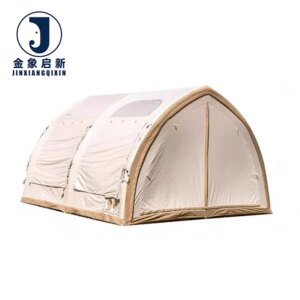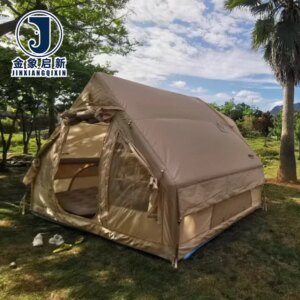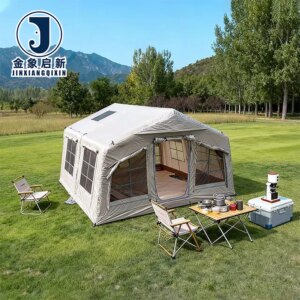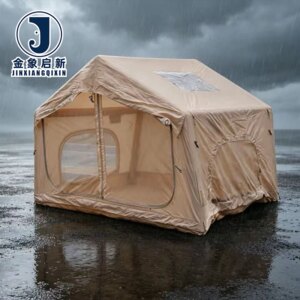
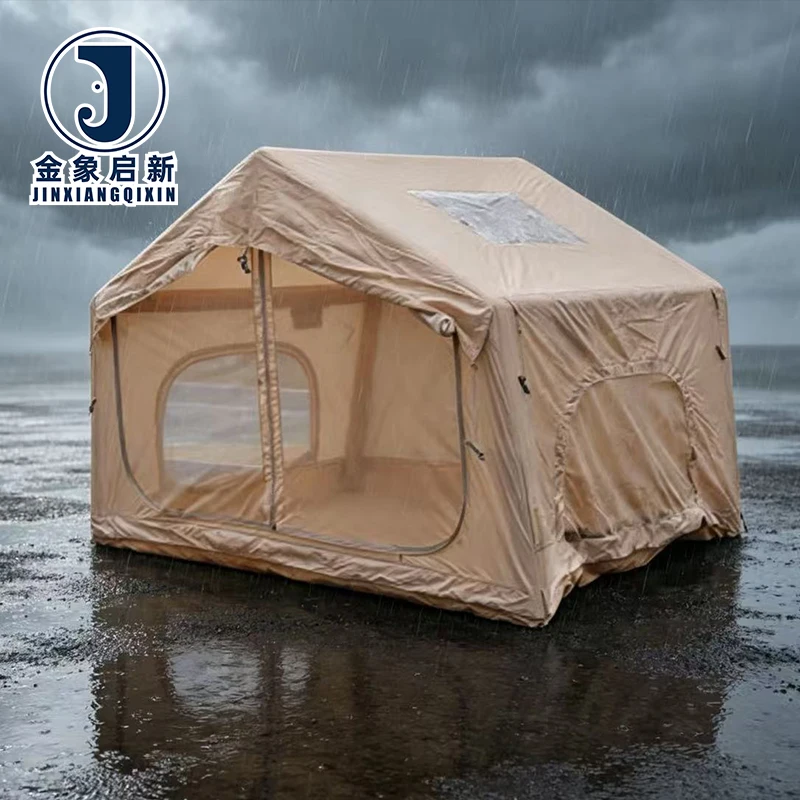
Coating Process Control — Nearly 30 years of focused PVC coating expertise delivers consistent adhesive bond strength across every roll, verified at each production stage for inflatable tent fabric applications.
Technical Specifications
| Parameter | Value |
|---|---|
| Product Type | Inflatable Tent Fabric |
| Core Material | PVC tarpaulin |
| Waterproof | Yes |
| UV Treatment | UV-resistant (test basis not stated in source) |
| Flame Retardant | Fire-retardant (grade not stated in source) |
| Anti-Static | Anti-static (standard not stated in source) |
| Tear Resistance | Tear-resistant construction |
| Customization | OEM & ODM available |
| Production Lines | 3 full production lines |
| Processing Equipment | 36 sets of professional equipment |
| R&D Team | 10 technicians |
| Standards | ISO 9001, ISO 14001, ISO 45001, CE |
Application Suitability
| Application | Exposure & Requirement |
|---|---|
| Inflatable tent and membrane structures | Constant internal pressure, repeated inflation/deflation cycles, welded seam integrity under flex |
| Outdoor event temporary shelters | Rapid deployment, weather resistance during multi-day installations, UV exposure across seasons |
| Construction site temporary facilities | Equipment storage and worker break areas, abrasion from site debris, wind loading on inflated forms |
| Agricultural mobile storage | Remote location deployment, contact with organic matter, seasonal UV and moisture exposure |
Why Coating Adhesion Determines Inflatable Fabric Performance More Than Base Fabric Weight
Inflatable structures fail first at the weld, not the fabric body — because the coating layer, not the yarn, carries the heat-seal load.
When a PVC coated fabric is specified for inflatable tents, buyers often fixate on GSM or base fabric denier. Yet the recurring field complaint is welded seams parting before the fabric itself shows wear. This happens when coating adhesion to the base fabric is insufficient to transfer the stress that concentrates at every inflation cycle. The bond between the PVC layer and the polyester weave must withstand both the thermal shock of hot-air welding and the sustained mechanical flex at the joint. An Inflatable Tent Fabric manufacturer that controls coating weight and adhesion at every stage prevents this failure mode before the roll leaves the factory [NEED_CITE: tensile and peel strength test methods for coated fabrics per ISO 2411].
Base Fabric Architecture and Its Role in Air-Holding Structures
The polyester base fabric provides the tensile skeleton that resists internal pressure. For inflatable tent fabric, the denier and weave density of this base determine how evenly stress distributes across the air beam. A loosely woven base allows the coating to migrate into the gaps during application, creating a mechanically locked bond but potentially reducing flexibility at the fold lines where the tent packs down.
Selecting an Inflatable Tent Fabric manufacturer with direct control over base fabric sourcing ensures the weave density matches the coating weight applied. The relationship is not linear: a heavier coating on a loosely woven base does not produce a stronger fabric — it produces a stiffer one that cracks at the crease. The 10-technician R&D team handles this material selection during the sample development phase, matching base fabric construction to the inflation pressure and pack-down requirements of the intended structure.
Coating Method and Weld Integrity for Inflatable Applications
The coating process directly determines how the fabric behaves under hot-air welding. Knife-coated PVC tarpaulin builds the coating layer on the fabric surface in controlled passes, producing a uniform thickness that welds consistently across the roll. This uniformity matters for inflatable tent fabric because every seam is a potential leak point, and inconsistent coating thickness causes some weld zones to overheat while others remain under-bonded [NEED_CITE: hot-air welding parameters and peel strength correlation for PVC coated textiles].
Fire-retardant and anti-static treatments, where specified, are integrated into the coating compound rather than applied as a surface finish. This means the treatment remains active through the welding process and does not create a weak boundary layer at the seam. Available in flame retardant grades — confirm the grade required for your market and the applicable standard for your target installation jurisdiction.
How PVC Weight, Weave Density, and Coating Method Interact in Inflatable Fabric
The performance of PVC tarpaulin for inflatable structures depends on three interdependent variables that cannot be evaluated in isolation. Base fabric denier and weave density establish the tensile and tear foundation: higher denier yarns resist puncture and tear propagation, while tighter weave density distributes load across more yarn intersections before any single yarn reaches its breaking point.
Coating method determines how that base fabric performs under fabrication. Knife coating applies PVC directly onto the moving web, building thickness in controlled layers that penetrate the weave to a measured depth. This produces strong mechanical adhesion that survives hot-air welding, but the coating weight must be balanced — too light and the weld lacks sufficient PVC mass to form a reliable bond; too heavy and the fabric becomes rigid, resisting the bending required during packing and deployment. UV-resistant treatment and fire-retardant compounds are compounded into the PVC layer, so their effectiveness depends on coating uniformity across the full roll width. Surface finish — whether glossy or matte — affects both cleanability in the field and the adhesion of any pattern printing or branding applied during fabrication.
The Cost of Overlooking Weld Compatibility When Specifying Inflatable Fabric
Specifying inflatable tent fabric based solely on a target GSM or a claimed fire-retardant property creates downstream failures that surface only after fabrication. A roll that meets the quoted weight but has inconsistent coating thickness will produce welds that pass initial peel testing yet fail under sustained inflation pressure. This is the origin of the field complaint where seams part before the fabric body shows any sign of degradation.
Batch-to-batch colour variation across rolls in the same order forces fabricators to reject panels or accept visible mismatches once the structure is inflated and installed [NEED_CITE: colour consistency measurement standards for PVC coated fabrics]. UV-resistant or fire-retardant claims unsupported by a test report mean the fabricator cannot provide compliance documentation to the end client, risking project rejection at inspection. An Inflatable Tent Fabric manufacturer that supplies material specification sheets, test reports with batch traceability, and pre-shipment inspection records eliminates these verification gaps before the fabric reaches the cutting table.
What Distinguishes This Supply Chain for Inflatable Fabric Buyers
Three full production lines and 36 sets of professional processing equipment support bulk roll output while maintaining the coating consistency that inflatable fabrication demands. This capacity means custom widths and colours do not require extended lead times that delay project timelines.
Dedicated QA/QC at every production stage with 100% inspection before shipment catches coating weight deviations, colour drift, and adhesion failures before rolls are dispatched. The 10-person R&D team handles material selection, pattern printing specification, and sample development, producing sample rolls within days for custom inflatable fabric requirements. This allows fabricators to validate weld parameters and colour match before committing to full production volumes.
Documentation & Verification
- Material specification sheet stating base fabric type, coating method, colour reference, and treatment details per roll
- UV resistance and flame retardancy test reports available upon request with full batch traceability
- ISO 9001, ISO 14001, ISO 45001, and CE certification documentation included with every shipment
- Pre-shipment inspection record confirming coating weight, colour match, and surface quality before dispatch
- Certificate of origin and customs documentation provided as standard with roll packing list
Fabrication, Handling & Storage
- Hot-air welding temperature and speed must be calibrated to the specific PVC coating thickness of this inflatable tent fabric
- Store rolls horizontally on pallets to prevent permanent creasing that compromises coating adhesion at the fold
- Cut panels with sealed edges to prevent moisture ingress into the base fabric weave during outdoor storage
- Clean inflated structures with pH-neutral detergent to preserve the surface treatment and any applied UV-resistant finish
- Repair field damage with compatible PVC weld patches, matching coating type to ensure bond integrity
Requesting a Specification Match for Your Inflatable Project
Provide the intended inflation pressure range and the deployment environment — including expected UV exposure duration and any fire safety regulations applicable in the installation jurisdiction. Specify whether you require rolls in standard widths or custom widths to minimise off-cuts during panel fabrication, and indicate your annual volume to determine production scheduling. If pattern printing or custom colour matching is required, request sample rolls for weld parameter validation before placing the full order.
Frequently Asked Questions
Q: What fire safety compliance grades are available for inflatable tent fabric?
A: Fire-retardant treatment is available in multiple grades. The specific grade required depends on the fire safety regulations of your target market and the intended use classification of the structure. Request the test report for the grade under consideration to verify compliance with your local building or event safety code before specifying.
Q: How is UV resistance validated for this PVC inflatable fabric?
A: UV-resistant treatment is compounded into the PVC coating layer during production. The test basis and exposure duration ratings are documented in test reports available upon request. For projects requiring a specific UV service life claim, request the relevant test data matched to your expected outdoor deployment conditions.
Q: What hot-air welding parameters are recommended for this inflatable tent fabric?
A: Welding temperature, speed, and pressure depend on the specific coating thickness and formulation of the roll batch. Sample material is provided for weld parameter validation on your equipment. The R&D team can supply starting parameter ranges based on the coating specification to reduce trial iterations.
Q: Can custom colours and pattern printing be applied to inflatable fabric rolls?
A: Custom colour matching and pattern printing are available through the OEM/ODM service. Sample rolls are developed within days for colour approval and print registration verification. Specify your colour reference standard and print artwork during the inquiry stage to confirm feasibility and minimum order quantities.
Q: What roll widths and minimum order quantities apply to custom inflatable fabric?
A: Roll width options and minimum order quantities vary based on the selected base fabric, coating weight, and treatment package. Custom widths are produced on dedicated coating lines. Provide your required width, estimated annual volume, and treatment specifications to receive a confirmed lead time and minimum.