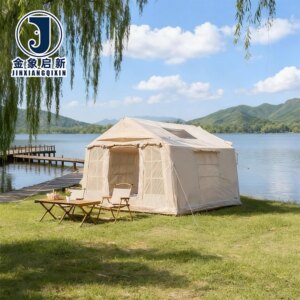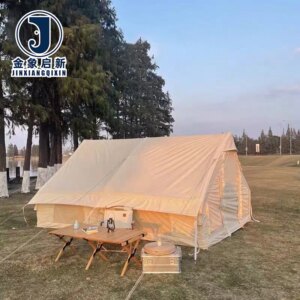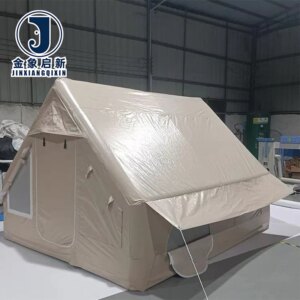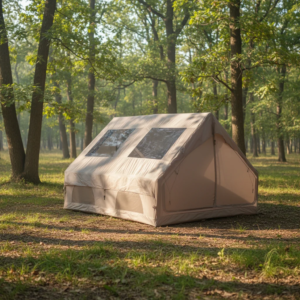
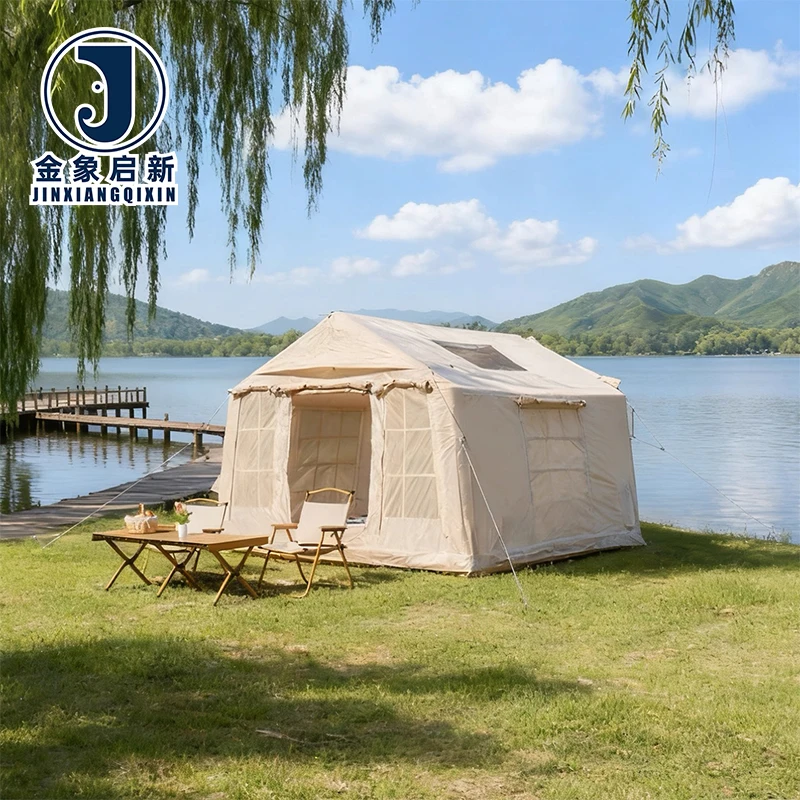
Coating Formulation Control — Our 10-person R&D team develops inflatable tent fabric samples within days, matching PVC coating weight and adhesion to your specified airtightness and structural load requirements.
Technical Specifications
| Parameter | Value |
|---|---|
| Product Type | Inflatable Tent |
| Core Material | Waterproof PVC Fabric |
| Key Features | Waterproof, UV-resistant, Tear-resistant, Fire-retardant, Anti-static |
| Customization Service | OEM & ODM (sample customization, pattern printing, material selection, product design) |
| Production Facility Area | 9,180 square meters |
| Production Lines | 3 full production lines |
| Processing Equipment | 36 sets of professional equipment |
| R&D Team Scale | 10 technicians |
| Standards | ISO9001, ISO14001, ISO45001, CE |
Note: Specific grades for UV resistance, fire retardancy, and anti-static properties are subject to project-specific testing and market compliance requirements.
Application Suitability
| Application | Exposure & Requirement |
|---|---|
| Temporary event accommodations | Repeated assembly cycles, high pedestrian traffic, rapid weather shifts requiring consistent air-holding pressure |
| Commercial camping ground operations | Prolonged sun exposure, seasonal temperature fluctuation, demand for visual consistency across multiple units |
| Construction site welfare facilities | Strict on-site fire safety compliance, heavy-duty abrasion from equipment proximity, dust and chemical exposure |
| Outdoor exhibition spaces | High aesthetic requirements, large-span structural tension, need for custom branding and colour matching |
| Equipment storage | Long-term static load, moisture ingress prevention, resistance to mould and mildew in unventilated conditions |
The Material Reality Behind Inflatable Structure Failures
Why do some inflatable tent fabrics delaminate at the seams while others hold pressure for seasons? Inflatable Tent Fabric performance depends on the chemical bond between the PVC coating and the base fabric, not just the total weight of the roll.
Technical buyers often specify a high GSM assuming it guarantees structural integrity. Yet, when an inflatable membrane is under constant internal pressure, the stress concentrates at the weld lines and flex points. If the coating formulation lacks the correct plasticiser balance or the base fabric weave is too open, the weld will fail before the fabric body tears [NEED_CITE: tensile and tear test methods for coated fabrics per ISO 1421]. We see procurement teams focus on the price per square metre, only to face costly replacements when the air tubes lose pressure during a commercial event.
Coating Adhesion and Weld Behaviour in Inflatable Structures
When sourcing Inflatable Tent Fabric, the primary concern for a fabricator is how the material behaves under high-frequency or hot-air welding. The PVC coating must melt and fuse with the opposing layer to create a bond that is as strong as the base fabric itself. If the coating is too heavily loaded with fillers to increase GSM cheaply, the weld becomes brittle and cracks under the flexing caused by wind loads or occupant movement.
Our material and coating technology approach focuses on the plastisol formulation. We ensure the coating penetrates the base fabric weave sufficiently to create a mechanical lock, while maintaining enough surface PVC for a clean, airtight weld. This balance is critical for inflatable glamping tents where a single leak can render an entire accommodation unit unusable.
Base Fabric Denier and Weave Density
The base fabric is the skeleton of the Inflatable Tent Fabric. The denier of the yarn and the density of the weave determine the tensile strength and, more importantly, the tear propagation resistance. In an inflatable structure, a puncture from a sharp branch or a mishandled stake can quickly turn into a catastrophic tear if the weave does not lock the rip [NEED_CITE: tear propagation testing for technical textiles].
A higher denier yarn provides the raw strength, but it is the weave density that stops a tear from spreading. For commercial glamping operators, this means the difference between a repairable pinhole and a total loss of an expensive asset. We provide specification sheets that detail the base fabric construction so technical buyers can calculate the safety margins for their specific structural designs.
The Role of GSM in Air-Holding Performance
GSM (Grams per Square Metre) is the standard metric for coated fabrics, but it must be interpreted correctly for inflatable applications. The weight comes from both the base fabric and the PVC coating. A heavy coating might make the fabric feel substantial, but if the base fabric is weak, the material will stretch under pressure, causing the inflatable tubes to deform and the structure to sag.
Conversely, a lighter, tightly woven base fabric with a precise coating weight will hold its shape better and resist the ballooning effect at the seams. Technical buyers evaluating Inflatable Tent Fabric must look at the ratio of coating to base cloth. Our production lines are calibrated to maintain this ratio consistently across every roll, ensuring that the air-holding performance does not vary from one production batch to the next.
Specification Selection and the Cost of Material Mismatch
The hidden cost of incorrect material specification often appears months after installation. We have seen commercial camping operators purchase fabric labelled as "heavy-duty" based on GSM alone, only to find that the material was too stiff for the folding and packing required between seasons. The constant creasing caused the PVC coating to micro-crack, leading to slow air leaks that were impossible to trace [NEED_CITE: flex fatigue testing for PVC coated fabrics].
Another frequent issue is the mismatch between the flame-retardant grade of the fabric and the local fire safety regulations. A material might pass a basic burn test but fail the specific smoke density or toxicity requirements of a target market, leading to site shutdowns and compliance fines. Verifying the test basis before procurement is not optional; it is a financial necessity.
Why Procurement Teams Choose This Production Facility
Sourcing Inflatable Tent Fabric requires a supplier who understands the difference between a static cover and a pressurised membrane. Our facility operates 3 full production lines dedicated to coated fabrics, allowing us to control the coating weight and curing temperature with precision. This is not about volume; it is about the consistency required for inflatable structures where every square metre must perform identically.
Our 10-person R&D team works directly with fabricators to develop custom formulations. If your design requires a specific level of translucency for lighting or a particular surface texture for acoustic damping, we adjust the plastisol mix and the coating gap to meet that need. This technical collaboration is supported by 36 sets of professional equipment, from high-precision coaters to automated winding systems that prevent edge damage.
Furthermore, our QA/QC protocol involves 100% inspection before shipment. We do not rely on spot checks; every roll is verified for coating adhesion, colour consistency, and surface defects. This level of scrutiny is essential for buyers who cannot afford to halt production because of a faulty roll of fabric.
Documentation & Verification
- Material specification sheet stating base fabric denier, coating weight, and GSM per batch.
- Test reports for UV and flame-retardant grades provided where applicable to the specific order.
- Pre-shipment inspection record verifying air-holding potential and weld-ability.
- ISO9001, ISO14001, ISO45001, and CE certificates available with each shipment.
- Certificate of origin and customs support for international logistics.
Fabrication, Handling & Storage
- Hot-air welding parameters must be adjusted for the specific PVC coating thickness to ensure airtight seams.
- Store rolls vertically in a climate-controlled environment to prevent permanent creasing of the PVC coating.
- Avoid dragging the fabric over rough surfaces during deployment to protect the tear-resistant base weave.
- Use compatible PVC adhesives for field repairs to maintain the chemical bond of the original coating.
- Clean with mild, non-solvent detergents to preserve the surface finish and UV treatment layer.
Defining Your Project Requirements
To provide an accurate material recommendation, we need to understand the operational environment of your inflatable structures. Please specify the target market’s fire safety standards, the expected frequency of inflation and deflation cycles, and any specific colour or translucency requirements.
If you are a fabricator, share your current welding equipment details so we can align the coating formulation with your process. For commercial operators, let us know the climate conditions and the required lifespan of the installation to determine the appropriate UV and anti-static treatment levels.
Frequently Asked Questions
Q: How are flame-retardant grades verified against the target market’s fire safety standards for inflatable structures?
A: Fire safety regulations vary significantly by region. We provide test reports based on recognized international standards, but the specific grade required depends on your local building codes or event safety regulations. We recommend confirming the exact standard (e.g., B1, M2, NFPA 701) with your local authority before ordering, so we can ensure the Inflatable Tent Fabric meets the necessary compliance documentation.
Q: What test basis supports the UV-resistance claim, and how does it relate to expected outdoor service life?
A: UV resistance is achieved through specific additives in the PVC coating. While we formulate for extended outdoor exposure, the actual service life depends on the intensity of solar radiation and the orientation of the structure. We can provide accelerated weathering test data upon request, but we do not guarantee a specific number of years, as site conditions vary too widely.
Q: How is coating adhesion and weld seam strength tested for inflatable tent PVC fabric under flex and pressure load?
A: We test the peel strength of the coating to ensure it does not delaminate under the internal pressure of the inflatable tubes. The weld seam strength is verified by destructive testing of sample welds, ensuring the bond is as strong as the base fabric itself. This is critical for maintaining airtightness over repeated inflation cycles.
Q: What GSM and base fabric denier options are available, and how do they affect tensile and tear strength?
A: We offer a range of constructions from lighter weights for temporary event structures to heavy-duty grades for permanent glamping installations. The tensile and tear strength are determined by the base fabric denier and weave density, not just the total GSM. We provide a matrix of options so you can select the right balance of weight and structural performance.
Q: How is batch-to-batch colour consistency controlled when ordering multiple inflatable tents for a single site?
A: Colour variation is a common issue in coated fabrics. We use spectrophotometry to measure colour deviation against the approved master sample before dispatch. Our production lines are calibrated to maintain consistent coating thickness and curing temperatures, which are the primary factors affecting colour uniformity across different rolls.