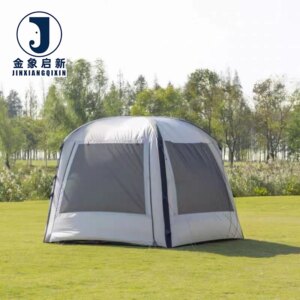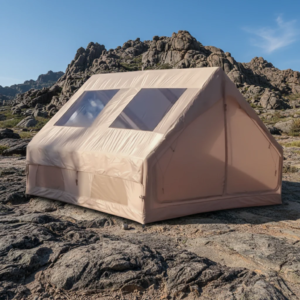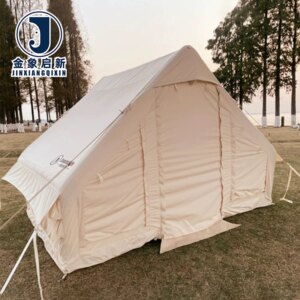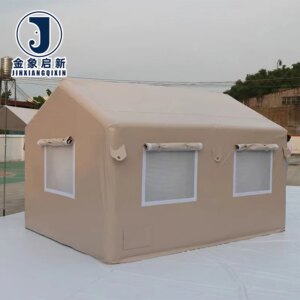
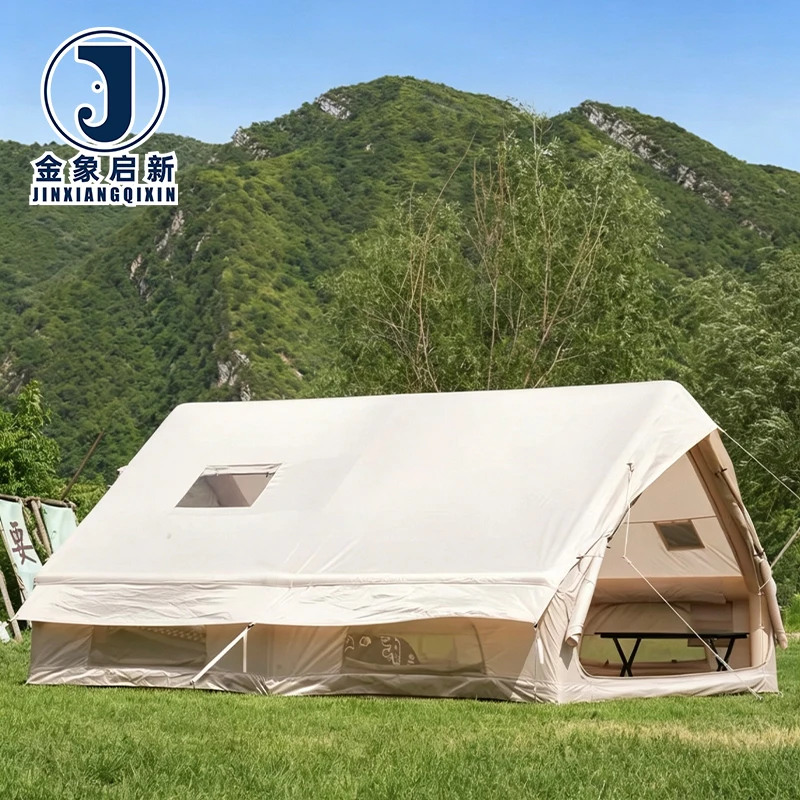
Coating Process Control — Our three full production lines maintain consistent PVC adhesion across every roll of inflatable tent fabric, verified through in-process QA checks at each coating stage.
Technical Specifications
| Parameter | Value |
|---|---|
| Product Type | Inflatable Tent |
| Core Material | PVC tarpaulin |
| Key Performance | Waterproof, UV-resistant (test basis not stated), tear-resistant |
| Product Forms | 2-3 Person Quick Automatic Opening Four-Season Waterproof Outdoor Air Tent |
| Customization Service | OEM & ODM (sample customization, pattern printing) |
| Quality Control | 100% pre-shipment inspection with dedicated QA&QC on site |
| Certifications | ISO9001, ISO14001, ISO45001, CE |
Application Suitability
| Application | Exposure & Requirement |
|---|---|
| Commercial camping ground facilities | Repeated inflation/deflation cycles, ground abrasion, prolonged sun exposure, seasonal temperature swings |
| Outdoor event management structures | Rapid deployment demands, wind loading on inflated surfaces, public safety compliance, frequent transport and re-erection |
| Construction site auxiliary shelters | Dust and debris contact, heavy equipment proximity, exposure to alkaline concrete splash, short-term weather protection |
| Outdoor exhibition booths | Visual presentation requirements, branding via pattern printing, indoor-outdoor transition zones, foot traffic abrasion at base |
| Mobile field operations | Remote site deployment, minimal crew setup, temperature extremes, limited repair resources in the field |
| Temporary site shelters | Short-duration weather resistance, quick inflation for emergency cover, storage of sensitive equipment under cover |
| Equipment storage facilities | UV exposure over extended periods, waterproofing integrity at seam joints, ventilation requirements to prevent condensation |
Why Coating Weight Alone Will Not Predict Inflatable Structure Failure
Seam integrity depends on coating adhesion and base fabric behaviour at flex points, not just the GSM printed on the specification sheet.
When an inflatable tent fabric fails, the tear almost never starts in the middle of a panel. It begins where the material bends most — at welded joints, valve surrounds, and the transition zones between air beams and ground sheets. A heavy-grade PVC tarpaulin with poor coating adhesion will delaminate at these stress concentrations long before the base fabric reaches its tensile limit. The inflatable tent fabric manufacturer must control both the coating formulation and the thermal welding parameters to prevent this cascade. [NEED_CITE: tensile and tear test methods for coated fabrics per ISO 1421]
How Base Fabric Denier and Weave Density Define Tear Propagation Resistance
The base fabric is the structural skeleton of any custom inflatable structure PVC material. Denier determines individual yarn thickness, while weave density controls how effectively load transfers from a damaged yarn to its neighbours. In inflatable tent applications, where internal air pressure places continuous biaxial tension on every panel, a loose weave allows small punctures to propagate into catastrophic splits. Our PVC tarpaulin base fabric is selected and specified by denier and weave count to match the inflation pressure and expected mechanical abuse of each application. The coating then locks this structure in place, preventing yarn migration under cyclic loading.
Thermal Welding Behaviour and Coating Formulation for Inflatable Air Beams
The coating layer must soften at a predictable temperature window so that heat-welded seams achieve full fusion without degrading the base fabric underneath. For inflatable tent manufacturers, inconsistent melt behaviour means some seams will be under-welded while adjacent joints show surface scorching. This is a material-level problem, not a machine calibration issue. Our coating process control maintains uniform PVC plasticiser distribution across the roll, which directly translates to repeatable welding parameters on the factory floor [NEED_CITE: hot air welding parameters for PVC coated polyester fabrics]. When you run test welds on sample cuts, the peel strength should be consistent whether the joint runs parallel or perpendicular to the machine direction.
Reading the Specification Sheet Beyond the GSM Figure
GSM tells you how much material is present per square metre, but it does not reveal the ratio of base fabric to coating, the denier of the yarns, or the weave density. Two PVC tarpaulin rolls at identical GSM can perform very differently in an inflatable structure: one may have a heavy coating over a light base fabric (good waterproofing, lower tear resistance), while the other uses a lighter coating over a dense base (higher structural strength, adequate weather protection). For inflatable tent applications, the balance matters more than the total weight. We provide the full material breakdown — base fabric denier, weave count, and coating weight — so buyers can evaluate suitability against their specific inflation pressures and handling requirements rather than relying on a single number.
The Hidden Cost of Underspecifying Inflatable Structure Fabric
When an inflatable tent fails at a welded seam during a commercial event, the direct replacement cost is only the beginning. The operator faces reputational damage with the event client, potential safety investigations, and the logistics of emergency replacement under time pressure. At the material level, this failure usually traces back to one of three causes: coating adhesion that was insufficient for the welding method used, base fabric that was too light for the inflation pressure, or batch-to-batch variation in coating thickness that made some seams weld correctly while others did not. [NEED_CITE: common failure modes in inflatable temporary structures]
Specifying inflatable tent fabric on price per kilogram without evaluating coating adhesion, weld peel strength, and batch consistency creates this exact risk profile. The savings on material procurement disappear the first time a seam fails in service.
Why Technical Buyers Source Inflatable Structure PVC Here
Nearly thirty years of coating process experience means our R&D team understands how PVC formulation decisions affect downstream fabrication. When an inflatable tent manufacturer needs a specific weld window or surface finish, we adjust at the coating stage rather than asking the fabricator to compensate with machine settings.
Three full production lines with 36 sets of professional equipment give us the capacity to hold batch consistency across large orders of custom inflatable structure PVC. Roll-to-roll colour and thickness variation is controlled through in-process measurement, not just final inspection.
Dedicated QA and QC staff inspect every production stage, meaning coating weight, adhesion strength, and visual quality are verified before a roll reaches the packing area — not after a customer complaint arrives.
The 10-person R&D team handles sample development for custom width, colour, and pattern printing requirements, delivering test samples within days so fabricators can validate welding parameters before committing to a production order.
OEM and ODM capability means we work from your material specification or help you develop one based on your inflation pressure, deployment frequency, and target market compliance requirements.
Documentation & Verification
- Material specification sheet stating base fabric denier, coating weight, and PVC formulation type for each inflatable tent fabric roll
- UV resistance test report available for grades treated for prolonged outdoor exposure — confirm the test standard required for your market
- Pre-shipment inspection record with batch traceability linking each roll to its production run and coating batch
- ISO9001, ISO14001, ISO45001, and CE certificates provided with shipment documentation
- Roll packing list with net weight, gross weight, and dimensions for container loading planning
Fabrication, Handling & Storage
- Thermal welding temperature and dwell time must be validated on sample cuts from each PVC tarpaulin roll batch before production runs begin
- Store rolls horizontally on racking to prevent permanent creasing in the PVC coating layer that could affect inflation uniformity
- Allow cold-stored rolls to reach ambient temperature before unrolling to prevent coating micro-cracking at low-temperature flex points
- Use PVC-compatible cleaners only — solvent-based products can attack the plasticiser system and reduce coating adhesion at seam zones
- Pattern printing registration must account for material stretch under inflation pressure to maintain visual alignment on finished structures
- Repair kits should include matching PVC tarpaulin patches with compatible coating formulation for field-welded seam repairs
What to Include in Your Inflatable Structure Fabric Inquiry
To move efficiently from inquiry to sample development, we need your application details: the inflation pressure range your structures operate at, the deployment frequency (single-use event hire versus permanent seasonal installation), and any fire classification or UV test standards your target market requires. Specify whether you need rolls at standard width or custom slit widths, and whether pattern printing or brand colour matching is part of the project. If you have existing welding equipment, share the make and model so our R&D team can recommend coating formulation adjustments for optimal weld window compatibility.
Frequently Asked Questions
Q: How should I evaluate GSM when comparing inflatable tent fabric options?
A: GSM alone does not predict performance. Request the base fabric denier, weave density, and coating weight breakdown. A higher coating-to-fabric ratio improves waterproofing but may reduce tear strength. Match the balance to your inflation pressure and expected mechanical loading rather than selecting on total weight alone.
Q: Can you supply flame retardant inflatable tent fabric with test documentation?
A: We produce PVC tarpaulin available in flame retardant grades. The specific grade and test standard depend on your target market requirements — confirm whether your project needs certification per DIN 4102, NFPA 701, or a local building code before we develop samples and provide the corresponding test report.
Q: How do you maintain colour consistency across multiple rolls for large inflatable structure orders?
A: Every production run uses batch-matched PVC coating with in-process colour measurement. We provide a pre-shipment inspection record showing colour verification per roll. For projects where panels from different rolls will be visible side by side, we recommend ordering the full quantity as a single production batch.
Q: What information do you need to develop a custom inflatable tent fabric sample?
A: We need your required width, target GSM range, surface finish preference (glossy or matte), colour reference, and any performance treatments such as UV resistance or flame retardancy. Our R&D team produces samples within days so you can test welding parameters before placing a bulk order.
Q: Does your PVC tarpaulin support heat welding for inflatable air beam construction?
A: Yes. Our coating formulation is designed for thermal welding compatibility. The PVC plasticiser system provides a consistent melt window for hot air and high frequency welding. We recommend validating weld peel strength on sample cuts from each batch before full production to account for any equipment-specific parameter adjustments.