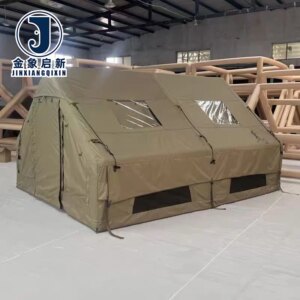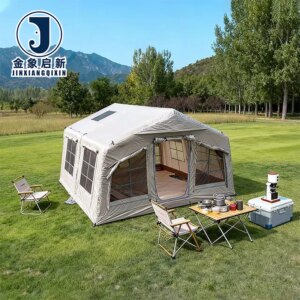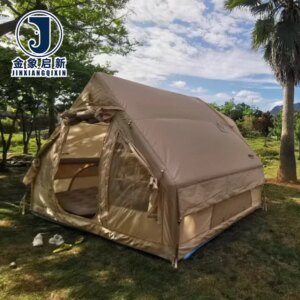
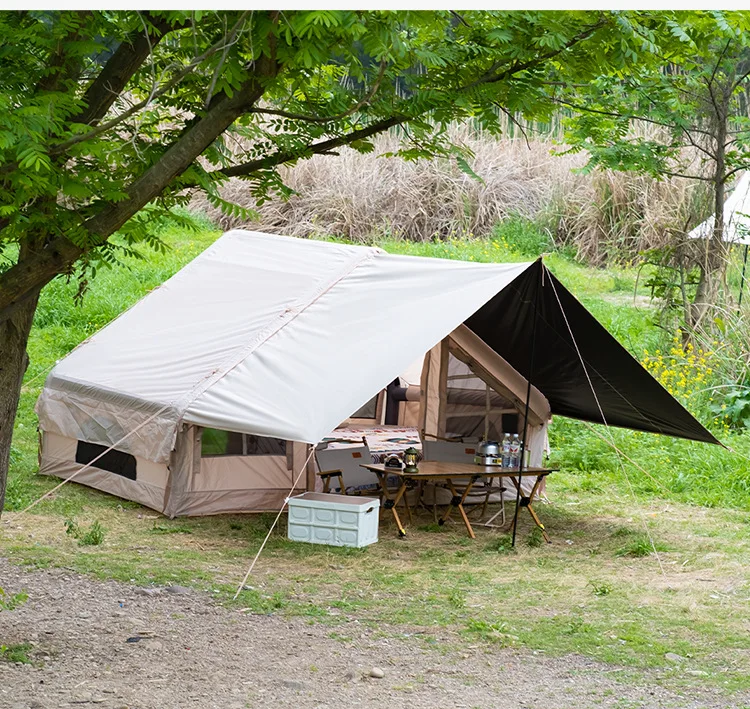
Coating Process Mastery — Nearly three decades of focused PVC coating development ensures consistent GSM and adhesion across every roll of Inflatable Tent PVC Fabric you receive.
Technical Specifications
| Parameter | Value |
|---|---|
| Product Type | Inflatable Tent PVC Fabric |
| Core Material | PVC waterproof fabric |
| Key Performance | Waterproof, tear-resistant |
| UV Resistance | Available in UV-resistant grades — confirm the rating required for your exposure conditions |
| Fire Retardancy | Available in fire-retardant grades — confirm the grade required for your market |
| Anti-Static | Available in anti-static grades — confirm surface resistance specification required |
| Coating Method | Knife coated |
| Standards | ISO 9001, ISO 14001, ISO 45001, CE |
| Customization | OEM & ODM, sample customization, pattern printing available |
| Lead Time | 2–4 weeks for bulk orders; 7–10 business days for pre-production sample |
Application Suitability
| Application | Exposure & Requirement |
|---|---|
| Professional inflatable camping tent manufacturing | Repeated inflation cycles, flex stress at air beam joints, outdoor weathering, user safety compliance |
| Construction site temporary shelters | Prolonged UV and rain exposure, wind loading on inflated structures, fire code adherence on work sites |
| Emergency response rapid-deployment tents | Fast inflation under field conditions, waterproof integrity, transport abrasion during repeated deployment |
| Commercial inflatable structure fabricators | Batch colour and GSM consistency across production runs, reliable weld seam strength at structural joints |
What "Fire Retardant" Means Without a Test Report Behind It
Flame retardant claims are only useful when backed by a grade tied to the standard your market enforces.
Inflatable tent fabric sourced on a datasheet promise alone creates downstream risk. A tent manufacturer ships a batch of inflatable shelters to a construction contractor, and the site safety officer requests documentation proving the fire-retardant grade meets local building codes. The fabric supplier’s quotation said "fire retardant" but no third-party test report accompanies the shipment. [NEED_CITE: fire classification standards for temporary structures and tents] The entire installation is halted until compliant documentation arrives — or the fabric is rejected outright. This scenario repeats across mining camps, event venues, and municipal emergency stockpiles where audit trails are non-negotiable. Buyers of Inflatable Tent PVC Fabric must match the claimed performance to a verifiable standard before committing to volume orders.
How Coating Weight and Adhesion Affect Inflated Structure Performance
Inflatable tents place unique demands on the fabric-to-coating bond. Every inflation cycle generates outward pressure that stresses the PVC layer against the base fabric substrate, particularly at beam junctions and valve surrounds. Knife coating allows precise control over the amount of PVC applied to each side of the base cloth, which directly influences how well the coating resists delamination under cyclic flex loads. When adhesion is insufficient, the coating peels away from the yarn at stress concentration points long before the base fabric itself fails. Specifying Inflatable Tent PVC Fabric requires understanding both the coating weight and the bond strength, not one without the other.
Weld Seam Behaviour at Inflation Points and Structural Joints
The seams on an inflatable tent carry the full internal air pressure, making them the most vulnerable part of the structure. High-frequency or hot-air welding melts the PVC coating on two fabric panels and fuses them together, creating a joint whose strength depends on coating formulation, thickness, and surface condition. A coating that is too thin produces a starved weld; one that is too thick can cause excessive squeeze-out and inconsistent seam width. Manufacturers producing inflatable shelters need Inflatable Tent PVC Fabric that delivers predictable melt behaviour across the entire roll surface. [NEED_CITE: tensile and tear test methods for coated fabrics per ISO 1421] Batch-to-batch variation in coating formulation forces fabricators to re-tune welding parameters for every new delivery, adding cost and scrap to the production line.
Reading the Specification Sheet: Base Fabric, Coating, and Surface Finish
Base fabric denier and weave density set the mechanical floor for the finished material — they determine how much tensile and tear load the yarn structure can absorb before the coating is even considered. A high-denier yarn in a tight weave resists tear propagation more effectively than a lighter weave of identical GSM, which is why looking at weight alone gives an incomplete picture of durability. The knife coating method used here applies a controlled PVC layer that penetrates the weave to varying degrees, influencing both peel strength and surface smoothness. Surface finish — whether glossy or matte — affects how the fabric handles during fabrication and how dirt and moisture behave on the installed tent exterior. Glossy surfaces tend to shed water and soil more readily, while matte finishes reduce glare and can improve paint or ink adhesion for printed branding. Available fire-retardant and anti-static treatments further modify the coating chemistry, which in turn can shift the optimal welding temperature window.
The Cost of Overlooking Roll-to-Roll Consistency
When one roll in a batch is a slightly different shade from the next, the mismatch becomes obvious the moment two panels are welded side by side on the factory floor. Colour variation across rolls forces manufacturers to sort and match before cutting, creating material waste and scheduling delays that compound with order size. [NEED_CITE: batch consistency standards for coated technical textiles] GSM deviation between rolls causes a different problem: welding parameters optimised for the first roll produce weak or over-melted seams on the second, and the defect may not surface until the tent is inflated during final QA. For commercial inflatable tent producers running continuous production schedules, these inconsistencies translate directly into scrap rates and missed shipment deadlines.
Why Technical Buyers Source This Fabric Here
Three full production lines with 36 sets of processing equipment provide the capacity to fulfil bulk orders of Inflatable Tent PVC Fabric without splitting your batch across multiple coating runs. A dedicated 10-technician R&D team handles material selection, custom sizing, and sample development so that your specification is validated before production begins, not after the container ships. Every production stage runs under a QA/QC protocol with 100% inspection before dispatch, catching GSM drift, colour deviation, and coating defects at the source rather than at your receiving dock. Pattern printing and OEM/ODM sample customisation are handled in-house, eliminating the coordination delays that arise when decoration is outsourced to a separate converter. Documentation accompanies every shipment — specification sheets, test reports where applicable, and pre-shipment inspection records — so your compliance team has what it needs before the goods arrive.
Documentation & Verification
- Material specification sheet stating GSM, base fabric construction, and coating method for every roll
- Third-party test reports for fire-retardant and UV-resistant grades where applicable to your order
- Pre-shipment inspection record confirming GSM, colour, and surface quality against agreed tolerances
- ISO 9001, ISO 14001, ISO 45001, and CE certificates supporting audit and customs requirements
- Roll packing list with individual roll weights and dimensions for receiving verification
- Certificate of origin provided for customs clearance in destination markets
Fabrication, Handling & Storage
- Set hot-air welding temperature based on the specific PVC coating thickness of this knife-coated fabric
- Allow cold-stored rolls to acclimatise to workshop temperature before unrolling to prevent coating stiffness cracking
- Store rolls upright on end caps to avoid flat-spotting the coated surface under sustained lateral pressure
- Use a compatible PVC-based adhesive for field repairs on the knife-coated surface to maintain bond integrity
- Plan cutting layout to minimise transverse welds across the fabric width, reducing potential leak paths in inflated panels
Starting Your Specification Conversation
Provide the inflation pressure range and beam diameter of your tent design so we can recommend the appropriate base fabric density and coating weight for structural integrity. Let us know the fire-retardant grade or standard your destination market requires — different regions enforce different classifications and we need to match the correct formulation. Share your target colour reference, print artwork if applicable, and annual volume so we can confirm roll width options, batch consistency parameters, and realistic lead times before sampling begins.
Frequently Asked Questions
Q: What fire-retardant grades are available and how do they map to market-specific standards?
A: We offer fire-retardant grades suited to various international classifications. The specific grade must match the standard enforced in your target market — for example, building and construction sites, event venues, or mining operations each reference different test protocols. Share the regulation or standard name your buyer requires, and we will confirm the matching grade with supporting test documentation for your Inflatable Tent PVC Fabric order.
Q: How do you verify GSM consistency roll to roll before shipping?
A: Every roll undergoes weight verification against the stated GSM during our pre-shipment inspection process. Dedicated QA staff sample multiple points along each roll and record the results in the inspection report that accompanies your shipment. This ensures the coating weight you specified is the coating weight you receive, eliminating surprises on your production floor.
Q: Can you match a specific colour across multiple roll orders placed months apart?
A: Colour matching is managed through controlled pigment formulation and reference standards retained from your original approved sample. When you reorder, we cross-check new production against the retained reference before dispatch. Pattern printing is also handled in-house, so colour and graphic consistency remain under one quality system throughout your product lifecycle.
Q: What information do I need to confirm weld compatibility with my existing fabrication setup?
A: Provide your current welding method — hot air, high frequency, or wedge — along with the temperature and speed settings you typically run. We will supply sample yardage of the Inflatable Tent PVC Fabric so your team can validate weld parameters and peel strength on your own equipment before committing to a bulk order, ensuring the coating formulation integrates cleanly with your production line.